
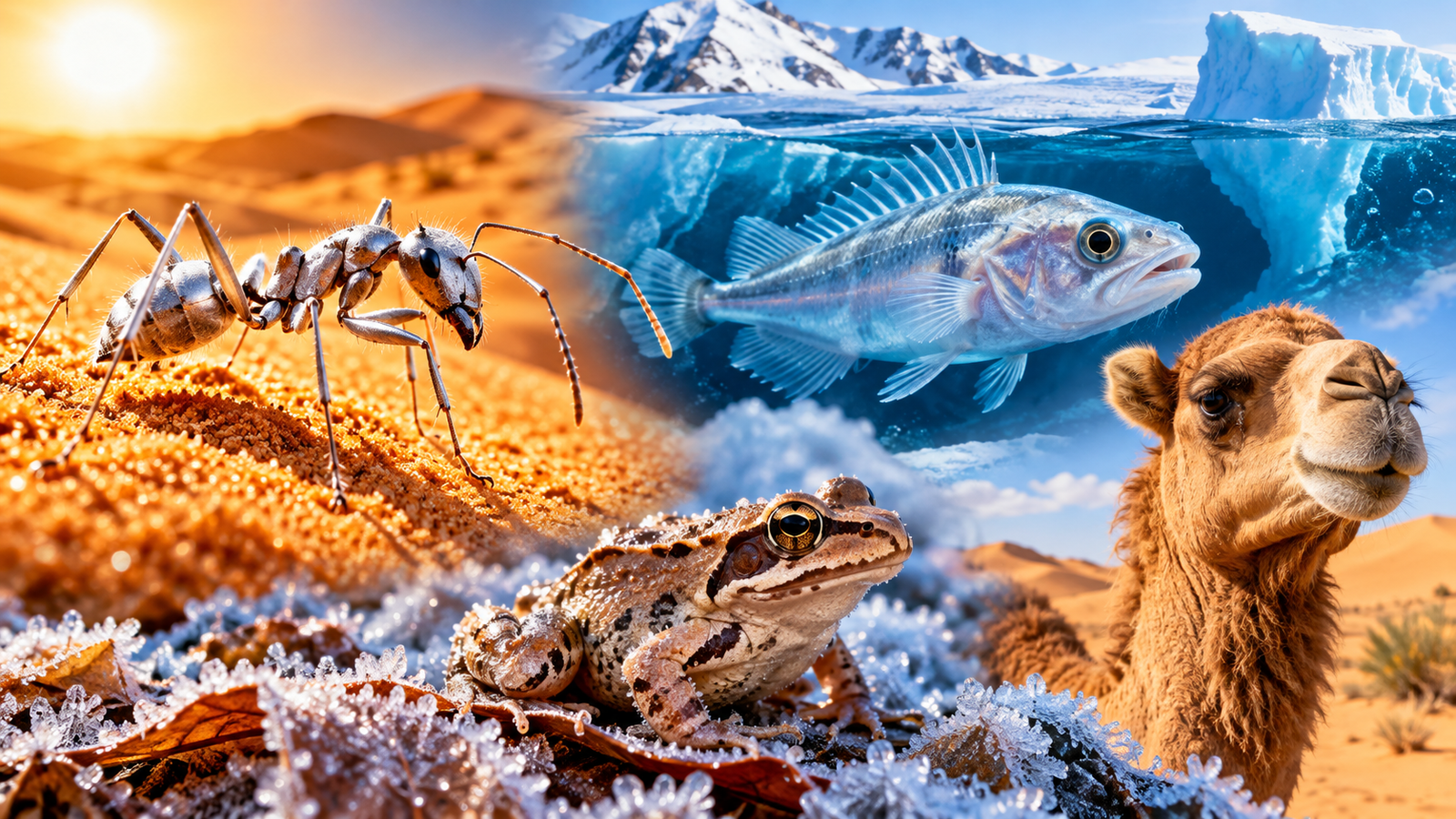
Imagine walking barefoot across scorching desert sand or swimming in water so cold that it could freeze your blood. Sounds like a terrible idea, right? Yet some animals spend their entire lives dealing with conditions like these.
And they have some seriously clever tricks up their sleeves. Some reflect the desert sun like tiny mirrors. Others carry their own natural antifreeze. And one little frog can survive with much of its body frozen solid!
Let’s meet some of nature’s most incredible survivors and discover how they pull off these amazing tricks.
1. The Ant That Wears a Tiny Silver Suit
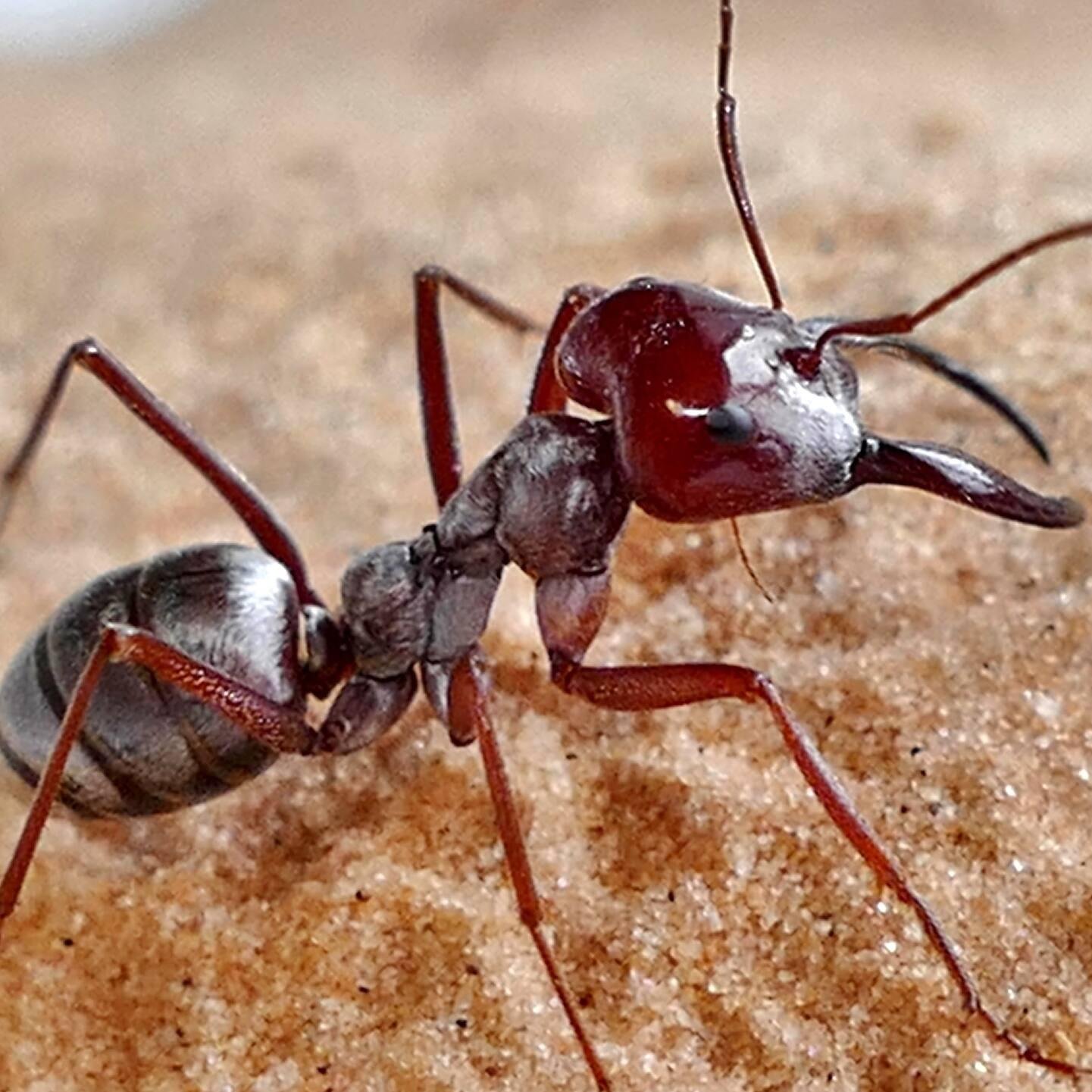
The Sahara Desert gets so hot that many animals hide during the hottest part of the day. But the Saharan silver ant sometimes does the opposite. It heads out across the burning sand to find food.
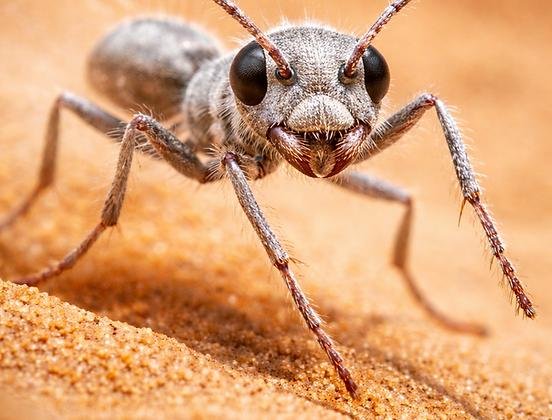
How does it avoid overheating? Look closely, and you’ll discover its secret: a coat of tiny silver hairs that reflect sunlight and help release body heat.
Think of a car left in the sun. A dark car heats up quickly, while a light colored one reflects more sunlight and tends to stay cooler. The ant uses a clever version of the same idea, only its cooling system is built into its body.
Its long legs also help keep its body farther away from the hot ground. And because it moves quickly, it spends less time exposed to the scorching sun.
Scientists studied these remarkable hairs in 2015 and found that they help the ant reflect sunlight while getting rid of excess heat.
So the next time you see something tiny shining in the sun, remember: nature came up with wearable heat protection long before we invented reflective clothing!
2. Fish With Their Own Natural Antifreeze
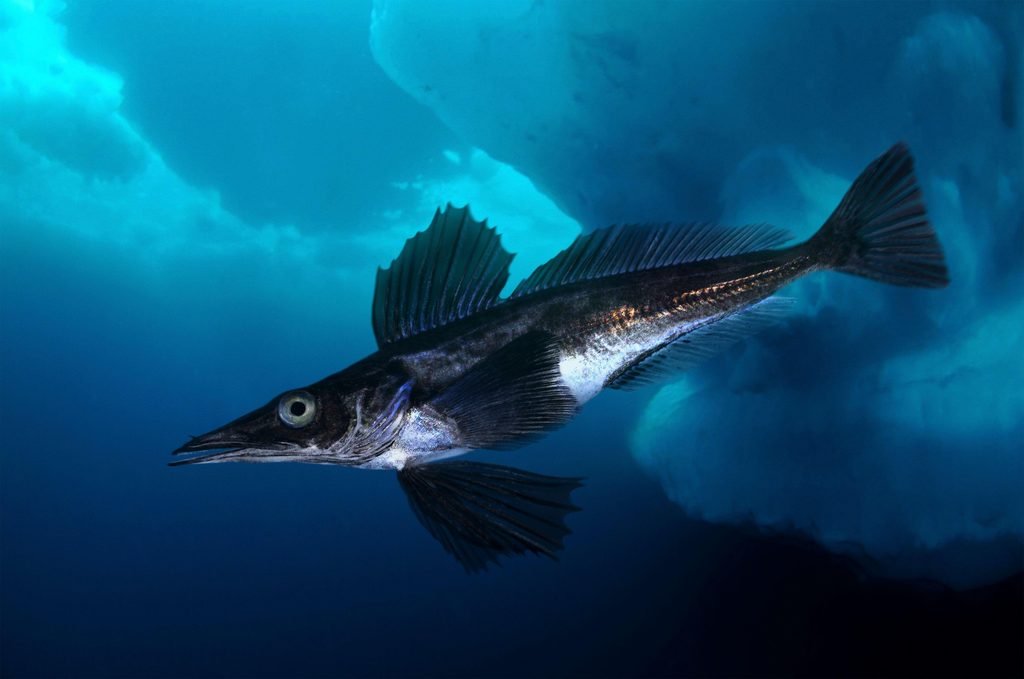
The ocean around Antarctica is brutally cold. The water can reach nearly minus 2°C, cold enough to freeze the body fluids of many fish.
But some Antarctic fish have a remarkable trick. Their bodies produce special proteins that act like natural antifreeze.
Imagine tiny ice crystals beginning to form inside your body. Normally, they could grow and damage your cells. These special proteins get in the way, helping stop the crystals from growing.
It’s a little like putting antifreeze in a car’s cooling system, except these fish make their own protection.
Thanks to this adaptation, they can survive in freezing seawater that would be deadly to many other fish.
Scientists have studied these natural antifreeze proteins for decades. They are also exploring how similar substances might help protect food and delicate biological materials from freezing damage.
Who needs a winter coat when your body has its own built in ice protection?
3. The Frog That Freezes in Winter and Comes Back to Life
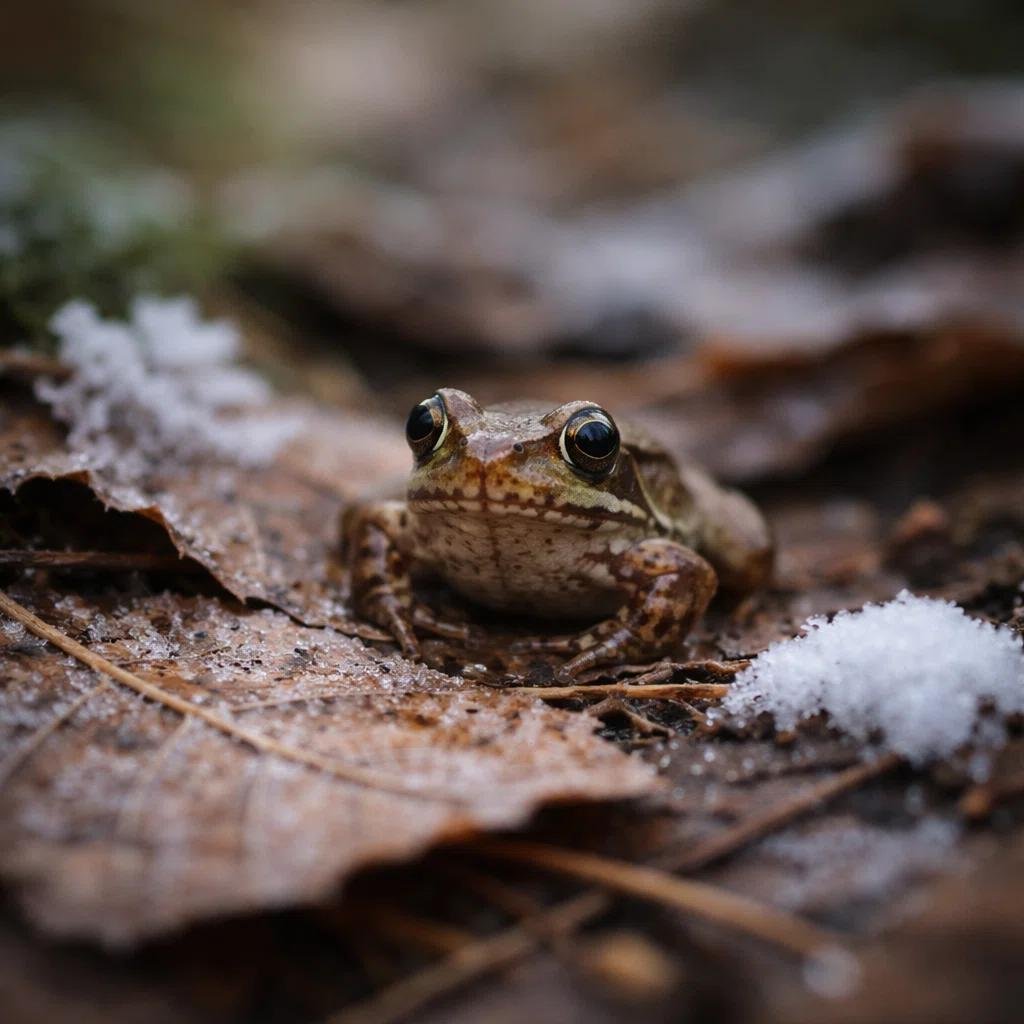
Meet the wood frog of North America. This little amphibian has a winter survival trick that sounds almost impossible.
When temperatures drop far enough, much of the water in its body can freeze. Its heart stops beating, it stops breathing, and it may remain in this state for weeks or even months.
Then spring arrives. The ice melts, the heart starts beating again, and the frog returns to its normal life.
How does it survive something that would kill most animals?
Before freezing, its body releases large amounts of sugar into the blood and tissues. This sugar acts like a protective shield, helping prevent the cells from suffering serious damage as ice forms around them.
The ice mostly forms outside the cells rather than filling them completely. That matters because ice growing inside cells can destroy them.
In a study of wood frogs in Alaska, researchers found that the frogs remained frozen for an average of 193 days. All 18 frogs in that study survived the winter.
But don’t try this at home! Not every frog can survive freezing, and even wood frogs need the right conditions.
For these little survivors, winter isn’t just something to endure. It’s something their bodies are specially equipped to handle.
4. How Camels Keep Their Cool in the Desert

Camels are famous for surviving in hot, dry deserts. But their secret isn’t simply that they can go a long time without water. Their bodies are also clever at managing heat.
Most mammals work hard to keep their body temperature fairly steady. Camels can let it rise during the hot part of the day and cool down again when the desert becomes colder at night.
Why does that help? Because sweating uses water. If a camel had to sweat constantly to stay at the same temperature, it would lose precious moisture much faster.
Camels also have a special arrangement of blood vessels that can help cool the blood reaching the brain under certain conditions. Scientists call this process selective brain cooling. In simple terms, it means the body can help keep the brain cooler than it otherwise might be.
This isn’t a magic air conditioner, and not all desert animals cool their brains in the same way. Camels survive through a combination of heat tolerance, water conservation and other physical adaptations.
In a place where every drop counts, knowing when to release heat and when to save water can make all the difference.
5. Desert Ants That Can Handle Nearly 50°C
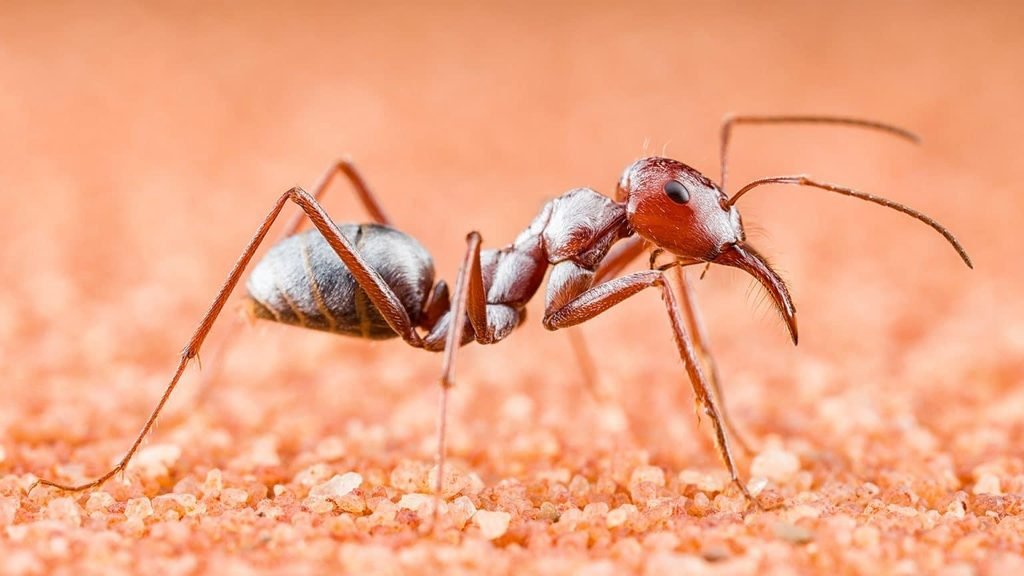
The Saharan silver ant isn’t the only insect that can cope with extreme heat. Other desert ants have developed their own ways of surviving temperatures that would overwhelm many familiar insects.
Researchers studying several ant species found that some can tolerate remarkable levels of heat. In one 2023 laboratory study, the red honey ant reached a median lethal temperature of about 49.8°C after three hours of exposure.
That doesn’t mean the ants can safely live at that temperature forever. It means that, under those specific test conditions, it was the temperature associated with half the tested ants dying.
So what makes desert ants so tough?
Part of the answer lies inside their cells. Some species have protective systems that help important proteins keep working when temperatures rise. Proteins are tiny working molecules that help cells perform their everyday jobs. If heat damages them, the entire cell can struggle.
Desert ants also make smart use of their surroundings. They can take advantage of shade, move quickly and avoid staying in the hottest places longer than necessary.
Different species use different combinations of these tricks. There isn’t one universal solution to desert heat.
For an insect that can fit on your fingertip, surviving a blistering desert is an impressive achievement.
6. What Humans Can Learn From These Extreme Survivors
These animals don’t just make great stories. Their unusual abilities can also inspire scientists and engineers.
The silver hairs of desert ants have attracted interest because they reflect sunlight and help release heat. Researchers are exploring similar ideas for materials that could keep surfaces cooler without relying entirely on electricity.
Natural antifreeze proteins may help protect biological materials from freezing damage. Scientists are investigating how these substances could be useful in food preservation and other areas.
And studying wood frogs helps researchers understand how living cells can survive conditions that would normally cause serious damage.
Of course, we can’t simply copy an ant’s hairs onto a building or use a frog’s freezing trick to make people survive winter underwater. Nature’s solutions are complex, and turning them into practical technology takes time and careful testing.
Still, these animals show that there is more than one way to solve a problem. One reflects heat, another prevents ice crystals from growing, and another protects its cells while much of its body freezes.
Each has its own remarkable strategy.
Nature’s Survival Tricks Are Stranger Than Fiction
From silver coated ants racing across hot sand to frogs waiting out winter in a frozen state, the animal kingdom is full of surprises.
These creatures don’t survive because they are invincible. They survive because their bodies have developed clever ways to deal with the particular challenges of their environments.
And that’s what makes them so fascinating. The next time you think about extreme heat or freezing cold, remember that somewhere in the wild, a tiny animal may already have a solution.
Nature has been experimenting for millions of years. And it still has plenty of tricks left to reveal.
Discover More Amazing Animal Stories
Want to discover more incredible animal survival tricks? Check out these related articles:
🐪 Animals That Can Survive Extreme Heat
🐸 Animals That Can Survive Being Frozen
🌍 Love discovering the wonders of our planet? Join our Wonderful World Telegram channel for more fascinating places, extraordinary animals, and amazing facts about our world.