
You wake up.
You hear a door slam down the hallway.
Someone’s riding the elevator.
Someone’s already heading to the store.
You step outside your apartment.
And you’re already in town.
No streets.
No intersections.
No neighborhood blocks.
Just a long hallway.
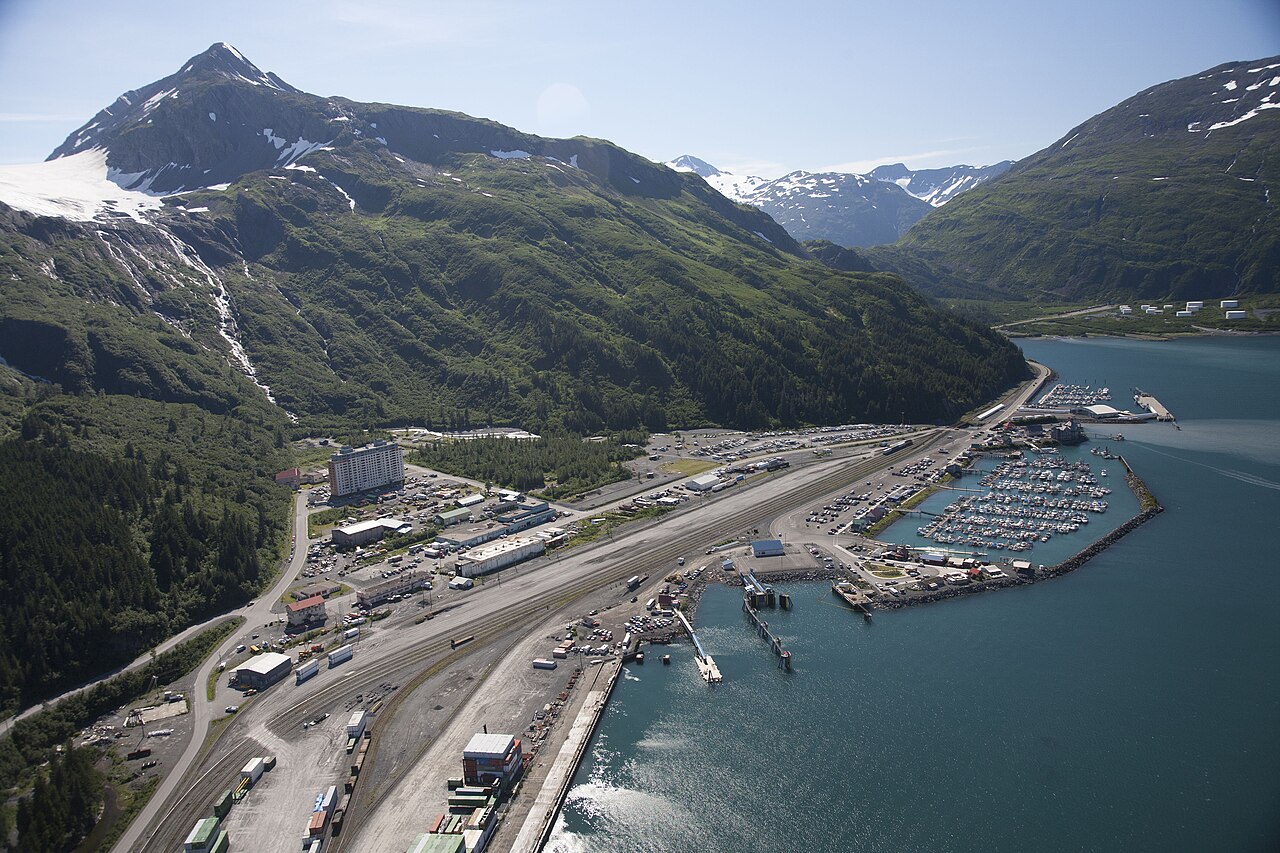
This isn’t some futuristic concept. It’s a real place called Whittier, Alaska. Almost everyone who lives there stays inside one building called Begich Towers.
One building.
Almost the whole town inside it.
How did this even happen?
Whittier started as a military base back in the mid 1900s. The location mattered. Protected harbor. Mountains all around. Access to the ocean.
But the weather is rough.
Strong winds.
Heavy snow.
Long dark winters.
So the military kept everything tight and close together. Housing, services, daily life all within reach.
When the military left, the building stayed.
And people stayed.
Over time, that one structure became the center of everything.
What’s inside?
Begich Towers is more than apartments.
There’s a small grocery store.
A post office.
A laundromat.
City offices.
A police department.
Even the school isn’t sitting somewhere out in the snow. It’s connected by an enclosed hallway. Kids walk to class indoors without stepping into freezing wind.
You could live your whole day without going outside.
Wake up.
Take the elevator down.
Buy groceries.
Pick up mail.
Head back upstairs.
The elevator feels like the town square.
The hallway feels like Main Street.
One tunnel in and out
There’s only one road into Whittier.
A single tunnel cut through the mountain.
It runs on a schedule.
Miss your time slot, and you wait.
That changes how the town feels. Movement isn’t constant. It has a rhythm.
In summer, tourists arrive. Boats fill the harbor. Fishing season kicks in.
In winter, life shrinks back into the building.
How people celebrate
When your town fits inside one structure, celebrations feel different.
On Christmas and the Fourth of July, residents gather in shared spaces. Decorations go up in common areas. People cook together. Kids run through the hallways in Halloween costumes.
In summer, neighbors set up barbecues near the water. Community events happen in shared rooms or just outside when the weather allows.
In a big city, you can ignore your neighbors for years.
Here, that’s not really an option.
If something is happening, the whole building knows.
What about crime?
There’s a local police department inside the building. Officers live close to everyone else.
Statistically, crime rates can look high when calculated per capita. But the population is small, so even a few incidents affect the numbers.
Most issues are typical small town conflicts. Disagreements between people who know each other. Occasional theft. Personal disputes.
When everyone lives under one roof, tension can build faster.
But it’s also hard to stay anonymous.
Everyone knows everyone.
What does it feel like?
The biggest difference is proximity.
You see the same faces every day.
In the elevator.
In the store.
In the hallway.
It creates a tight community.
You can’t disappear the way you can in a major city.
Some residents say they feel safer here.
Others eventually crave more space.
It’s not for everyone.
The contrast outside
Step outside the door and everything expands.
Mountains.
Cold water.
Huge open sky.
Inside, warmth and concrete.
Outside, wild Alaska.
That contrast hits you immediately.
Whittier shows how people adapt to extreme conditions.
A city can stretch for miles.
Or it can fit inside one building.
And still be a real town.
Want to explore something even more extreme? Read our article “Places on Earth Where Humans Don’t Belong.”
And if you’re curious about more unusual places around the world, join our Telegram channel Wonderful World. There’s a lot more waiting for you there.