
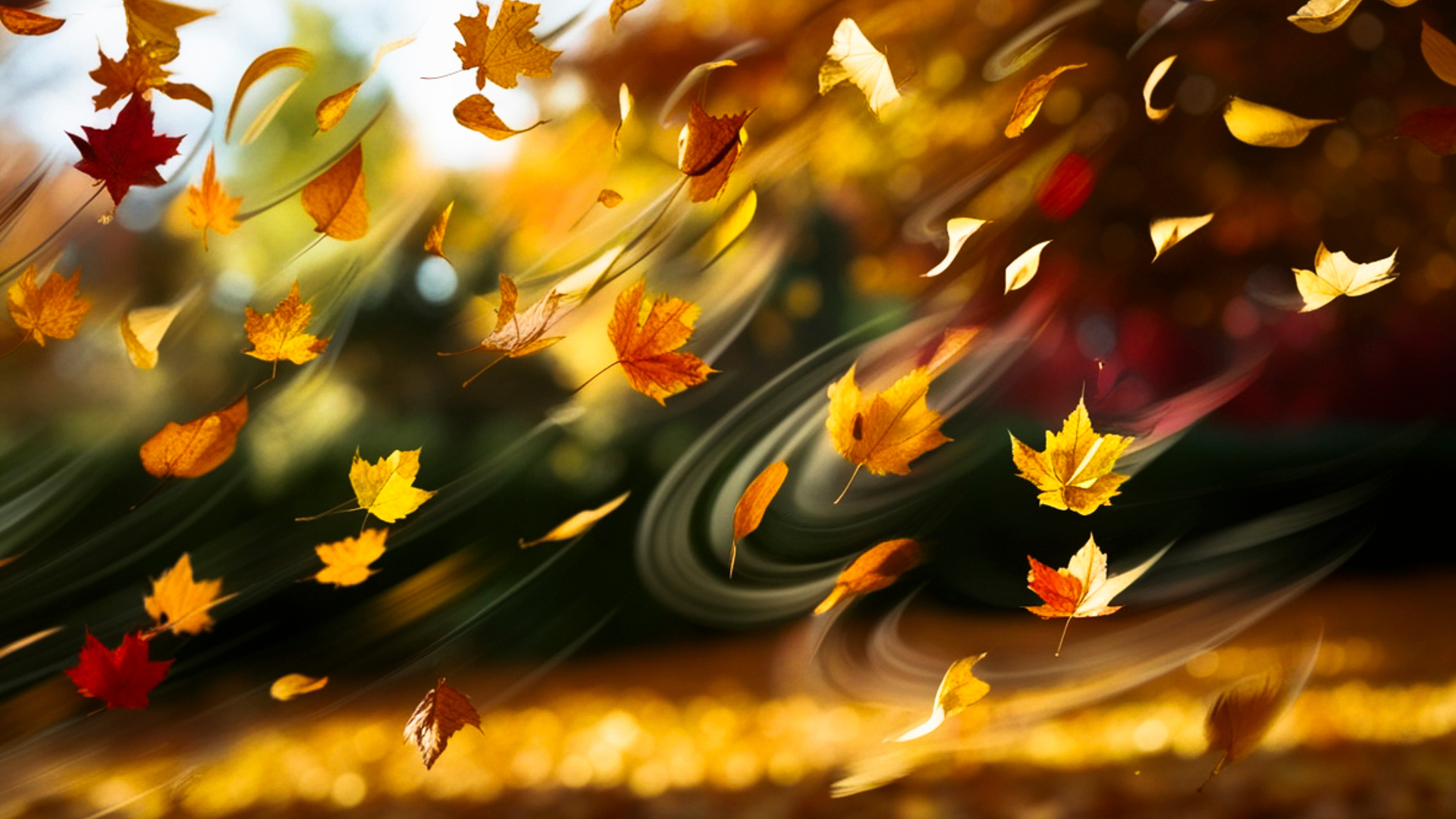
You can’t see it or touch it, but it’s all around us. The wind. Simple, ordinary, always around. But if you stop for a second and really pay attention, you’ll see that the world would be a lot quieter, duller, and probably lifeless without it.
Wind is a big part of how the Earth looks. In Namibia, it builds dunes that are taller than skyscrapers. In the Sahara, it moves entire “rivers” of sand that satellites can see from space. In Mongolia, it’s erasing ancient caravan trails. And in Iceland, it sculpts volcanic ash and salt into strange, living landscapes that look like they belong to another planet.
Sometimes it takes centuries to create a shape, and sometimes just one storm. One night of strong gusts and the land you knew looks completely different by morning.
The Air That Carries Life
The thing is, wind isn’t just moving air. It moves life. Scientists have found pollen from African plants in the ice of Greenland and Asian bacteria floating above Hawaii. It’s amazing how tiny particles like dust, spores, and microorganisms can travel such long distances. They’re carried by invisible hands of moving air.
It’s got a certain smell to it, too — like the rain before it hits, the salty breeze, and that sweet, dusty scent of grasslands. That “smell of freshness” right before a storm? That’s ozone, which is formed when wind mixes layers of air.
If you pay attention, you can read the wind. In the mountains, it’s cold and thin. It tastes like salt because it’s near the sea. In the desert, it’s dry and heavy, like it’s been walking for miles.
How Humans Learned to Listen
Humans and wind have a long history. Without it, we wouldn’t have ships, discoveries, or journeys. Sailors used to be more afraid of calm waters than stormy ones because a ship without wind was a ship without hope.
Every culture tried to explain it in its own way.
The ancient Greeks had Boreas, Zephyrus, Notus, and Eurus — the four brothers of the sky. The Slavs spoke of Stribog, the old god of the winds. Actually, wind is more than just moving air. It moves life. Scientists have found pollen from African plants in the ice of Greenland and Asian bacteria floating above Hawaii. It’s amazing how tiny particles like dust, spores, and microorganisms can travel such long distances. They’re carried by invisible hands of moving air.
It’s got a certain smell to it, too — like the rain before it hits, the salty breeze, and that sweet, dusty scent of grasslands. That “smell of freshness” right before a storm? That’s ozone, which is formed when wind mixes layers of air.
If you pay attention, you can read the wind. In the mountains, it’s cold and thin. It tastes like salt because it’s near the sea. In the desert, it’s dry and heavy, like you’ve been walking for miles.Japan, there was kamikaze, the “divine wind” that, according to legend, destroyed the Mongol fleet in the 13th century. In Egypt, the cool northern wind was seen as a blessing from the gods.
As time went on, we learned not just to fear the wind, but to use it. The first windmills popped up around the 9th century in Persia. These days, wind turbines are powering entire cities. Even so, we’re still dependent on air movement. When there’s no airflow, everything slows down.
Winds with a Personality
Not all winds are the same. Some of them have names, and some of them have tempers.
Sirocco is a hot, dusty wind that blows from the Sahara across the Mediterranean, turning the sky pinkish and the air heavy.
Mistral – cold and sharp, coming down from the Alps into southern France, sweeping the sky so clean it looks unreal.
Foehn is a warm alpine wind that can melt snow in a single afternoon.
The Pampero is a wild Argentine wind that brings storms and sudden drops in temperature.
And let’s not forget Bora, the fierce Adriatic wind that’s strong enough to slam doors and toss waves against the coast with terrifying force.
In Iceland, wind is practically a national resident. Locals say, “If the wind’s not in your face, you’re probably indoors.” It can move cars off the road and bend signposts, and yet — it gives the island its ever-changing light and mood.
Places Where the Wind Lives
There are places on Earth where the wind doesn’t just blow — it rules.
In Patagonia, on the southern edge of the world, it’s always sunny. It howls across plains, bending trees sideways and shaping grass into flowing patterns. The locals say, “Everything here grows at an angle.”
In Iceland, it sculpts clouds, spreads volcanic dust, and creates skies that seem alive — never still, never the same.
In Namib Desert, the wind sings. When it slides between dunes, it makes a deep humming sound — like an enormous organ buried under the sand.
They call it the “birthplace of the wind” in New Zealand. It’s got that salty ocean and wet grass smell, and sometimes it’s so strong you can almost taste it.
And in Norway, between the fjords, the wind whistles and moans like a living thing — sometimes soft, sometimes angry.
Without Wind, the World Would Fall Silent
Try to imagine a world without wind.
There weren’t any moving clouds, waves, or dunes. There’s no smell of rain, no ocean breeze, and no seasons. Even sound would fade because wind gives everything rhythm.
It connects continents, spreads seeds, shapes mountains, brings rain, and drives storms. It builds and destroys—sometimes gently, sometimes brutally.
So next time the wind hits your face, don’t just turn away.
Listen. Maybe it came from far away—across deserts, over oceans, through forests.
It might have a little bit of sand, a grain of salt, or a hint of another world in it..
Why the Wind Matters More Than We Notice
Wind is about more than just the weather — it’s motion, memory, and connection. It connects everything—the oceans, forests, deserts, and people. It’s like the Earth’s breath, and we’re all part of it.
To be honest, we sometimes forget that. We close windows, hide behind walls, and call it “bad weather.” But every gust, every soft breeze, every storm—it’s the planet reminding us that everything’s moving, alive, and connected.
It’s just air, really. But without it, nothing would move, nothing would grow, and the world would be silent.