
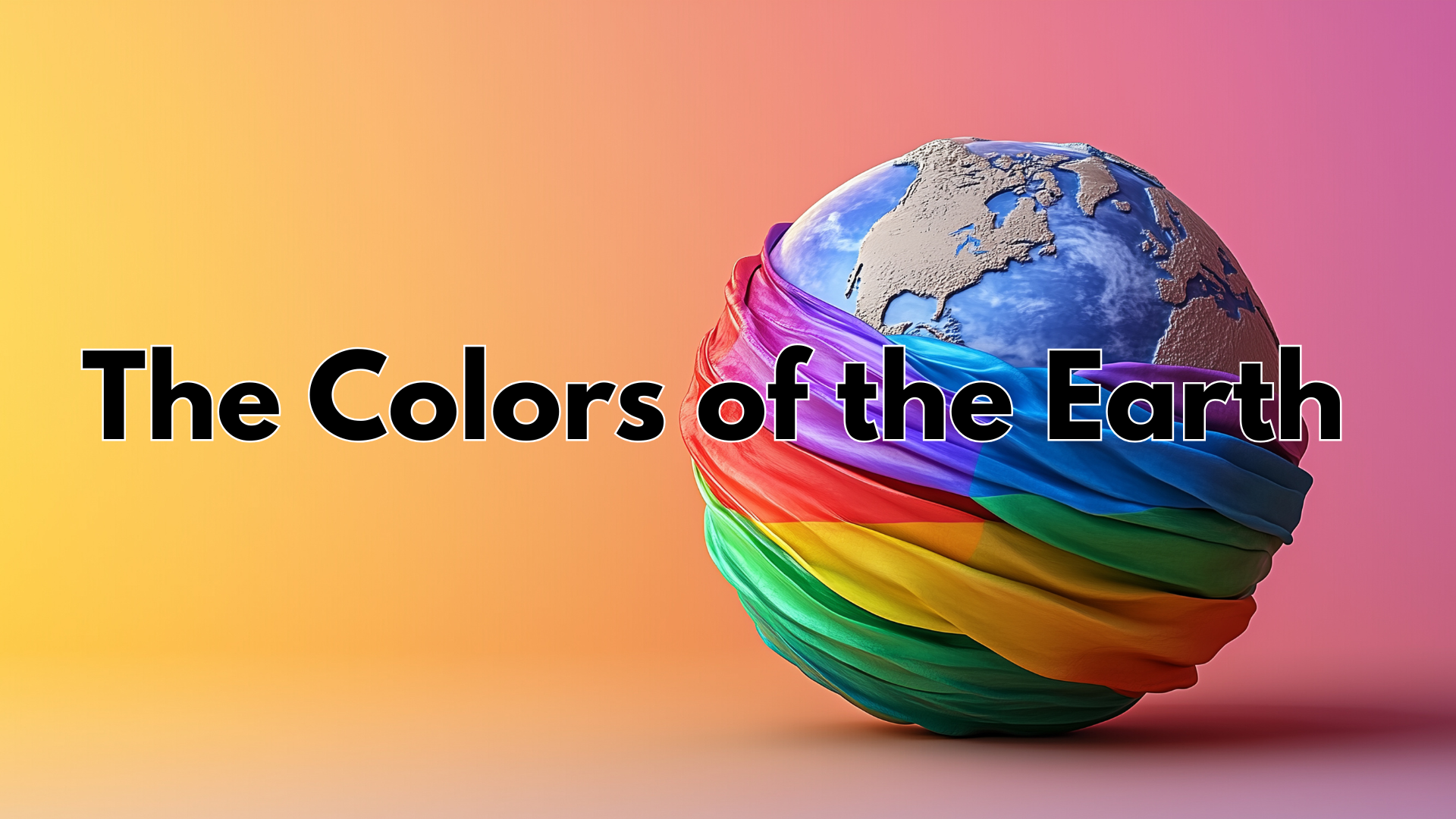
When the Planet Becomes a Palette
If an artist ever needed inspiration, they would only have to look at Earth. Our planet already holds every color imaginable – red, blue, green, white, and gold. Each hue breathes, moves, and changes, painting the surface of the world in endless motion. Earth isn’t just round. It’s alive with color.
Red – The Breath of Fire and Desert

Red is the color of strength. It burns in the sands of the Sahara and Namib, where wind and time carve stone into shades of copper and rust. It glows in volcanoes, where molten rock reminds us that the planet still has a heartbeat.
In Hawaii, fire meets sand – volcanoes breathe out dust that turns soil red and iron-rich. Scientists say it’s iron oxide that gives both Mars and Earth their reddish tones – the color of oxidation, of transformation.
Red isn’t just danger. It’s the pulse of the planet, the color of beginnings disguised as endings.
Blue – The Color of Depth and Calm

Blue is the first color seen from space – the color of oceans, glaciers, rivers, and the morning sky.
But why is water blue? Because it absorbs red light and scatters the blue, tinting the entire planet in serenity.
The sapphire depths of the Pacific, the turquoise lagoons of Polynesia, the frozen blues of Antarctica – every shade holds a story of motion and stillness.
Blue is also illusion. In deserts, it becomes a mirage. On the horizon, it becomes air. In our eyes, it becomes dreams.
Green – The Heart of Life

If Earth has a heart, it beats green. It’s the jungles of the Amazon, the moss on Icelandic stones, the rice terraces of Vietnam, and the pine forests of Siberia.
Green is chlorophyll – nature’s quiet engine that turns sunlight into breath. Without it, there would be no air, no balance, no us.
One mature tree can produce enough oxygen for three people each year. The world’s tropical forests create about 20% of Earth’s oxygen. Every valley, every leaf is part of the planet’s great exhale.
Green teaches patience. It grows slowly, silently, surely. It knows that life isn’t about speed – it’s about endurance.
White – The Color of Silence

White is the color of snow, clouds, and mountaintops – the color that doesn’t shout but hums softly.
The Himalayas shine so brightly under the sun they seem to open a doorway to another realm.
In the Arctic, snow crunches beneath your feet like the planet whispering through ice.
White is memory. In glaciers, scientists find ancient air – tiny bubbles trapped for millennia. Inside them lies the story of past climates and vanished worlds.
But white is fading. Ice melts, mountains darken, and the silence retreats a little more each year.
Gold – The Light That Connects It All

Gold is the meeting point of earth and sun. It glows in desert sands at sunset, in autumn leaves, in minerals buried beneath our feet, and in the shimmer of fire.
Even the northern lights sometimes flash gold when solar particles dance through the atmosphere.
Gold has always meant eternity – but in nature, it’s fleeting. True gold is not a metal but a moment: the world wrapped in light just before night falls.
Seeing the World as a Painter
Red for strength. Blue for depth. Green for life. White for silence. Gold for light.
Together they form Earth – not just a planet, but a masterpiece.
Maybe that’s why, when humans first looked at Earth from space, they didn’t feel pride – they felt tenderness. Beauty doesn’t belong to us. It’s something we’re meant to protect.
👉 Want to keep exploring? Read our story about The Secret Life of Trees.