
You know what’s harder than starting over? Letting go.
Not fighting, not trying again – just… letting go.
Letting go of what didn’t work. Of people who left. Of the version of yourself you used to be.
We hold on to things like old clothes – uncomfortable, worn out, but familiar. Because the thought of living without them scares us. We think holding on gives us control, but really, it just keeps us stuck in the same place.
Why Letting Go Is So Hard
Our brains hate loss. Psychologists call it the sunk cost fallacy – we keep investing in something that’s no longer right, just because we’ve already invested so much.
A relationship that no longer works. A job that drains you. A project that’s going nowhere.
We hold on, not because it’s good for us, but because it’s ours. Letting go feels like losing a part of ourselves.
But here’s the truth: sometimes the only way to grow is to release what no longer fits.
A Story That Stayed With Me
I once read about a woman who kept her ex’s letters for more than ten years. Not because she wanted him back – she just couldn’t throw them away.
She said, “If I get rid of them, I’ll lose a piece of myself.”
Then one day, she took the box, put it in the attic, and said, “Enough.”
Months later, she had a new job, new friends, new passions.
Not because she found something new – but because she finally made room for it.
And that, I think, is the heart of letting go: making space for what’s next.
What Science Says
Studies show that when we can’t let go, the same parts of the brain activate as when we feel physical pain. That’s why heartbreak actually hurts.
But the same brain that clings can also heal.
In one study, people going through breakups spent ten minutes a day focusing on what they had learned from the experience. After a few weeks, their pain levels dropped significantly.
Psychologists call this cognitive reframing – training the brain to see meaning, not just loss.
Letting Go Doesn’t Mean Forgetting
Many people think letting go means erasing – forgetting, deleting, pretending it never happened.
But that’s not true. Letting go doesn’t mean forgetting. It means releasing the weight.
You can remember without hurting.
You can look back without wanting to go back.
Letting go is saying: “Yes, it happened. I’m grateful. But it’s time to move on.”
The Paradox of Control
The more we try to hold on, the faster things slip away.
When we cling to people, ideas, or the past, we don’t preserve them – we crush them.
Life doesn’t respond well to a tight grip.
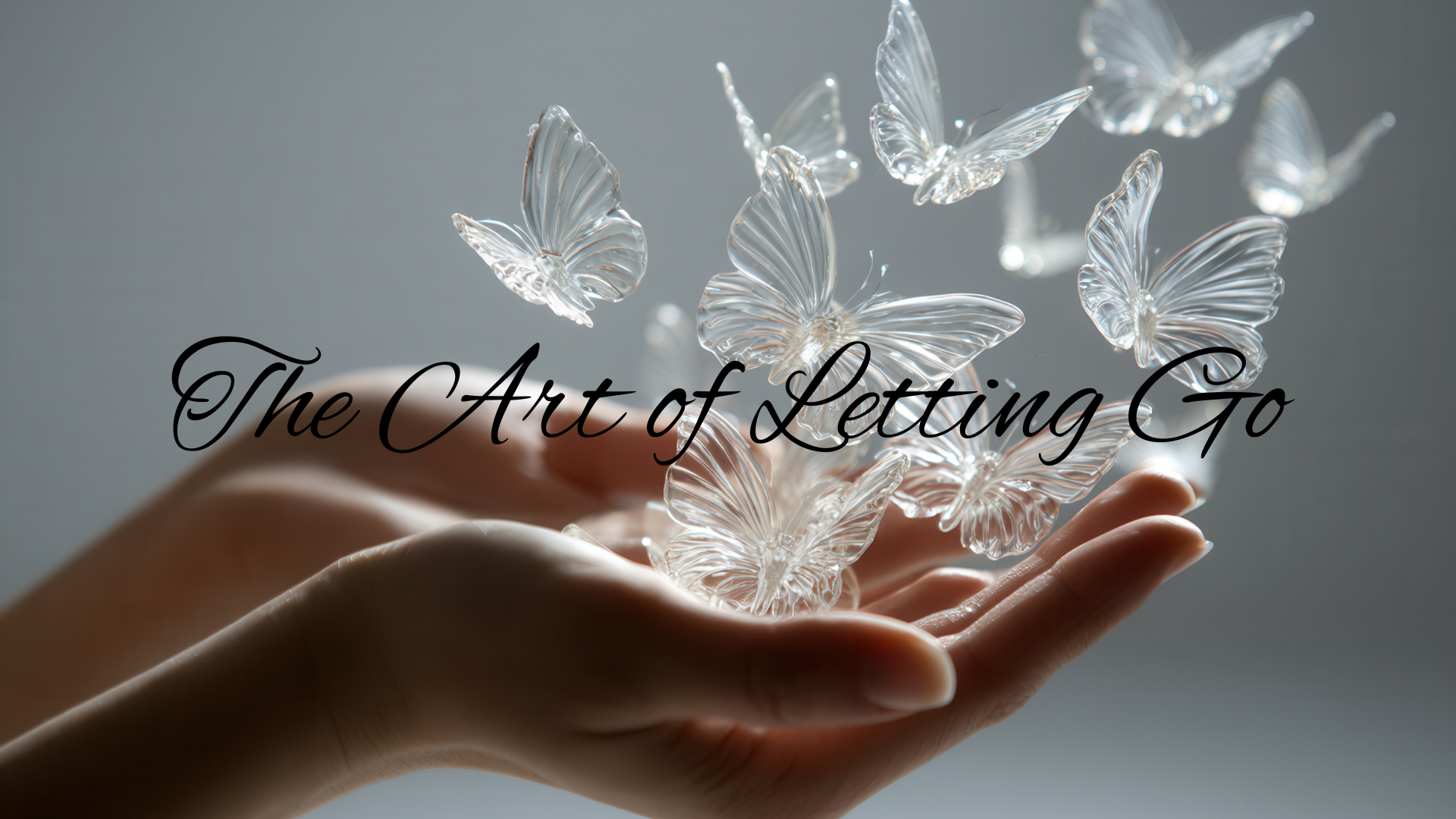
There’s an old story about a man who caught a butterfly. He held it in his hands, afraid it would fly away. When he finally opened them, the butterfly didn’t leave – it just sat calmly on his finger.
Freedom doesn’t run from those who don’t try to trap it.
How to Practice Letting Go
- Acknowledge the pain. Letting go isn’t a single moment – it’s a process.
- Stop blaming. Sometimes no one’s at fault. The story just ended.
- Write it out. Say everything you never said – then close that chapter.
- Clear space. Delete the messages, give away what holds you back.
- Fill the gap. Once something leaves, make space for something new.
A Story of Two Monks
Two monks were walking along a river. One carried a young woman across so she wouldn’t get wet.
Hours later, the other monk said, “You broke your vow – you touched a woman.”
The first replied, “I left her by the river. You’re the one still carrying her.”
That story always gets me.
We carry things long after we’ve put them down – in our minds, in our hearts, in our habits.
Final Thoughts
Letting go isn’t weakness. It’s strength.
The strength to say, “I don’t have to carry everything.”
The strength to believe that what’s ahead can be better than what’s behind.
Sometimes peace doesn’t come from holding tighter – it comes from finally opening your hands.