
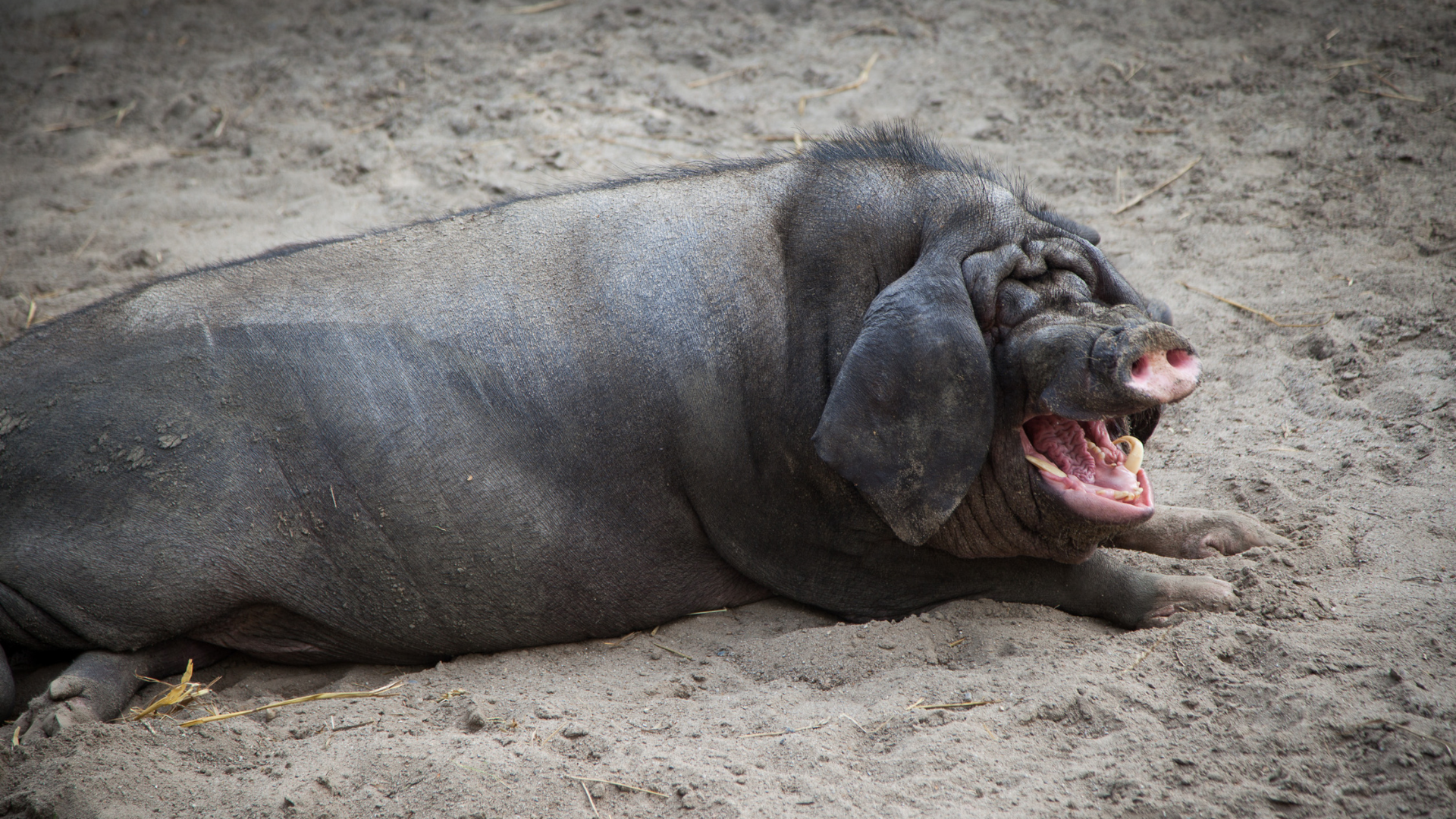
Sometimes you come across an animal that makes you stop and think, “Wait, this really exists?” The Meishan pig is one of those. At first glance, it looks kind of strange – wrinkled skin, long floppy ears, eyes barely visible. But the more you look, the more you start to like it.
This pig comes from China and has been around for thousands of years. Farmers didn’t use science or special tools – they just kept the calmest, strongest, and kindest pigs. Over time, this is how the Meishan breed appeared.
Where it came from
The name “Meishan” comes from a district in Jiangsu Province. It’s a hot and humid area with lots of rice fields. Local farmers needed an animal that could handle heat, eat simple food, and survive without much care. So they kept breeding the ones that did best, and that’s how the Meishan became what it is.
Scientists say this breed has existed for more than 3,000 years. Imagine that – three thousand years, and it still looks almost the same. Wrinkled skin, long ears, dark color – just like it was in ancient times.
What it looks like

The Meishan pig looks very different from most pigs. It has a short face covered with wrinkles, and its long ears hang down over the eyes. The hair is thin and rough, and the skin is dark gray or almost black. At first, some people might even call it ugly. But after a while, it starts to look kind and wise in its own way.
That look isn’t just random – it helps the pig survive in hot weather. The wrinkles hold moisture and protect the skin, while the big ears keep the face shaded and safe from insects. Everything in its body has a purpose.
Calm and kind

The Meishan is one of the calmest pigs in the world. It doesn’t make much noise, doesn’t fight, and rarely causes trouble. It just lives its life quietly, taking things easy.
The most amazing thing about this pig is how caring it is as a mother. A Meishan sow can give birth to 15-18 piglets at once – that’s a record! And what’s even more special – almost all of them survive. The sow is patient, gentle, and takes care of every single one.
In China, people used to believe this pig brings luck, food, and family happiness. You could even see pictures of pigs near house doors, as symbols of wealth and fertility.
Slow growth but high quality
The Meishan grows slowly compared to modern breeds. Many farmers might think that’s a bad thing, but there’s a reason behind it. Its meat is tender, juicy, and rich in flavor – similar to marbled beef. In old China, Meishan meat was considered a delicacy.
People said, “Meishan meat is food for the soul.” Maybe it was just a saying, but it still sounds true today.
What it looks like
Outside of China, people only learned about the Meishan pig in the 1980s. Scientists in Europe and the U.S. were curious – how could one pig have so many healthy piglets?
It turned out to be genetic. The Meishan has unique reproductive traits that make it very fertile and healthy. Because of this, breeders started crossing it with other pigs to improve maternal qualities and hardiness.
So, this ancient Chinese pig suddenly became important for modern science.
The peaceful side of life
Farmers who raise Meishan pigs often say that the animals bring calm to the farm. They don’t fight, don’t panic, and don’t destroy fences. They just live quietly, like they’re meditating.
If you watch them resting under a tree or gently nudging their piglets, you start to feel that they understand something about life – something we often forget: there’s no need to rush.
Why they’re so rare today
Unfortunately, there aren’t many pure Meishan pigs left. In China, they’re raised only in a few provinces. In other countries, they’re mostly kept in research centers or small private farms.
Scientists call them a “living treasure.” In their genes lies the story of survival, patience, and balance with nature.
A quiet reminder from nature
The Meishan pig isn’t just an old breed – it’s a reminder that not everything in life should be fast. It grows slowly, lives simply, and stays calm.
Maybe that’s its real wisdom – being yourself, taking your time, and living in peace.
👉 Want to explore more amazing stories about animals?
Check out our article: Islands Where Animals Rule.