
“I’m sure it was like that!”
Have you ever argued with someone over a tiny detail – a logo, a movie line, a name – absolutely sure you’re right… only to find out you’re wrong?
You could swear it used to be “Febreeze,” not “Febreze.” You remember Darth Vader saying, “Luke, I am your father.” And wasn’t there a cornucopia behind the Fruit of the Loom logo?
None of that ever existed.
Welcome to the strange and fascinating world of the Mandela Effect – where memory bends reality.
Where the name came from
The term Mandela Effect was coined in 2010 by researcher Fiona Broome.
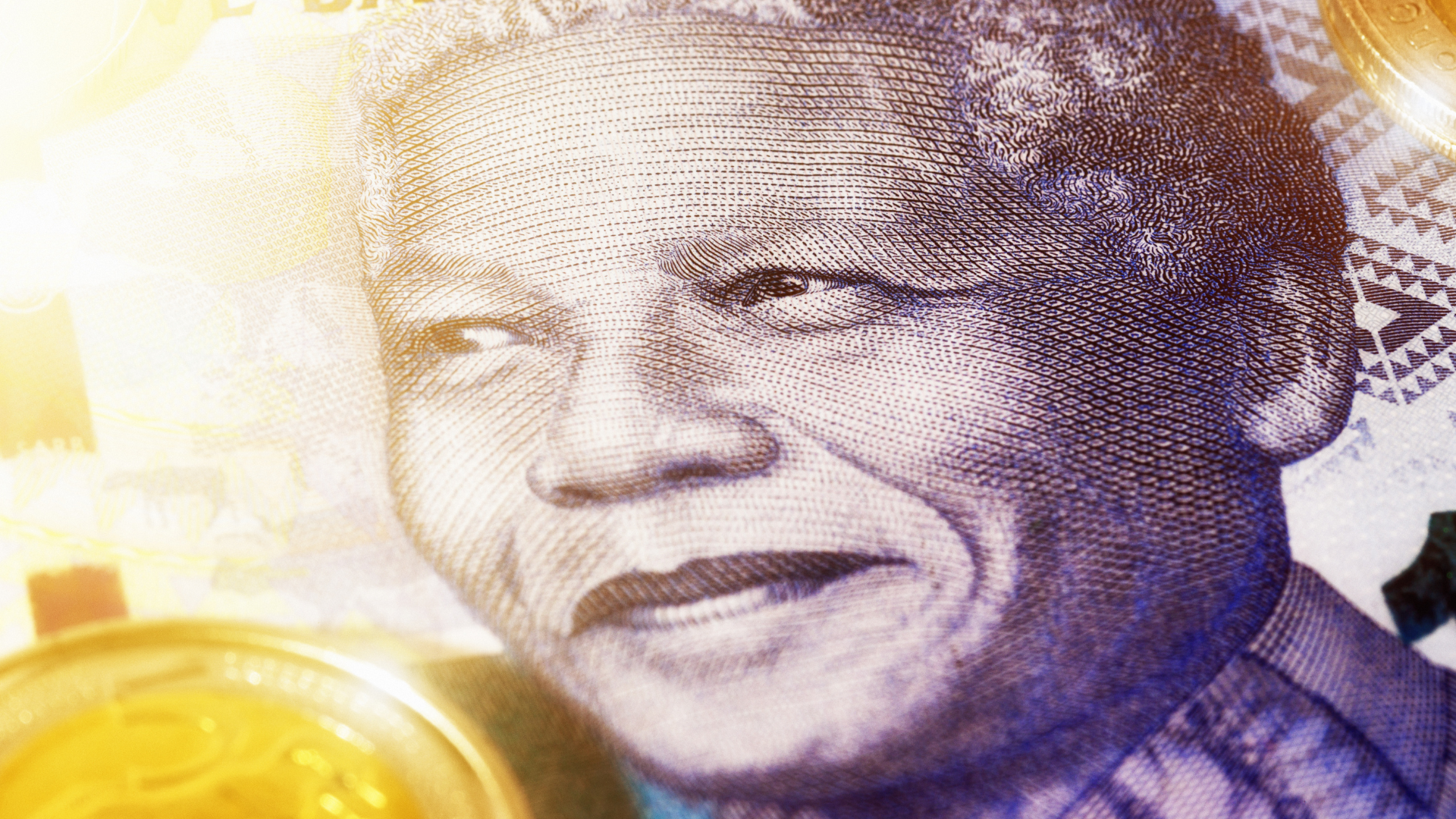
She discovered that thousands of people around the world clearly remembered Nelson Mandela dying in prison in the 1980s – complete with televised funerals and public mourning.
In reality, Mandela was released in 1990 and lived until 2013.
The realization that so many people could share the same false memory sparked a new question:
how can millions remember something that never happened?
What the Mandela Effect really is
The Mandela Effect is a case of collective false memory – when a large number of people confidently remember an event or detail incorrectly.
Some of the most famous examples include:
- Fruit of the Loom – never had a cornucopia.
- “Luke, I am your father” – the actual line is “No, I am your father.”
- The Monopoly man – no monocle.
- The Berenstain Bears – not Berenstein.
- Febreze – not Febreeze.
It’s both funny and unsettling – proof that even collective memory can’t be fully trusted.
Why the brain does this
According to neuroscientists, memory isn’t a recording device — it’s a reconstruction.
Every time we recall something, the brain rebuilds the memory, often filling gaps with logic or emotion.
There are several psychological effects at play:
- Confabulation – the brain invents missing details to make a memory feel complete.
- Suggestibility – we adopt others’ false memories as our own.
- Pattern recognition errors – similar visuals or sounds merge in memory.
- Digital reinforcement – the internet spreads and validates shared errors.
The Mandela Effect is what happens when individual distortions become mass agreement.
The illusion of certainty
The human brain hates contradictions.
When facts don’t match our expectations, it adjusts the memory instead of the belief – a phenomenon called cognitive consistency.
That’s why people affected by the Mandela Effect are often completely certain they’re right, even when shown proof.
It’s not lying. It’s the brain defending its own logic.
How it becomes collective
Before the internet, false memories stayed personal.
Now, shared experiences spread instantly.
When hundreds of people online describe the same false detail, it becomes “evidence” and memory turns social.
Psychologists call this collective confabulation – a shared rewriting of the past.
Science vs. alternate realities
Some theories go beyond neuroscience.
Fans of the paranormal believe the Mandela Effect is evidence of parallel universes, where history differs slightly and people “shift” between realities.
There’s no scientific proof for this, but the idea persists — perhaps because it’s more exciting to imagine timelines colliding than to admit our brains are fallible.
What science actually found
Researchers at the University of Washington ran experiments using false brand logos.
Over 70% of participants confidently chose incorrect versions, even after seeing the real ones.
Brain scans revealed that false and true memories activate the same regions – especially the hippocampus and prefrontal cortex.
Emotion and familiarity, it seems, can override fact.
Classic examples of the Mandela Effect
- Pikachu’s tail never had a black tip.
- The Monopoly Man never wore a monocle.
- “Mirror, mirror on the wall” – the real line is “Magic mirror on the wall.”
- The Fruit of the Loom logo never included a cornucopia.
- The U.S. flag never had 51 stars – though many “remember” seeing it.
Each false memory carries emotional truth, which makes it stick.
What the Mandela Effect tells us about the mind
The phenomenon shows that human memory is creative, not reliable.
It’s not a library of facts – it’s a living story, constantly rewritten.
Every recall reshapes the original.
When millions rewrite together, we get not just a false memory – but a shared myth.
The modern danger of false memory
In the age of AI and deepfakes, the Mandela Effect has evolved from curiosity to warning.
If we already trust our false memories, what happens when fabricated videos or voices confirm them?
In the future, collective illusions may become the new reality – built not by memory errors, but by technology itself.
The Mandela Effect and other memory mysteries
Want to explore more ways the mind bends reality?
- Déjà Vu – the feeling of reliving the present.
- Water Memory – can water remember what it touched?
- Sleep Paralysis – when the mind wakes but the body doesn’t.
Each shows that memory and perception are far more fragile than we think.
Final thought
The Mandela Effect reminds us that reality lives not just in facts, but in how we remember them.
Our minds don’t record – they interpret.
And sometimes, the truth that feels most real… never happened at all.