
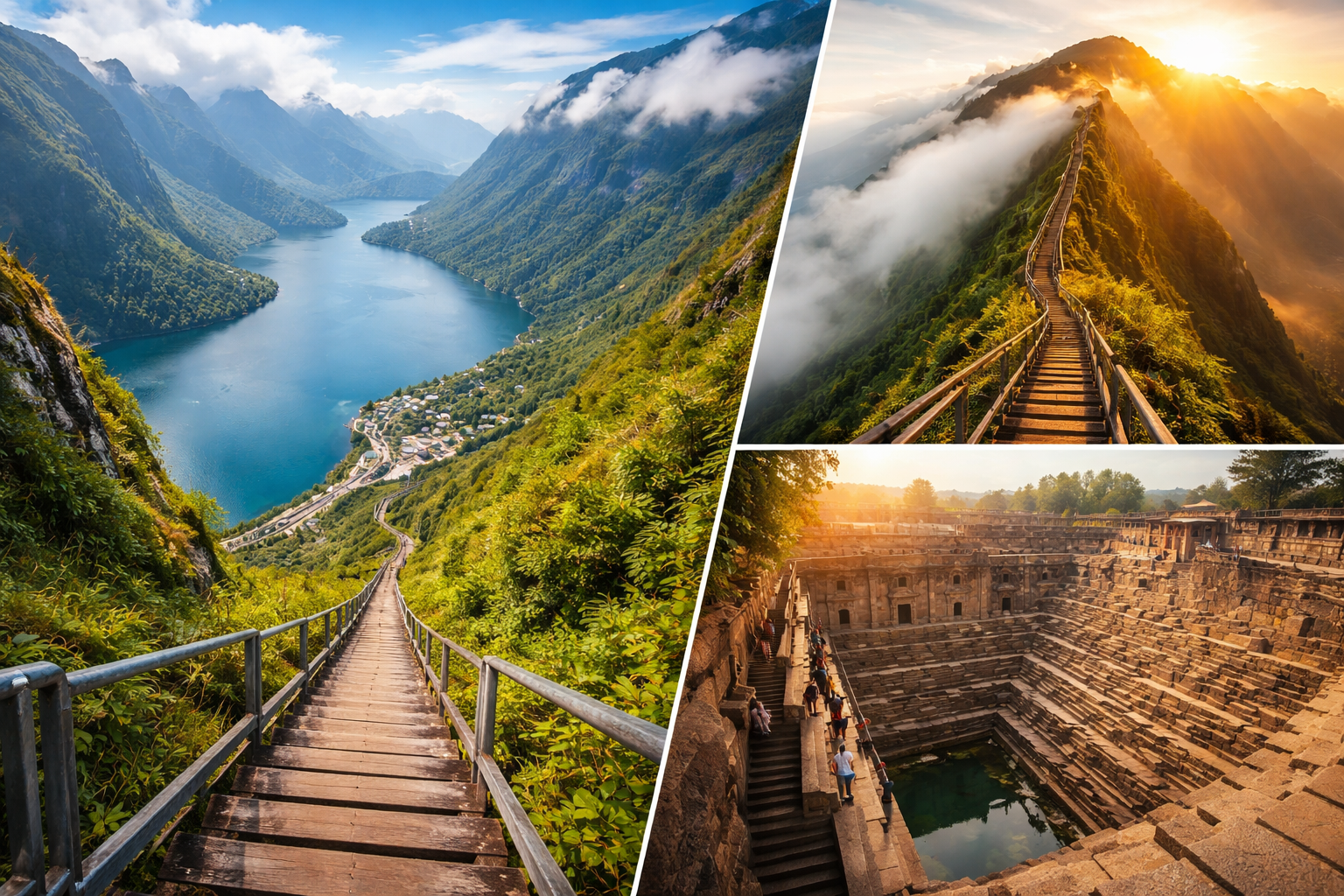
A staircase seems like the simplest thing in the world. A few steps, a railing, a quick climb, and you’re on another level. We’re so used to that motion we barely notice it anymore. Up. Down. Done.
But some staircases can’t be “just walked.”
They don’t connect the first floor to the second. They climb into mountains, into the sky, or down into the earth. Thousands of steps in a row. And behind each one, there’s effort. History. People.
At some point, these places stop being about architecture.
They become about character.
Let’s head to Norway, Switzerland, Hawaii, and India – places where a staircase became part of the landscape and, in some cases, part of people’s lives.
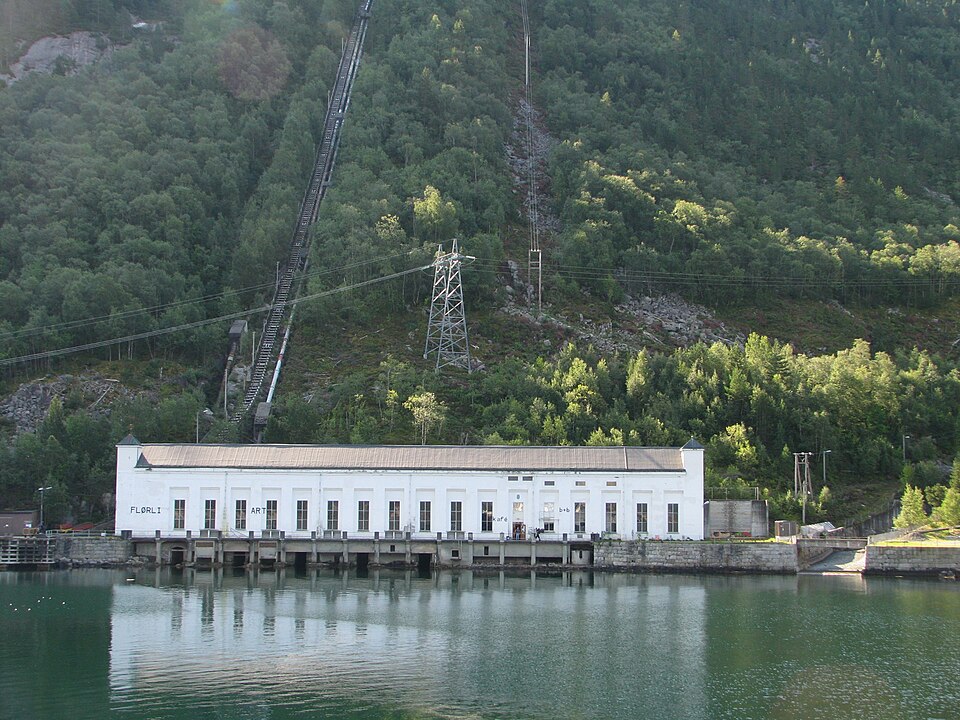
By kalev kevad – originally posted to Flickr as Flørli power station, CC BY-SA 2.0, https://commons.wikimedia.org/w/index.php?curid=8543965
Flørli, Norway – 4,444 Steps Above a Fjord
From the bottom, the Flørli staircase doesn’t look real. A narrow wooden line climbs straight up alongside a massive metal pipe and disappears into the mountains. It feels almost vertical. It’s not – it’s just incredibly steep.
4,444 steps.
This staircase wasn’t built for tourists. In the early 1900s, workers built a major hydroelectric plant here. Water rushed down the pipe from a mountain lake to power turbines below, and workers had to service the system daily. The only way up was on foot.
Rain.
Cold.
Wind coming off the fjord.
It wasn’t an adventure. It was just part of the job.
Today, Flørli is a tiny settlement along the Lysefjord. Very few permanent residents live here. In summer, hikers arrive, a small hostel opens, boats dock at the pier. Still, the place feels remote and quiet.
The climb usually takes two to three hours. The first few hundred steps feel manageable. Then the rhythm shifts. Your legs grow heavier. Your breathing shortens. You start glancing down more often to measure how far you’ve come.
Weather matters. After rain, the wooden steps can get slick. Wind picks up higher up the mountain. There are no widely reported major tragedies here, but visitors are regularly reminded to wear proper shoes and take the climb seriously. This isn’t a theme park attraction. It’s a real mountain route.
Locals don’t treat it like extreme tourism. To them, it’s just part of the scenery – like the fjord or the cliffs. Once a year, they even host a race up the stairs. Some runners fly up all 4,444 steps. Most people move slowly, one steady step at a time.
There’s an unspoken rule: don’t keep staring at the top. If you constantly calculate how much is left, your energy drains faster. Focus on the next step.
There’s something meaningful in that.
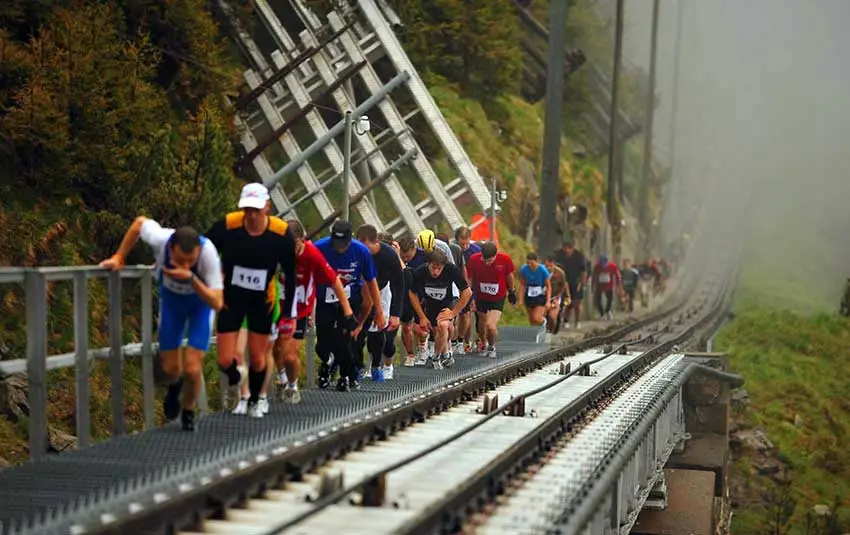
Niesen, Switzerland – 11,674 Steps to the Summit
Mount Niesen in Switzerland looks almost perfectly shaped – so symmetrical that people call it the “Swiss pyramid.” Alongside the funicular railway that carries tourists to the top runs a staircase. It’s the longest in the world.
11,674 steps.
Most of the year, it’s closed to the public. It’s too steep and too long for casual access. The staircase mainly serves as a maintenance route for the railway.
But once a year, everything changes. A race takes place, and participants climb from the base all the way to the summit. Nearly a mile of vertical gain. It’s like climbing a skyscraper – except instead of air conditioning, you have mountain air and gravity working against you.
Locals don’t use the stairs for everyday errands. They take the funicular. Still, the staircase has become part of the region’s identity. Niesen isn’t just a scenic viewpoint – it’s a place that quietly tests endurance.
The number of steps is carefully documented and maintained. Safety matters here. There’s no mystery legend about ancient builders or hidden meanings.
But on race day, when a long line of runners moves up the mountainside, it looks almost unreal – like a slow-moving line drawn across a giant slope.
Here, the staircase is about pure stamina. Numbers. Precision. Discipline.

By Jstan2000 – Own work, CC BY-SA 4.0, https://commons.wikimedia.org/w/index.php?curid=57330719
Haʻikū Stairs, Hawaii – The Staircase That Became a Legend
On the island of Oahu, there’s a staircase many people know as the Stairway to Heaven. Its official name is the Haʻikū Stairs.
Nearly 4,000 metal steps climb along a sharp mountain ridge. The structure was built during World War II so the military could service a radio station high in the mountains.
After the war, the original purpose faded. The staircase remained.
Over time, it became iconic. Photos of people standing above the clouds spread online. Mist rolling in. Green ridges stretching out in every direction. It looked unreal.
But the climb was always demanding and risky. There have been reports of injuries, especially during bad weather or unauthorized climbs. In one case, a visitor died from a heart condition during the ascent. It was a reminder that this structure was never designed for heavy tourism.
Access was officially closed due to safety concerns and the growing number of trespassers. Still, many people tried to sneak in – climbing fences, starting at dawn to avoid fines.
Local residents were divided. Some believed it should be reopened safely. Others argued the traffic damaged the environment and put people at risk.
In recent years, parts of the staircase have been dismantled.
The Haʻikū Stairs became an example of how popularity can reshape a place. It was never meant to handle thousands of thrill-seekers. Yet for many, climbing it felt personal – almost symbolic.
Sometimes, a restriction only makes the climb more tempting.
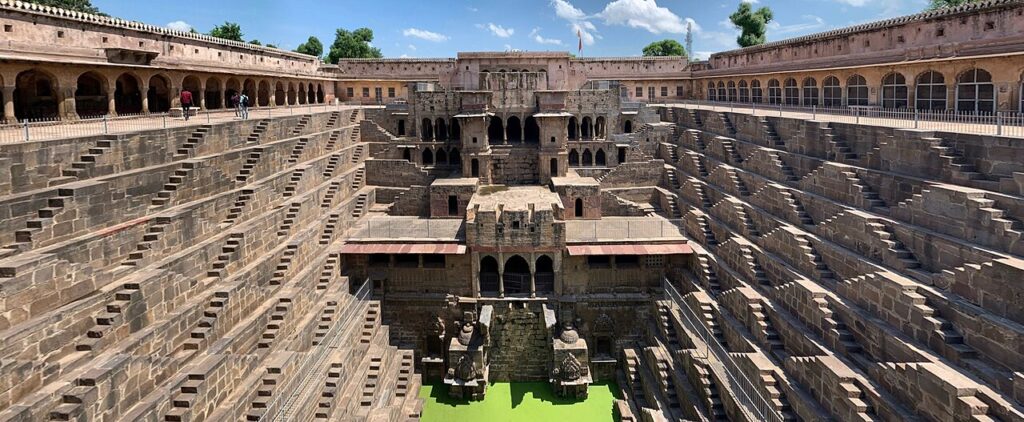
By Chainwit. – Own work, CC BY-SA 4.0, https://commons.wikimedia.org/w/index.php?curid=120762903
Chand Baori, India – 3,500 Steps Downward
In the Indian state of Rajasthan stands a very different kind of staircase. Chand Baori is a stepwell built over a thousand years ago.
From above, it looks like precise geometric art. Rows of stone steps form repeating triangular patterns that descend toward water. Around 3,500 steps create a design that feels almost hypnotic.
This isn’t a climb toward a summit.
It’s a descent into the earth.
In Rajasthan’s intense heat, water has always been precious. Stepwells were engineered so people could reach the water no matter how low the level dropped. The lower the water, the deeper the walk.
Chand Baori wasn’t just a water source. It was a gathering place, a social hub, even a space for rituals. The lower levels offered cool relief from the heat.
There’s a local legend that spirits built the stepwell in a single night because the structure seems too complex for human hands. In reality, skilled craftsmen built it over many years.
Today, access to the lower steps is limited to preserve the site. Still, even standing at the top, you feel the scale of the effort that went into it.
This staircase doesn’t lead upward to a view.
It leads downward to life itself.
Why These Staircases Draw Us In
A staircase is the most honest way to change elevation. It doesn’t let you cheat the distance. There’s no button to press. No shortcut.
In Norway, workers climbed because it was part of the job.
In Switzerland, athletes climb to test their limits.
In Hawaii, adventurers climbed because the challenge called to them.
In India, people descended daily for water.
Different centuries. Different reasons.
But always the same motion – step by step.
Maybe that’s what pulls us in. In a world that keeps speeding up, a staircase slows you down. It demands attention. Patience. Presence.
And when the final step is behind you, something shifts. It feels like you didn’t just move through space – you moved through something internal.
Staircases don’t promise an easy path.
They offer a real one.
Before taking on a climb like this, though, it’s worth remembering the basics. Solid footwear. Enough water. A quick weather check. An honest look at your own fitness level. These staircases are breathtaking, but they are still demanding routes where fatigue and distraction matter.
The view from the top feels better when you earn it safely.
If you’re curious about places where nature pushes human limits even further, read our article “Places on Earth Where Humans Don’t Belong.”
And if you want more stories about unusual places around the world, there’s plenty more to explore on our Telegram channel Wonderful World.