

We usually think of long life as something rare. Extraordinary. But in nature, there are animals for whom a hundred years is basically “still young.” When you start learning about them, you get that real wow effect – as if you’ve stepped into a world where time moves differently.
And here’s the key: these animals don’t just “live long.” Each one has its own survival strategy, its own logic, its own way of making life last. That’s what makes them so fascinating.
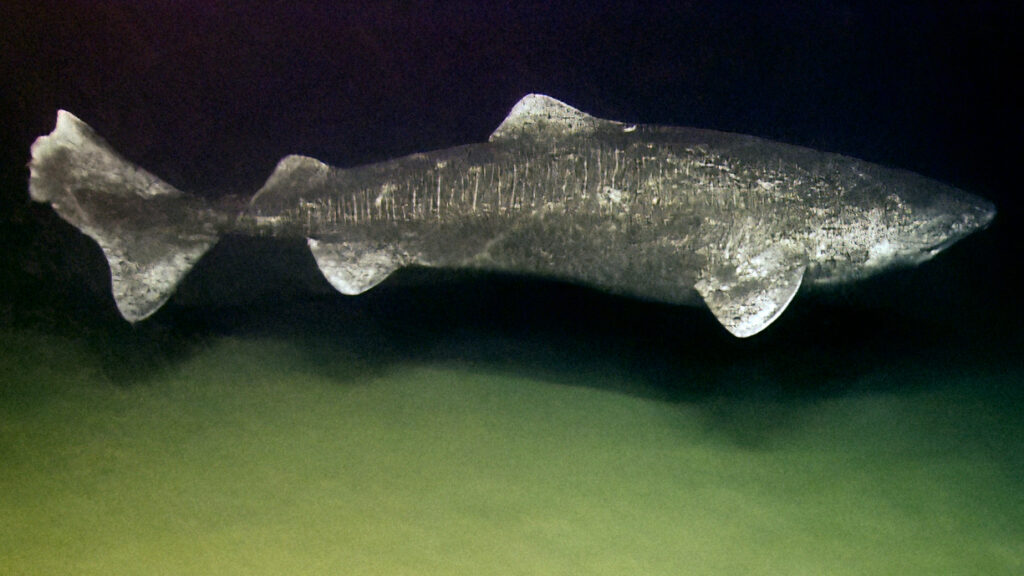
Greenland Shark – an animal that outlives human civilizations
By NOAA Okeanos Explorer Program – http://oceanexplorer.noaa.gov/okeanos/explorations/ex1304/dailyupdates/media/aug16.html, Public Domain, https://commons.wikimedia.org/w/index.php?curid=28162084
When you first hear that a Greenland shark can live 400 years, it doesn’t sink in right away. Four hundred. That’s longer than many countries have existed. A shark born in the 1600s could still be swimming somewhere in the cold Arctic waters today.
Why this is mind‑blowing:
- its eyes have seen a world we no longer remember;
- it has survived eras, wars, and entire human histories;
- it lives so slowly that aging barely affects it.
The idea is simple: a body that uses very little energy wears out incredibly slowly. This shark is like a vehicle that has spent its entire life driving in first gear.
And that’s exactly why it can live so long.
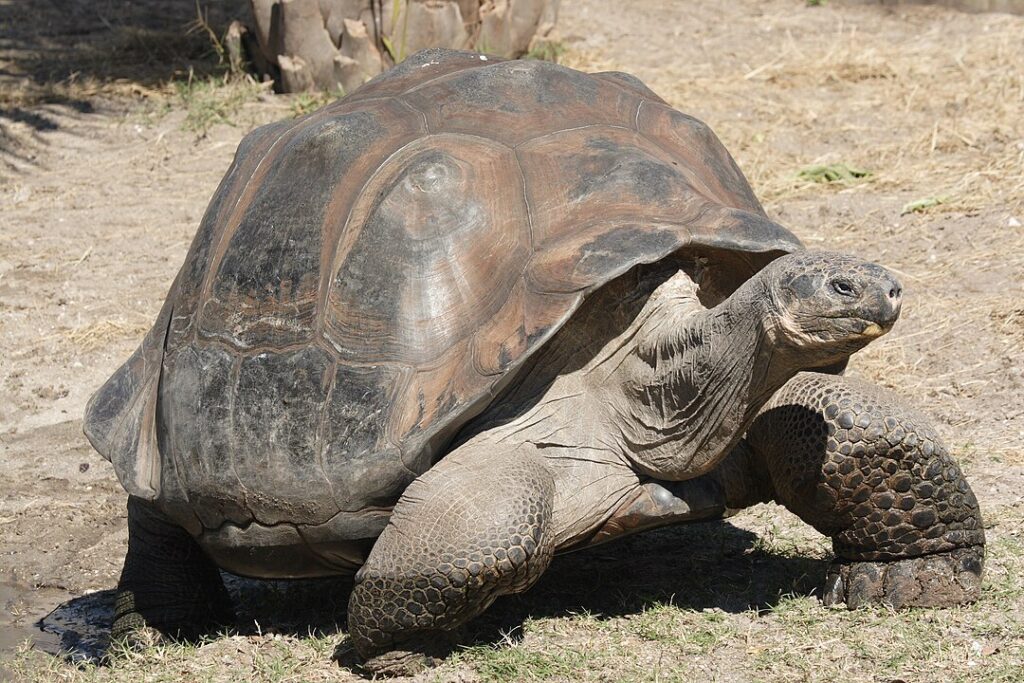
Giant tortoises – animals that live as if time has no pressure on them
Author: Mfield, Matthew Field, http://www.photography.mattfield.com. Own work, CC BY-SA 3.0, https://commons.wikimedia.org/w/index.php?curid=4210424
When you look at a giant tortoise from the Galápagos or Seychelles, it seems like nothing can rush it. And that calmness is its superpower. Tortoises can live 150-200 years, sometimes longer.
The wow factor here is different: A tortoise is a perfect example of how the simple strategy “use energy slowly and steadily” turns into longevity.
Their secret:
- slow metabolism;
- calm lifestyle;
- almost no predators once they reach adulthood.
They don’t waste energy. They don’t live in chaos. They survive by being efficient.
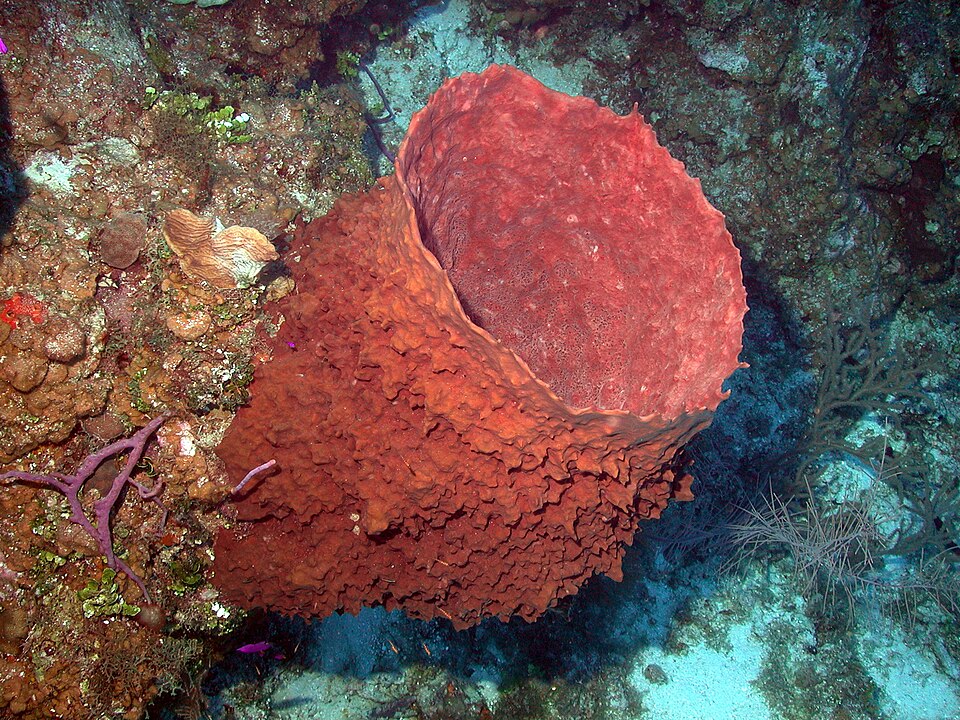
Sponges – creatures that survive ice ages
By Twilight Zone Expedition Team 2007, NOAA-OE . – NOAA Photo Library: reef3860, Public Domain, https://commons.wikimedia.org/w/index.php?curid=17987942
Now this is where the real shock happens. Some marine sponges live for thousands of years. Imagine an animal that started its life long before humans invented writing.
Why this stands out:
- a sponge can stay in the same place for centuries;
- its body can renew itself endlessly;
- it barely shows any signs of aging.
You can think of a sponge as a “self-repairing organism.” It’s constantly fixing small cellular issues before they become real damage.
It’s hard not to be impressed.
Koi carp – fish that outlive their owners
By Unknown – Original publication: UnknownImmediate source: https://www.timesnownews.com/amp/the-buzz/article/worlds-oldest-koi-fish-hanako-lived-for-226-years/724210, Fair use, https://en.wikipedia.org/w/index.php?curid=74473188
Stories about koi living over 200 years sound like myths, but they’re real. One famous koi named Hanako lived 226 years.
The wow effect here is simple: most people think fish live a few years. And suddenly – two centuries.
And all thanks to clean water, stable conditions, and extremely slow metabolism.
Sea urchins – small creatures with almost “ageless” bodies
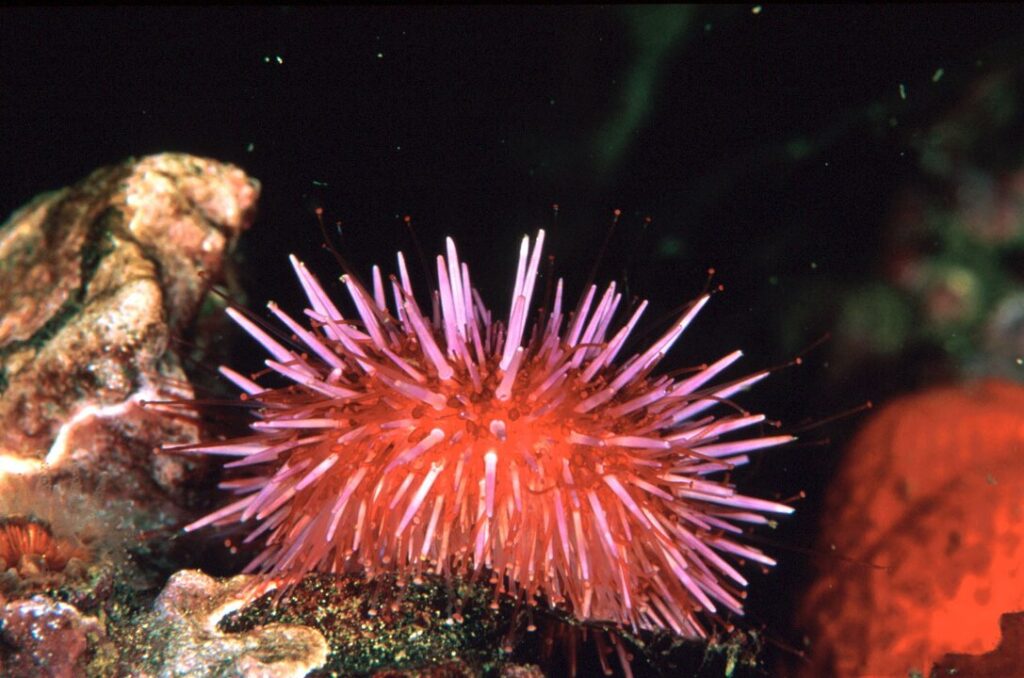
Public domain: https://commons.wikimedia.org/w/index.php?curid=32050
Some species of sea urchins live 150–200 years and show no visible signs of aging. Even at 150, they can reproduce and regenerate just like when they were young.
This is not just longevity – it’s almost the absence of a biological clock.
Albatrosses – birds that return to the same spot for decades
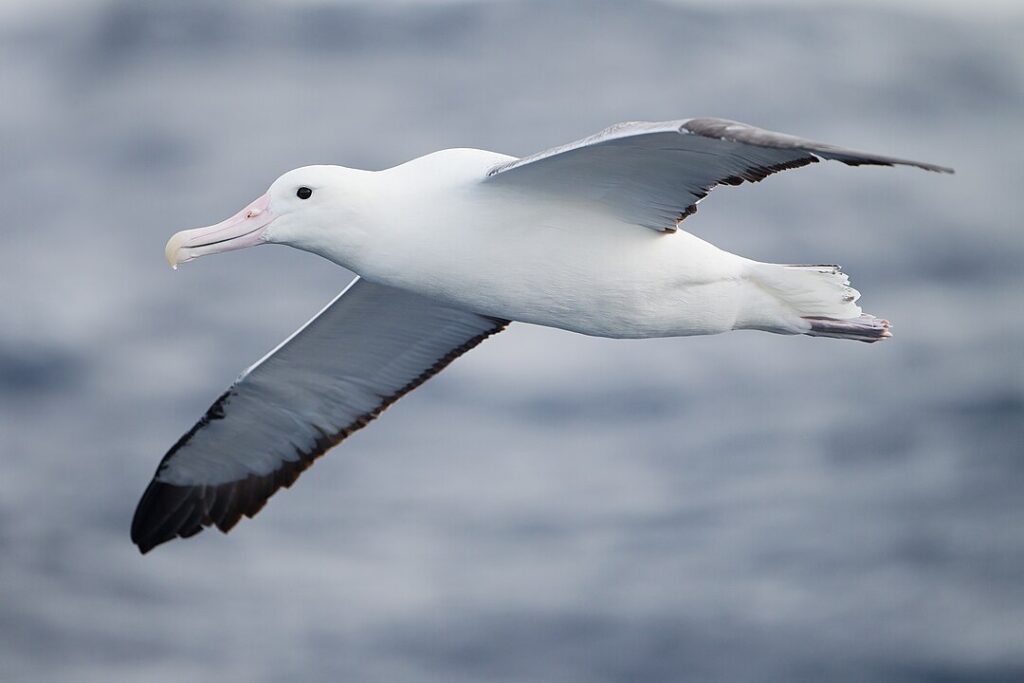
Author: JJ Harrison (https://www.jjharrison.com.au/). Own work, CC BY-SA 3.0, https://commons.wikimedia.org/w/index.php?curid=20759996
Albatrosses can live 60 years or more. But their wow factor isn’t only the number.
What makes them special is consistency: they travel enormous distances across oceans and return to the same tiny nesting spot year after year, decade after decade.
Imagine a bird coming back to the same place after half a lifetime. It’s a kind of loyalty to the world that feels almost human.
What all these long‑lived animals have in common
They’re completely different: a shark, a tortoise, a sponge, a fish, a bird. But they share several traits that explain their astonishing lifespans.
1. They live slowly
Not lazily – economically. They don’t waste energy without a reason.
2. Their environment is stable
Cold deep waters, quiet islands, calm seas. When there’s little change, the body doesn’t have to constantly adapt.
3. They repair themselves better than we do
Some barely age at all. Their cells renew efficiently, and errors don’t accumulate.
4. They don’t compete in the way fast animals do
They don’t rely on speed or aggression. Their survival strategy is endurance, not intensity.
Conclusion – nature shows us that life can follow different rhythms
Reading about these animals gives a strange, thought‑provoking feeling. This is biology, but it also gently nudges us to think about our own lives.
Longevity isn’t always about strength or intelligence. Sometimes it’s about calmness, stability, and the ability not to burn out.
These animals remind us that there are many ways to live and some of them are far more sustainable than the pace we’re used to.
👉 Want to continue? Read the article “Kakapo – the parrot that can’t fly but won the world’s heart.”
Follow Wonderful World Hub on Telegram
Stay updated with new stories, nature insights, mysteries, and deep dives: https://t.me/tgwonderfulworld