
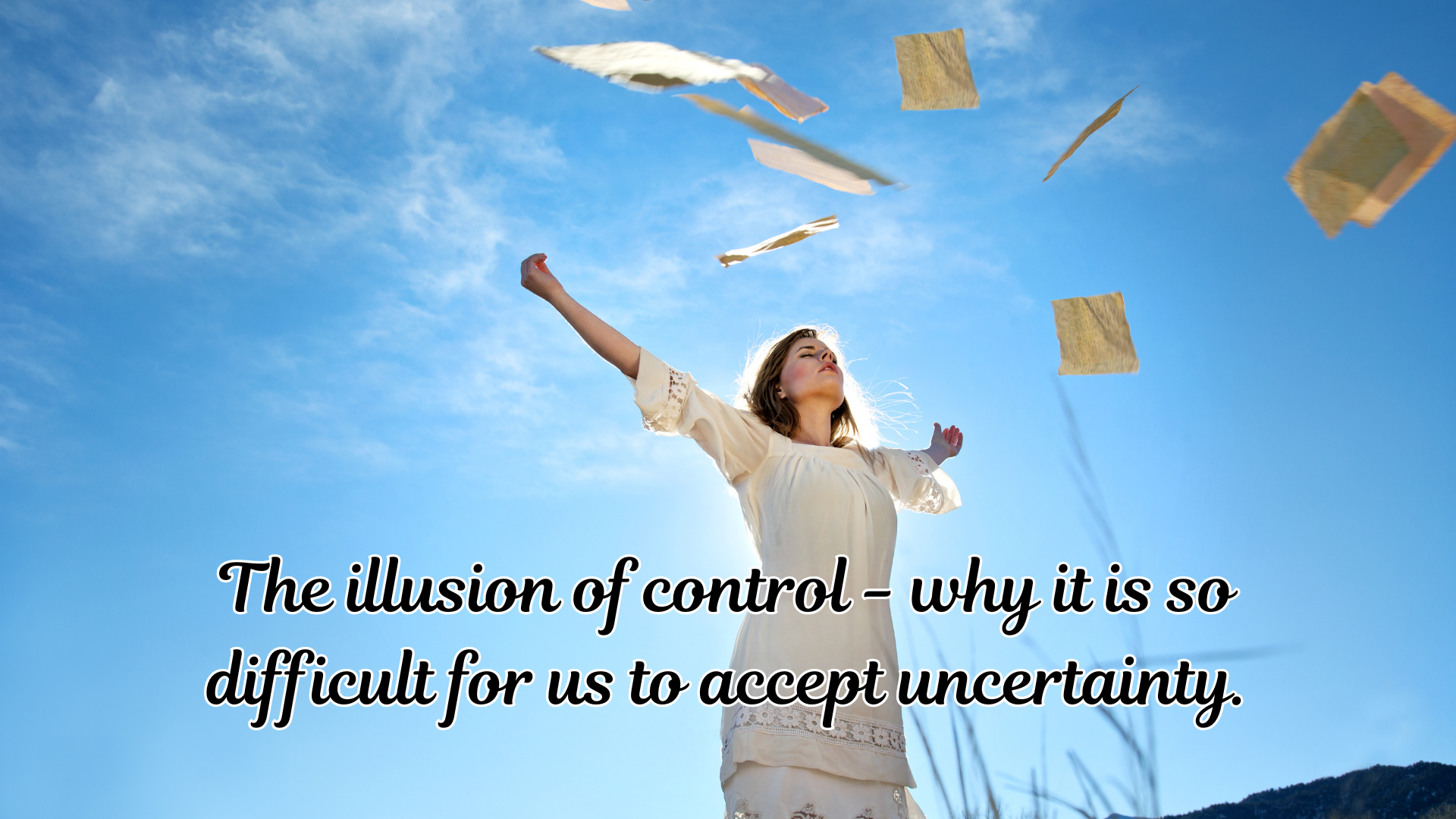
We love predictability so much. We’re planning, calculating, and keeping everything under control as much as possible. It seems like safety, success, and even peace of mind depend on it. But life can be tricky. It doesn’t always go as we plan. The harder we try to keep it in check, the more often we feel anxious, helpless, and confused.
This article talks about why having control is so appealing, how it affects our behavior, and what happens when we finally decide to let go.
We live in a world of control.
From a young age, we’re taught to control our actions, grades, careers, and time. “Pull yourself together,” “be focused,” “it’s all up to you” – these phrases sound like a formula for success. But there’s a dangerous myth out there: that we can control everything.
The reality is different. We can’t control illness, accidents, other people’s feelings, or our own reactions. We can influence and guide, but we can’t control them in the literal sense.
But it’s easier for us to believe the opposite. It’s because control makes things seem stable. And when things are stable, that means there’s peace. Or at least, the appearance of it.
The brain cannot tolerate uncertainty.
Scientists call this “cognitive thirst for order.” Our brains try to make things predictable because it saves energy. When we know what’s going to happen, we don’t have to stress about it.
But as soon as things get uncertain, an ancient survival mechanism kicks in. Your body gets all tense, your pulse starts racing, and your mind starts looking for explanations and patterns. We make scenarios, trying to predict everything, even things that will never happen.
This is how anxiety starts. It’s not so much from the uncertainty itself, but from our resistance to it.
The illusion of control as a defense mechanism.
When we say “I’ve got everything under control,” it’s really just a way of protecting ourselves. It’s a way to overcome our fear of chaos.
We buy insurance, make schedules, plan budgets, and come up with rules, all to convince ourselves that “I can handle this.”
But really, we only control a tiny bit of what happens. The harder we try to expand this zone, the more often we encounter frustration. Because, as we all know, “it is bigger than us.”
How we lose our lightness.
The need to be in control of everything makes life too narrow.
We start to fear mistakes, avoid risks, and think through every step in advance.
And then we’re left wondering why we’re so unhappy, why we’re not as lively and spontaneous as we used to be.
Control can make things more complicated than they need to be. If you’re not flexible, you’re not going to have a strong presence.
Sometimes it feels like we’re not living in the moment, but always looking ahead, like we’re directing a movie but missing the action.
Letting go does not mean giving up.
There’s a big difference between doing nothing and accepting things.
Acceptance isn’t passivity. It’s realizing that not everything depends on us.
It’s when you stop fighting the current and start going with the flow.
Psychologists call this radical acceptance. When you stop arguing with reality and focus your energy on making a difference – in your reactions, decisions, and attitudes.
When you let go, it’s not about giving up. It means accepting what’s going to happen.
When control becomes a trap.
There’s a bit of a paradox here: people who try to control everything often end up feeling the most helpless.
This is because any deviation from the plan is seen as a failure.
As soon as something goes wrong, the whole internal order just falls apart.
We start to blame ourselves, look for someone else to blame, and get anxious. But really, that’s just life, with its ever-changing tempos.
The illusion of control won’t protect us from chaos – it’ll just make it more painful.
Acceptance as a form of power.
Being strong doesn’t mean you have to keep everything under control.
But what about maintaining stability when control is impossible?
When we accept uncertainty, we don’t lose our footing; we learn to stand on the waves.
Where there was panic before, there’s trust now.
It’s not about the circumstances, it’s about what’s inside us.
Life doesn’t get easier, but it does get more real.
And with that comes a quiet sense of inner freedom.
Small steps towards acceptance.
- Take a look at when you start to “control” everything.
Ask yourself: what am I really feeling right now – control or fear? - Know the difference between influence and control.
You can influence, but you can’t always control. This isn’t a sign of weakness; it’s a sign of maturity. - Learn to leave room for surprises.
Sometimes the best things happen when you stop planning everything. - Practice trust.
It’s not blind trust, but conscious trust. Have trust in life, time, and the process.
And finally, a little silence
At the end of the day, control is just an attempt to hide from things you can’t predict.
But that’s exactly what makes life interesting.
When we stop trying to hold on to everything, we suddenly notice how the air becomes deeper, our thoughts clearer, and time more vivid.
The world doesn’t become less chaotic, but it doesn’t seem as hostile either.
We don’t have to know everything ahead of time.
Sometimes, being yourself is all you need.
👉 Want to continue reflecting? Read our article “The Art of Letting Go.”
.