
Imagine this.
You do the work. You follow the rules. You earn your reward. Then you watch someone else do the exact same thing and get twice as much.
Something tightens inside you. That quick flash of irritation. That feeling that something is not right.
We call that unfair.
For a long time, people believed that kind of reaction belonged only to humans. It seemed to require morality, abstract thinking, an understanding of rules and equality.
But studies on animals have started to challenge that assumption.
There are no courts in the wild. No written rules. No moral codes.
There is survival. And there is cooperation.
And surprisingly, cooperation may depend on something that looks a lot like fairness.
The Cucumber and Grape Experiment
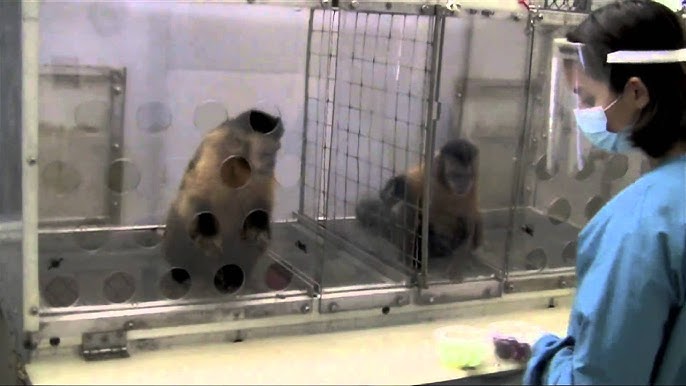
One of the most famous studies involved capuchin monkeys.
Two monkeys were given the same simple task, such as handing a small stone to a researcher. In return, they received a reward. At first, both monkeys were given a slice of cucumber.
Everything was calm.
Then one monkey received a grape instead.
Grapes are far more desirable to capuchins.
The monkey who still received cucumber suddenly changed behavior. It refused the reward. It threw the cucumber back. It banged on the enclosure. Sometimes it stopped participating entirely.
The key detail is comparison. The reaction did not happen when the monkey was alone. It happened when it saw another monkey getting more for the same effort.
That response looked very close to protest.
Dogs and Unequal Rewards
Similar patterns have been observed in dogs.
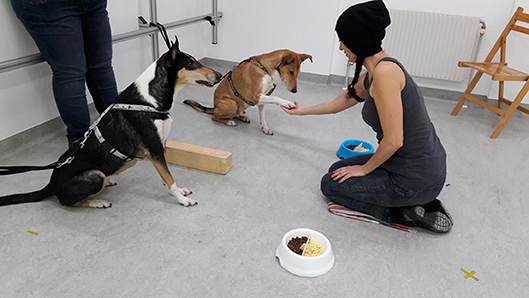
In one experiment, two dogs were asked to perform the same command, such as giving a paw. One dog received a treat. The other received nothing.
At first, both dogs continued to comply.
After several rounds, the dog that received no reward began to turn away. It refused to give its paw. It disengaged from the task.
Interestingly, when neither dog received a treat, the reaction was weaker. Once again, the difference in reward mattered more than the absence of reward itself.
That suggests sensitivity to imbalance, not just hunger.
Fairness Inside Social Groups
In highly social species, cooperation is essential. Primates, wolves, and even some bird species track who contributes and who does not.
Individuals are more likely to help those who helped them before. They may avoid or exclude individuals who consistently take without giving back.
This system of reciprocity helps stabilize the group. It is not written down anywhere. No one explains it. Yet it influences behavior.
Balance seems to matter.
Is It Envy or Fairness
This is where the debate begins.
When a monkey throws back a cucumber, is it simply jealous of the grape. Or is it reacting to unequal treatment.
Some researchers argue that it is just a response to seeing a better reward. Others believe the reaction reflects an expectation of equal exchange: equal effort should bring equal outcome.
The truth may lie somewhere in between.
Animals may not reflect on fairness the way humans do. They are not debating ethics. But they appear sensitive to violations of balance within social interaction.
And that sensitivity has consequences.
Why This Changes the Picture
If animals react to inequality, then their social world is more complex than a simple collection of instincts.
Sensitivity to fairness strengthens cooperation. It reduces long term conflict. It encourages stable partnerships.
Human morality may not have appeared out of nowhere.
It may have grown from ancient biological mechanisms that once helped our ancestors survive in tightly bonded groups.
Do animals have a sense of fairness in the full human sense.
Probably not.
But they clearly respond to imbalance. They expect reciprocity. They withdraw when the rules feel broken.
And if you think about it, that may be exactly where fairness begins.
If animals react to unfairness, how far does their social intelligence really go?
Can they deceive each other to gain an advantage?
And what happens when memory and strategy start to look like revenge?
Continue the series:
Animals That Take Revenge Myth or Reality
Telegram
Wonderful World