
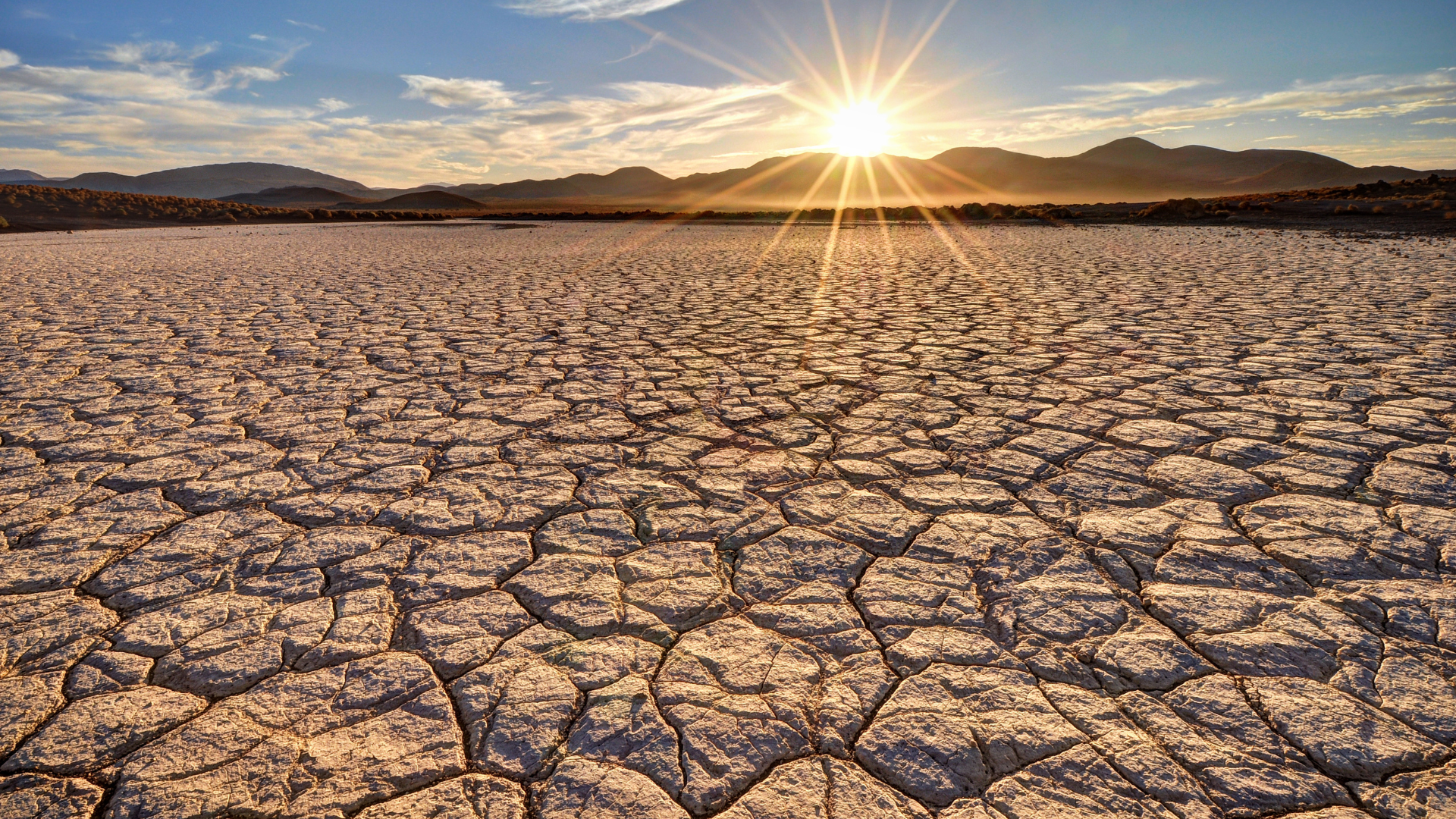
When a Desert Is More Than Empty Land
Deserts often seem lifeless and silent. Yet behind the endless dunes and salt plains lie stories as powerful as those told by mountains or oceans. These are places where time stops, where ancient seas left their marks, where caravans vanished, and where myths still linger in the sand.
Sahara – The Sea Turned to Sand
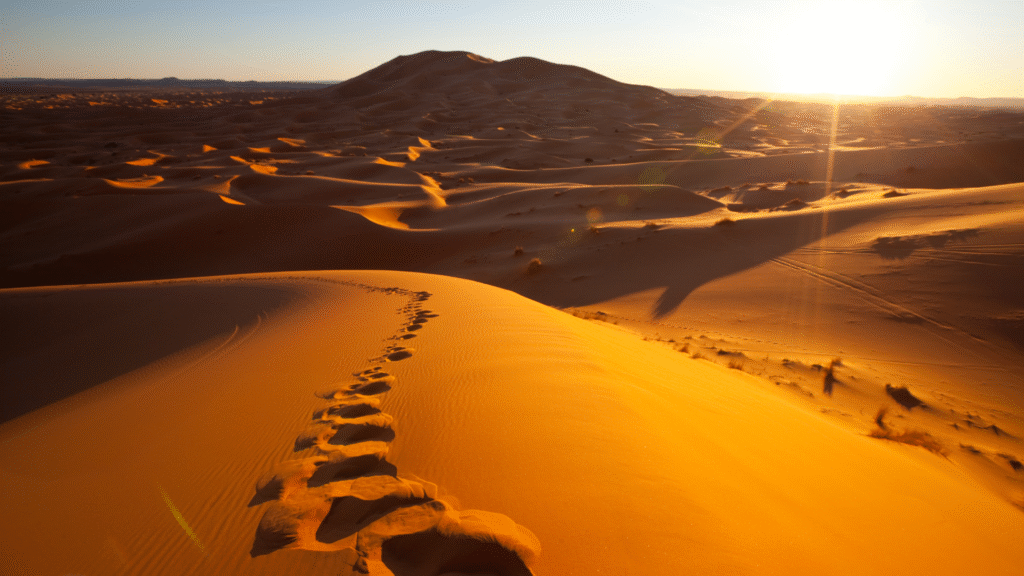
The Sahara, the world’s most famous desert, is often called “the sea without water.” Millions of years ago, it truly was a sea – fossils of whales and seashells still rest under its dunes.
On the rocks of Tassili n’Ajjer, ancient people painted hunting scenes, dancers, even boats – proof that rivers once flowed here. Legends speak of lost cities swallowed by the sands. The most famous is Ubar, “Atlantis of the Sands,” said to have vanished in a storm. Satellite images in the 21st century revealed traces of walls and roads beneath Oman’s dunes, rekindling the myth.
Atacama – Earth’s Closest Thing to Mars
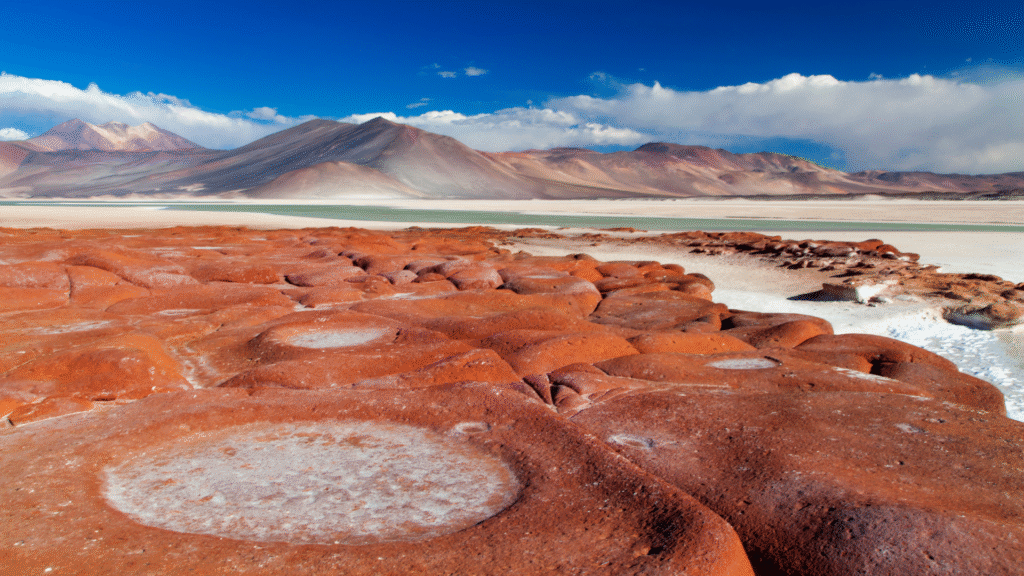
In Chile lies the driest desert on Earth: Atacama. Some places here haven’t seen rain for centuries. Its landscapes are so alien that NASA tests Mars rovers among its red rocks and barren valleys.
Yet Atacama is also a place of wonders. The ALMA Observatory, with dozens of white radio dishes, listens to the universe in silence. Astronomers call it one of the best windows to the stars. The desert also preserves meteorites perfectly – fragments from space lying untouched for thousands of years. In Atacama, Earth and cosmos meet.
Namib – The Red Dunes and the Dead Forest
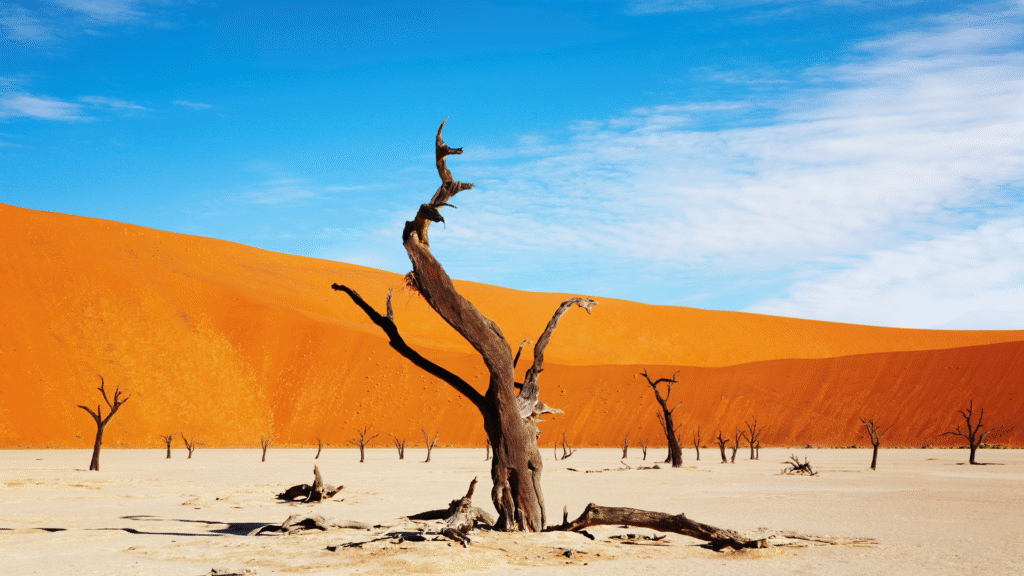
Along Namibia’s coast stretches the Namib, the world’s oldest desert – more than 55 million years old. Its dunes rise 300 meters, glowing red in sunrise and sunset.
At its heart lies Deadvlei, the “dead marsh.” Here stand blackened trees, long dead yet perfectly preserved for six centuries, frozen in time by the arid air. Nearby is the Skeleton Coast, where shipwrecks rust among whale bones. Sailors once feared this place more than storms – because if the sea didn’t kill you, the desert would.
Gobi – Caravans and Dinosaurs
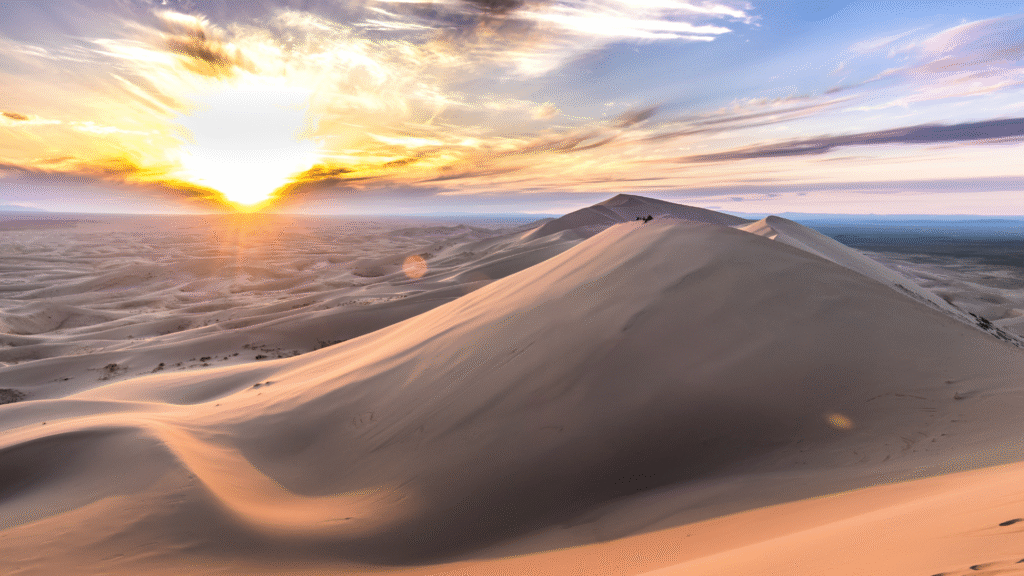
The Gobi, spread across Mongolia and China, is less sand and more endless steppe and rock. It was the harsh stage for Silk Road caravans, carrying silk, spices, and gold across its windswept plains.
In the 1920s, explorers found the first dinosaur eggs here – proof that giants once walked this land. The Flaming Cliffs of Bayanzag still reveal fossils today. Local legends also speak of the “death worm,” a mythical creature said to live under the sands. Scientists never found it, but the myth persists, giving the Gobi an air of mystery.
Lut – Iran’s Sea of Fire
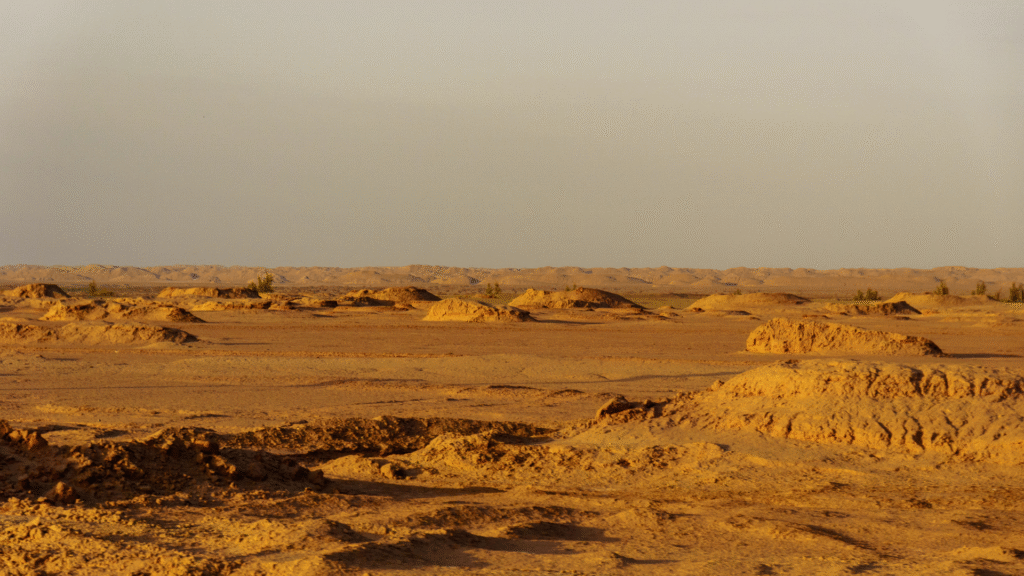
The Lut Desert in Iran is a record-breaker. In 2005, satellites measured its surface at 70.7°C – the hottest ever recorded on Earth. Locals call it Dasht-e Lut, the “Empty Plain,” but its landscapes look like another planet: dark ridges of rock, glowing salt flats, and sand sculpted into shapes by wind.
Birds cannot cross it by day, and caravans once traveled only at night, guided by stars. To walk into Lut is to step into fire itself.
Why Deserts Guard Stories
The Sahara with its lost cities. Atacama with its cosmic silence. Namib with its red dunes and dead forest. Gobi with its dinosaurs and caravan trails. Lut with its fiery heat.
Each desert looks empty. But every one is a book written in sand, full of legends, fossils, and whispers of history. You only need to pause, listen, and let the desert tell its tale.