

When you hear the phrase “dark DNA,” it sounds like something from a sci‑fi series – mysterious, hidden, maybe even a bit spooky. But the reality is much cooler: scientists have actually found parts of the genome that don’t fit into any of the rules we thought were universal. They’re real, they’re functional, organisms literally depend on them – but figuring out how they work is still a big question mark.
“Dark” here doesn’t mean dangerous. It just means our tools and our understanding… well, they kinda fall apart when we try to read these sections.
The more you dig into the topic, the clearer it becomes: biology still has places that look like blank spots on the map.
How the whole story started and why nobody saw it coming
It all began with animals so tiny and innocent-looking, you’d never expect trouble from them: gerbils (Meriones, for example the Mongolian gerbil Meriones unguiculatus).
Researchers were sequencing their DNA, expecting a totally normal set of essential genes. You know – the ones responsible for DNA repair, recombination, immunity… nothing unusual.
But suddenly something didn’t add up.
A chunk of genes that HAD to be there simply didn’t show up in the sequencing data.
The funny part? The animals were fine. Completely functional. Healthy. Active.
So the functions existed – but the genes that should encode them were nowhere in sight.
Scientists thought they’d made a mistake. They checked the tools. Repeat-sequenced samples. Cross‑tested everything.
And kept getting the same thing: there are gaps where crucial genes should be – but the organism is working perfectly.
That’s when the term dark DNA appeared.
What makes DNA “dark” and why geneticists find it so frustrating
If you strip it down to simple language, dark DNA is made of genome regions that:
- don’t look like normal genes at all;
- mutate insanely fast compared to typical DNA;
- barely show up in standard sequencing data;
- but somehow handle vital biological functions.
So no, it’s not “junk DNA.” Not broken code. Not meaningless noise.
These are working genes – just the kind our tools aren’t good at recognizing yet.
For scientists it feels like looking at a fully functioning engine… and discovering half the parts aren’t on the blueprint.
The weirdest known examples of dark DNA
1. Gerbils (Meriones) – the unexpected troublemakers

By Alastair Rae from London, United Kingdom – Mongolian Gerbil, Public Domain, https://commons.wikimedia.org/w/index.php?curid=11481841
In these rodents, key genes responsible for recombination – super important stuff – didn’t show up in sequencing. But recombination still happened.
So the genes had to exist, but looked too unusual to detect.
2. African clawed frogs – genus Xenopus(like Xenopus laevis)
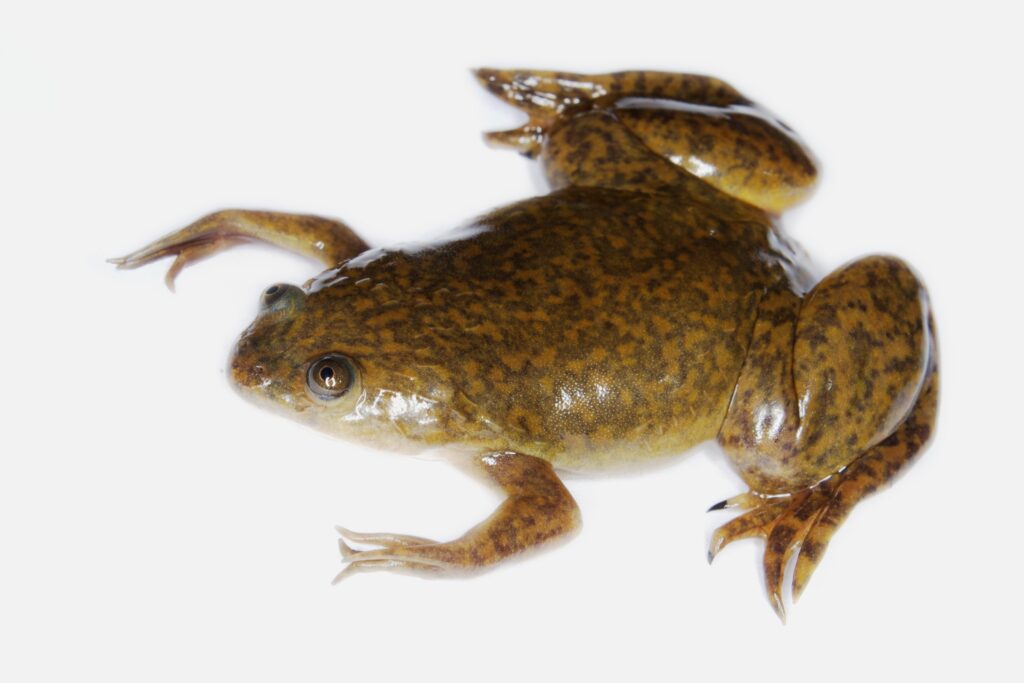
By Brian Gratwicke – Flickr: Xenopus laevis, CC BY 2.0, https://commons.wikimedia.org/w/index.php?curid=23752908
Their genome includes sections that look as if someone hit the “randomize code” button. But those sections still control development and immunity.
3. Birds – mostly passerines and galliformes
Some bird species have heavily altered or “hidden” genes tied to metabolism. They’re present – just almost unrecognizable.
4. Humans – yep, we’re included too
We also have ultra‑fast‑mutating DNA regions that are extremely hard to read. Some researchers think dark‑DNA elements may be hiding there.
Where dark DNA might come from – theories but no solid answers
So far, there are several hypotheses – none fully proven.
Hypothesis 1: super‑fast mutation rates
If a region mutates too rapidly, it drifts so far from its original sequence that tools fail to recognize it.
Hypothesis 2: alternative genetic coding styles
Some organisms might literally use different rules of encoding information – rules we haven’t figured out yet.
Hypothesis 3: ancient genetic fragments
Sequences so old and so unique that nothing else in modern biology looks similar, so we simply don’t recognize them.
Hypothesis 4: viral traces in the genome
Viruses integrate into DNA constantly. Some viral leftovers might have evolved into something functional – but extremely unusual.
All the theories sound logical, but none of them fully explains the picture.
Why dark DNA created so much buzz
Partly because the term sounds cool. But mainly because it reveals the weak points in our understanding.
Dark DNA basically says:
“You thought you understood genomes? Cute. Here’s a new puzzle.”
Even organisms we’ve studied for decades still hide genetic zones that refuse to obey the usual rules.
What dark DNA means for the future of genetics
A few things have already become clear:
- genomes are far more diverse than we thought;
- mutation rates can vary wildly – to the point of breaking our tools;
- standard sequencing methods don’t capture everything;
- and we’re still only scratching the surface.
Science loves order. Nature clearly prefers improvisation.
Conclusion
Dark DNA isn’t mystical or ominous. It’s simply a sign that science has reached a layer of complexity where old tools stop working.
We see the functions. We see the outcomes. But the mechanisms behind them? Still hiding.
And honestly, that’s kind of amazing. Nature still knows how to surprise us and keeps pushing us to look deeper.