
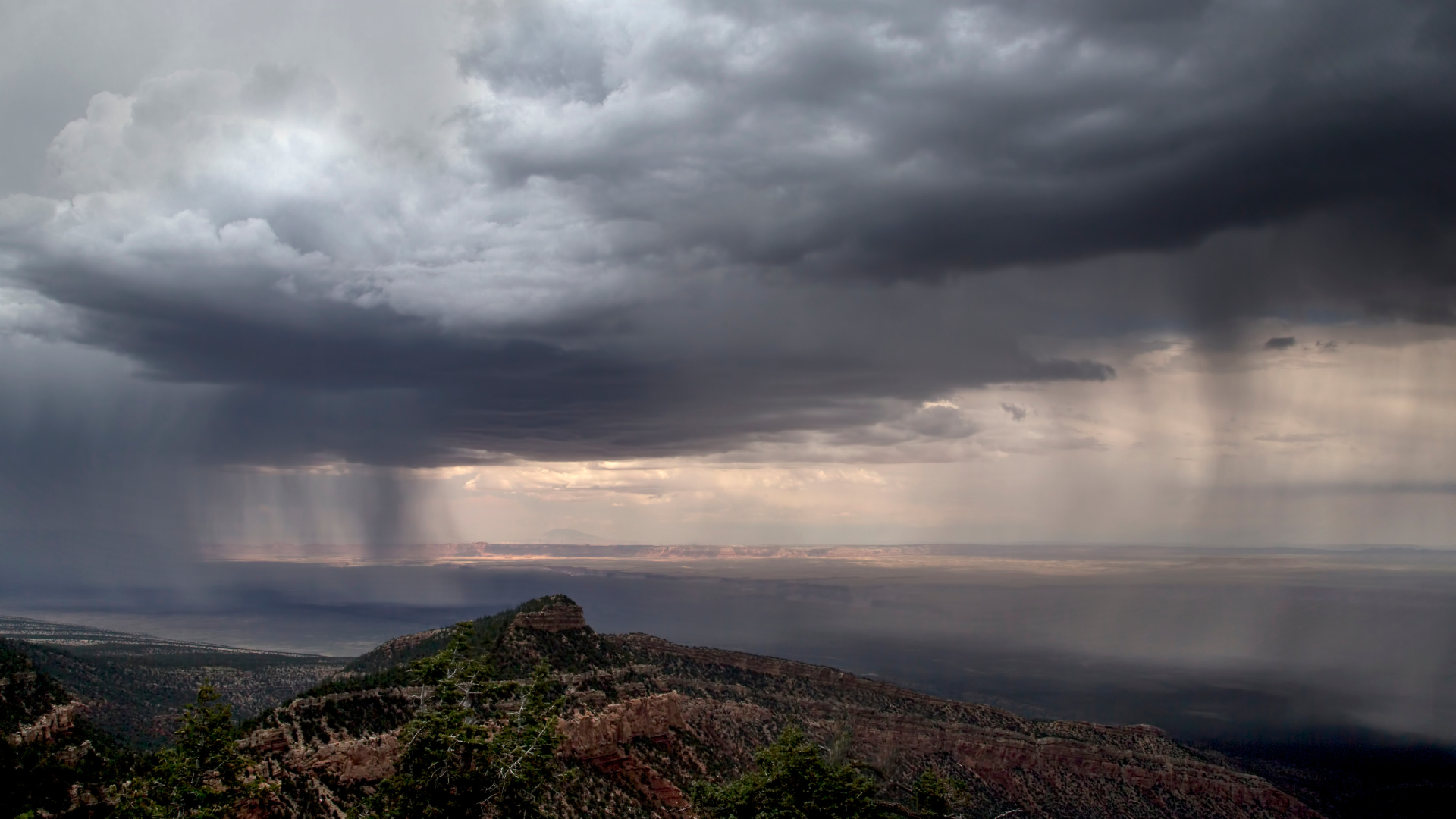
The cycle of rain has shaped human life for millennia. Across the planet, this rhythm defines when people plant, build, migrate, and celebrate.
For some, rain marks rebirth; for others, it brings destruction. But in every culture, the return of water is more than weather – it’s a ritual of survival and renewal.
The Cycle of Rain in South Asia

In South Asia, the cycle of rain takes the form of the monsoon – a vast system of seasonal winds that determine the lives of over a billion people.
First described in 1686 by English meteorologist Edmund Halley, the monsoon is driven by temperature contrasts between land and sea.
Each year, around June 1, the southwest monsoon reaches Kerala, officially declared by the India Meteorological Department as the start of the rainy season.
When it arrives, the dry soil comes alive, rice fields flood, and millions begin sowing crops that depend entirely on the coming months of rain.
The monsoon is celebrated in festivals such as Teej, marking fertility and renewal, and even in classical Indian music through monsoon ragas like Megh Malhar – a melody said to summon the rain itself.
But the same cycle of rain can also turn destructive.
In 2005, Mumbai received 944 mm of rainfall in a single day, the heaviest in recorded history. Over 500 people died, and the city was paralyzed – a harsh reminder that nature’s rhythm can overwhelm human design.
Cambodia’s Water Festival and the Reversal of the River

Every November, Cambodia celebrates Bon Om Touk, the Water Festival. It marks the unique moment when the Tonlé Sap River reverses its flow – an event that happens only twice a year.
During the rainy season, the Mekong’s power pushes water back into Tonlé Sap Lake; when the rains subside, the current returns downstream.
This cycle of rain was central to the Angkor Empire (9th – 13th centuries), when kings held boat races to honor the gods of water and balance.
Today, over two million Cambodians gather in Phnom Penh to watch the illuminated longboats.
Yet the same floods that feed the fields sometimes devastate lives. In 2011, record rains raised the Mekong by four meters, killing 247 people and displacing thousands – a fragile balance between celebration and survival.
Africa: When the Cycle of Rain Fails
In East Africa, the cycle of rain determines migration, grazing, and harvest. Kenya and Tanzania have two rainy seasons: the long rains (March – May) and the short rains (October – December).
In 2016, the pattern broke. Warming in the Indian Ocean disrupted the winds, and rainfall dropped by nearly 40%.
Over a million people were forced to move in search of water. Later, in 2024, the opposite struck – record floods that destroyed bridges and homes across Kenya and Somalia.
For centuries, local traditions such as Zulu rain dances have expressed humanity’s dependence on this rhythm – not to control it, but to coexist with it.
South America: When Water Rises from the Ground

In the Amazon Basin, the cycle of rain blurs the line between wet and dry. From December to May, water levels can rise up to 14 meters, flooding entire forests.
For local communities, this is not disaster – it’s life as usual.
Archaeologists from the University of São Paulo discovered that 3,000 years ago, Amazonian peoples built raised mounds to grow crops during floods. The natural cycle of rain became an agricultural tool long before modern irrigation existed.
In 2021, however, deforestation disrupted that balance.
The Amazon River at Manaus rose to 30 meters, its highest level in a century, flooding dozens of towns – proof that human interference is now altering the planet’s oldest rhythm.
Japan: The Aesthetic of Rain

In Japan, the rainy season – tsuyu, or “plum rains” – begins in June and lasts about six weeks.
According to the Japan Meteorological Agency, Tokyo receives roughly 400 mm of rain during this period – one-third of its yearly total.
Tsuyu inspired an entire cultural aesthetic: quiet gardens, paper umbrellas, and the reflective stillness of haiku poetry.
Yet in 2018, torrential rains triggered 600 landslides in western Japan and killed 225 people, the deadliest rainfall disaster since 1982.
Here, too, the cycle of rain is both art and warning – beauty balanced by fragility.
When Climate Becomes the Cycle of Rain

Rain has always been part of culture, but climate change is rewriting its rhythm.
According to NASA’s 2025 climate report, the frequency and intensity of extreme rainfall and drought events have nearly doubled compared with the early 2000s.
The July 2025 Central Texas floods became one of the most dramatic examples: rainfall in a few hours equaled four months of normal precipitation, killing more than 135 people.
From Asia to America, the cycle of rain is no longer predictable and that unpredictability is becoming the planet’s new normal.
The Other Face of Rain
Rain gives life, but it can also destroy.
Floods in Mumbai (2005), Japan (2018), and Texas (2025) show how the same rhythm that feeds crops can drown cities.
Still, each year, people everywhere wait for it – because the cycle of rain is not just weather. It’s renewal, memory, and the reminder that after dryness, life always returns.