
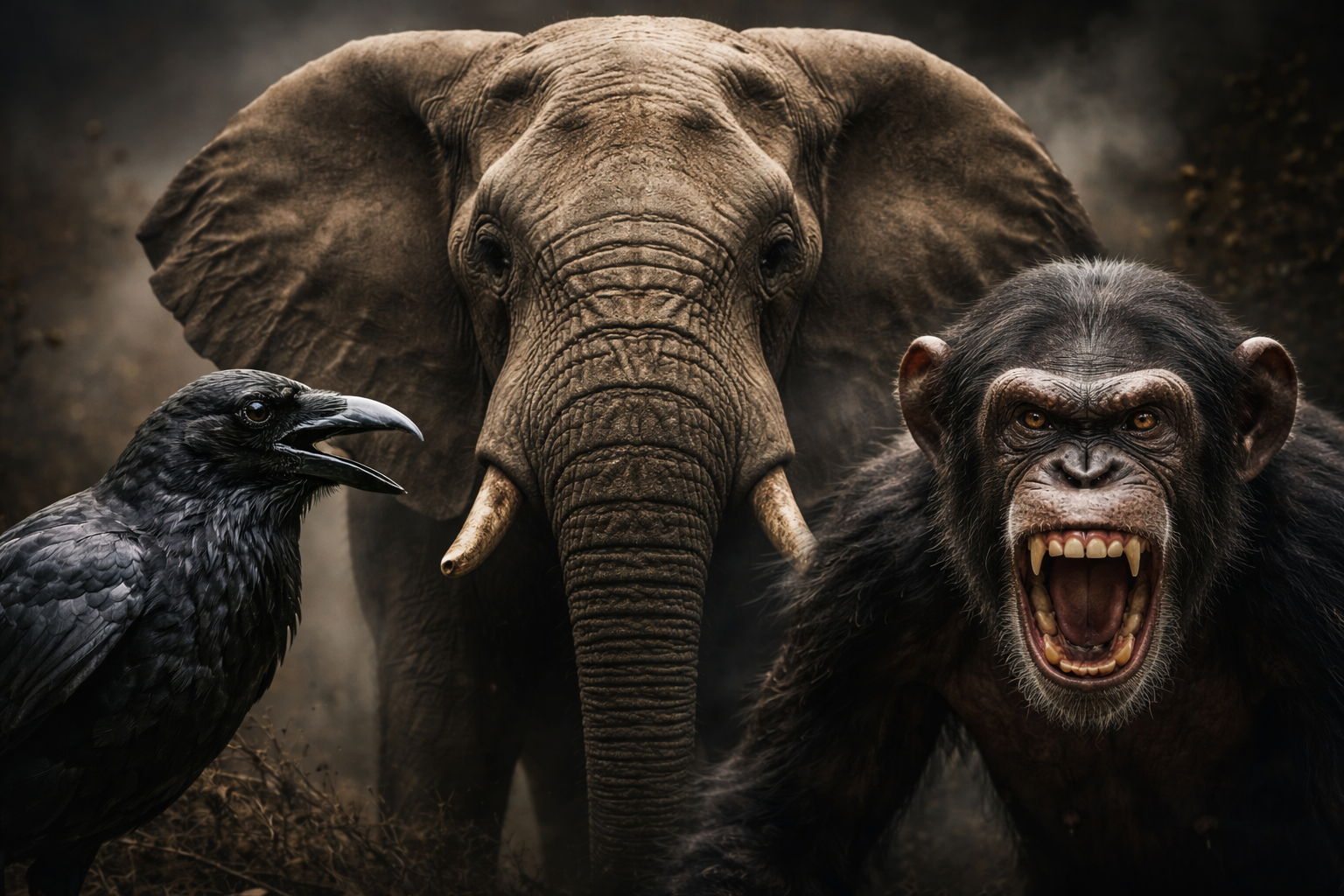
Picture this.
Someone kills a member of an elephant herd. Time passes. Then the herd returns to the same village. They tear down fences. Smash storage huts. Destroy crops.
Revenge?
Or something else entirely.
Stories about animals taking revenge sound intense. Almost human. Elephants that come back. Crows that remember faces. Primates that target specific rivals long after a conflict.
But what is actually true?
Let’s look at real cases.
By Yathin S Krishnappa – Own work, CC BY-SA 3.0, https://commons.wikimedia.org/w/index.php?curid=24916395
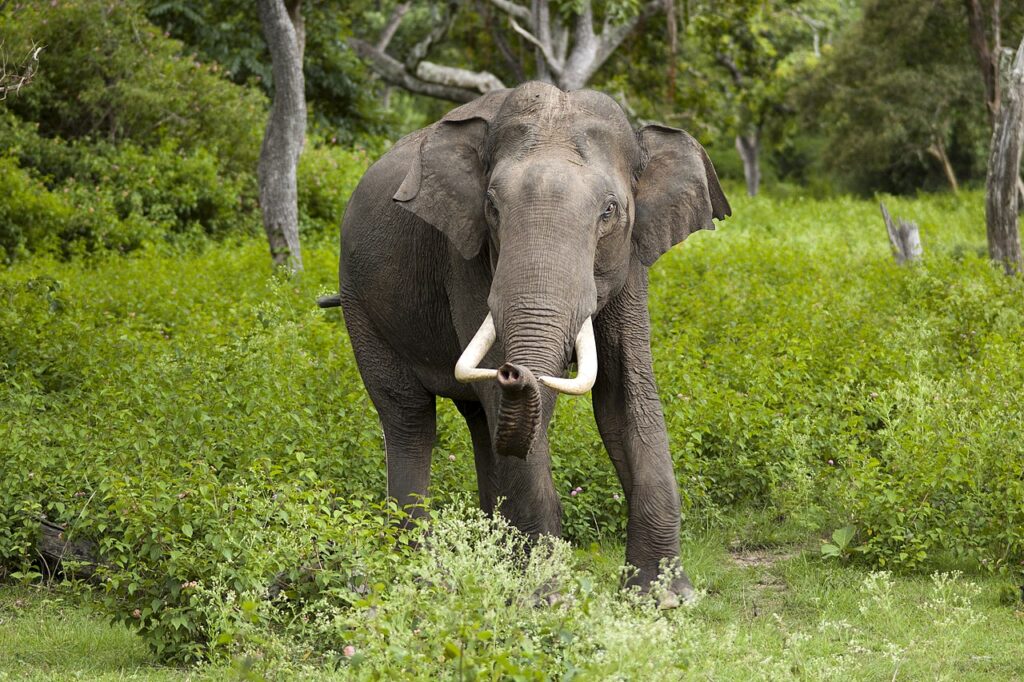
Elephants and Destroyed Villages
In parts of India and Africa, there have been documented cases where elephant herds showed increased aggression in areas where one of their own had been killed.
In 2006, in the Indian state of Assam, a herd destroyed several homes after local residents killed a young male elephant. Witnesses reported that the animals came at night and methodically damaged structures.
Similar events have been recorded in Kenya. After confrontations with poachers, herds returned to nearby settlements and caused serious destruction.
From the outside, it looks like payback.
But biologists explain it differently.
Elephants have complex social bonds and remarkable memory. They can recognize humans by scent and even by voice. If a traumatic event happens in a specific place, the herd may associate that location or those people with danger.
The aggression may not be about revenge. It may be a stress driven defensive response.
Still, the focus and intensity of these actions make people stop and think.
By Accipiter (R. Altenkamp, Berlin) – Own work, CC BY-SA 3.0, https://commons.wikimedia.org/w/index.php?curid=6806927
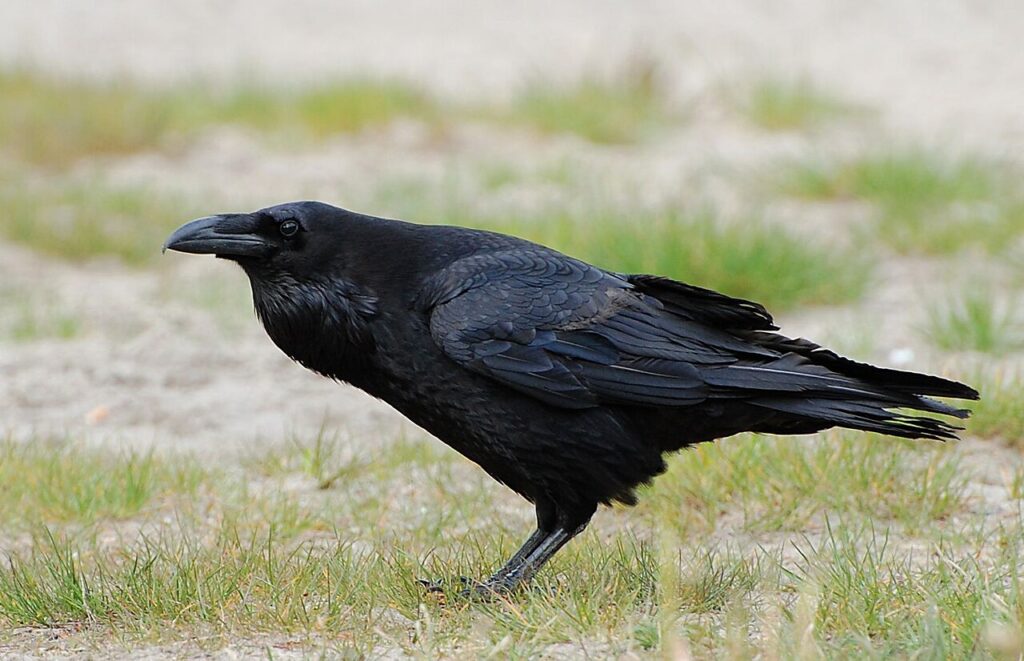
Crows That Never Forget
The crow story is even more striking.
At the University of Washington, researchers conducted an experiment. People wearing disturbing masks captured and tagged crows. The birds were then released.
Years later, when researchers walked through campus wearing the same masks, the crows reacted immediately. They screamed, dive bombed, and alerted other birds.
Even more surprising, younger crows that had never experienced the original capture also reacted to the masked faces.
The information had been passed along socially.
That is not short term memory. That is long term recognition combined with communication.
From a human perspective, it feels personal.
From a biological perspective, it is an advanced threat detection system.
Either way, they remember.
By transpixt – https://www.flickr.com/photos/transpixt/3384088318, CC0, https://commons.wikimedia.org/w/index.php?curid=77598809
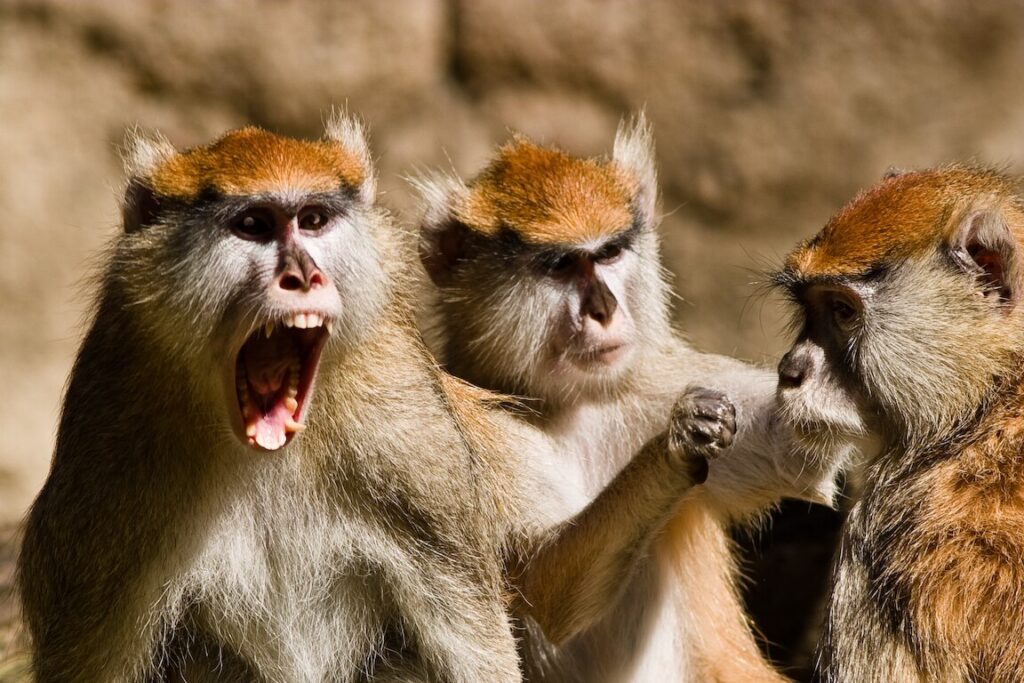
Primates and Calculated Social Moves
With monkeys and apes, things get even more layered.
In both wild populations and sanctuaries, researchers have observed cases where primates later directed aggression toward specific individuals after earlier conflicts.
For example, in macaques and chimpanzees, individuals that lost status fights have later formed alliances and initiated coordinated attacks against former rivals.
That begins to look strategic.
There is memory involved. There is timing. There are social alliances.
But even here, scientists are careful.
They talk about hierarchy, competition, and social dynamics.
They rarely use the word revenge.
Where Is the Line
To call something revenge, you would need proof of intent. A conscious decision to cause harm specifically in response to a past offense.
In humans, revenge involves reflection and emotional processing.
In animals, we clearly see memory and learning. We see behavior change after negative experiences. We see recognition of specific individuals.
What we cannot easily prove is human like intention.
Most researchers believe what looks like revenge is actually adaptive behavior.
An animal remembers a threat and responds in a way that reduces future risk.
Sometimes that response feels targeted. Even unsettling.
But underneath it may simply be survival logic.
Why We Want to Call It Revenge
Because it makes the story powerful.
If an elephant returns and destroys a village, it feels like justice or payback. If a crow attacks someone years later, it sounds like a grudge.
That framing makes animals feel closer to us.
But nature does not operate by our emotional narratives.
Here is what we do know.
Elephants remember.
Crows recognize faces and share information.
Primates track past conflicts and adjust behavior accordingly.
That level of complexity is already extraordinary.
So do animals take revenge?
Probably not in the human sense.
But they do remember.
And sometimes memory alone is enough to make their actions look like payback.
Read more
The Most Patient Animals on the Planet Masters of the Long Game
Telegram
Wonderful World