
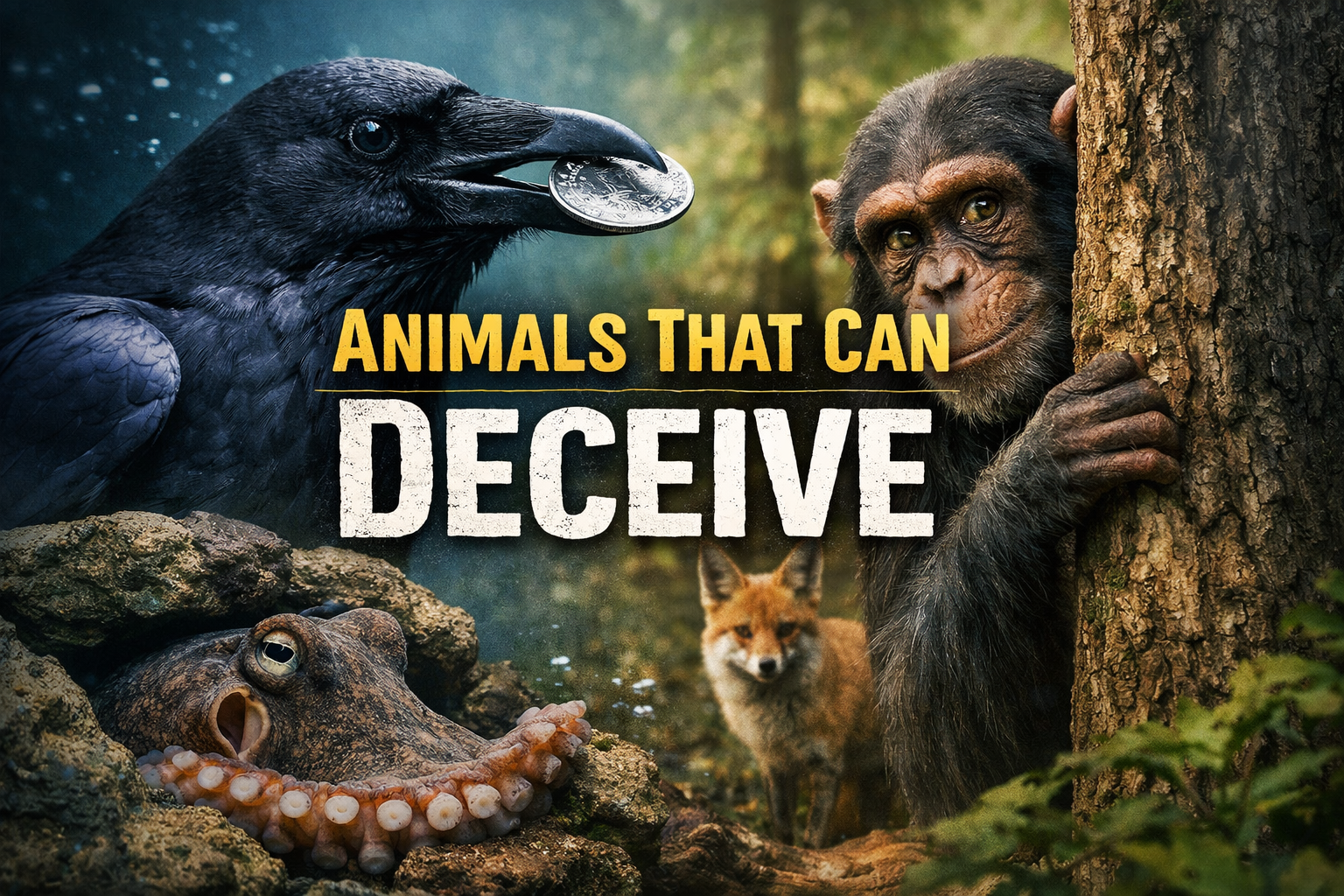
We like to believe that lying is a uniquely human invention. Deception, after all, seems to require something sophisticated. You have to recognize that another individual does not know what you know. You have to predict how they will react. You have to adjust your behavior accordingly. That sounds like language, planning, maybe even self awareness.
Yet when researchers look closely at the natural world, the picture becomes less clear. Deception does not always require words. Sometimes it is expressed through action, timing, and carefully adjusted behavior. And in many documented cases, animals appear to do exactly that.
The idea that animals can deceive may sound dramatic at first. However, field observations and controlled experiments suggest that certain species consistently mislead others in ways that increase their own chances of survival or success. These actions are not random accidents. They are flexible, repeatable, and sensitive to context.
Let’s look at what that actually means.
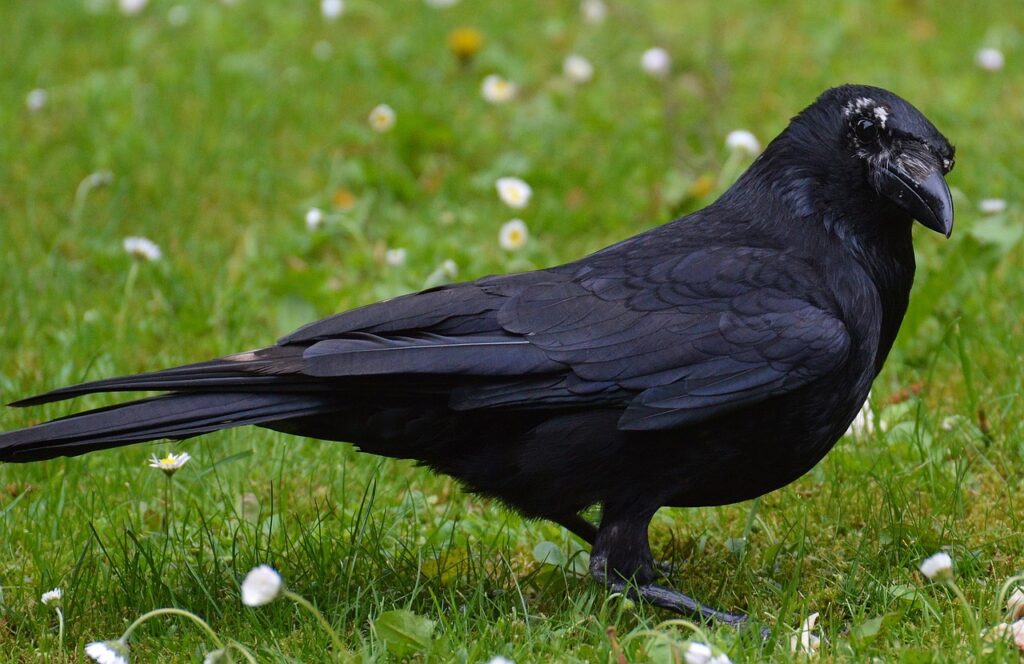
Crows and Strategic Food Hiding
Crows are widely recognized as some of the most intelligent birds. Their problem solving abilities are impressive, but their social awareness may be even more remarkable.
In experiments, researchers observed that when a crow knows another bird is watching, it changes how it hides food. Instead of simply placing it in one spot, the crow may pretend to cache it in a visible location, then later move it to a more secure place once the observer is gone. The behavior becomes even more interesting when the crow has prior experience stealing from others. Individuals that have stolen food themselves are more likely to re hide their own caches, as if anticipating that another bird might do to them what they once did to others.
This suggests more than instinct. The crow appears to adjust its behavior based on who is present and what that individual might do.
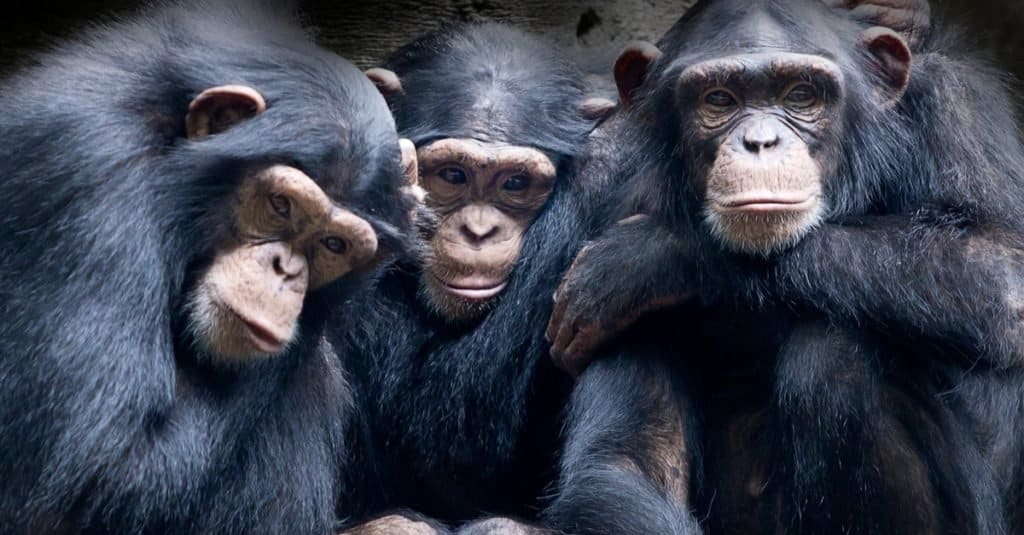
Chimpanzees and Social Calculation
Chimpanzees live in socially complex groups where status and alliances matter. Access to food and mates often depends on rank, and individuals constantly monitor one another.
In sanctuary settings, researchers have observed situations in which a chimpanzee finds food but suppresses the usual vocalizations that would alert others, especially if a dominant male is nearby. Instead of announcing the discovery, the individual remains silent and consumes the food quietly. In other cases, chimpanzees have been seen walking past visible food when watched, only to return for it later when alone.
Such behavior reflects an awareness of social context. The individual appears to consider who is present, what their reaction might be, and how best to secure a personal advantage.
Distraction Displays in the Wild
Not all deception is social. Some of it is directed at predators.
Certain ground nesting birds perform what is known as a broken wing display. When a predator approaches the nest, the parent bird moves away and begins to drag one wing along the ground, behaving as if injured. The predator, drawn toward what appears to be easy prey, follows the adult bird and is led away from the hidden chicks. Once the threat is far enough, the bird suddenly regains full strength and flies off.
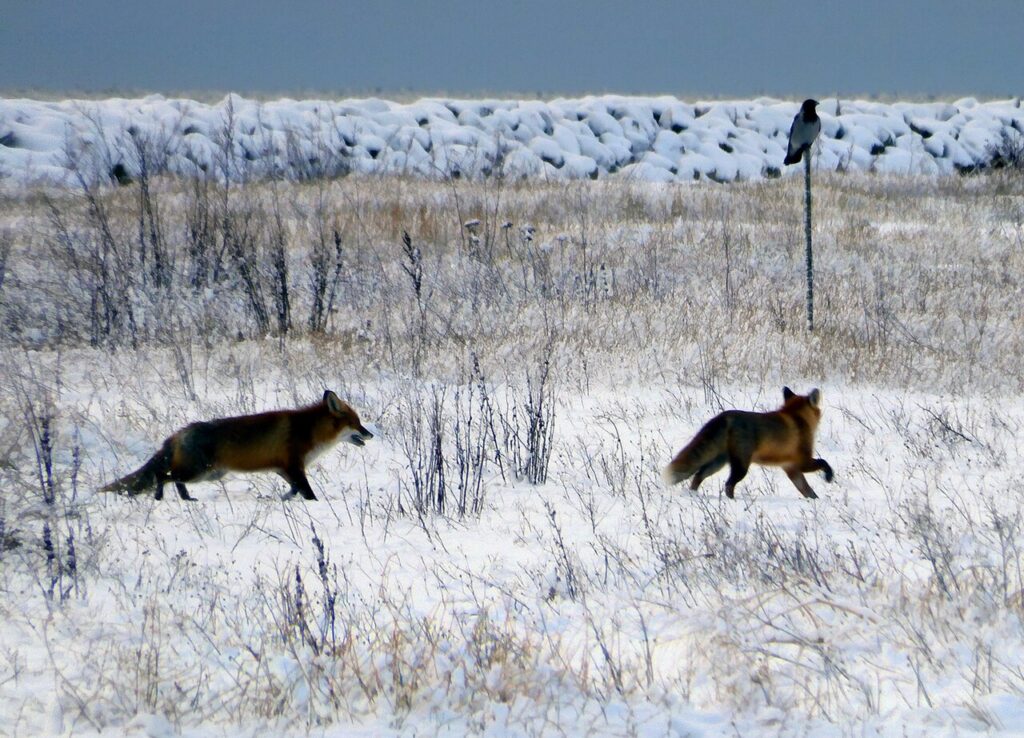
Foxes and other predators also use distraction tactics. A fox may appear to lose interest in prey, shifting direction casually before abruptly changing course and attacking from a better angle. In both cases, the animal creates a misleading signal that alters the expectations of another creature.
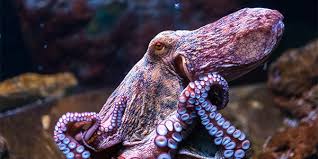
Octopuses and Chosen Identities
Octopuses are masters of camouflage, capable of altering color, texture, and even body posture within seconds. Some species, however, go further than simple blending. The mimic octopus, for example, can imitate the movement patterns of venomous fish or sea snakes when threatened.
This is not passive camouflage. It is active role selection. The octopus appears to assess the situation and choose a form that maximizes its safety. The deception works because other animals interpret the signal as something dangerous.
Deception or Instinct
At this point, the central question becomes unavoidable. Are these behaviors true deception, or are they sophisticated instincts?
To classify an action as genuine deception, one would need evidence that the animal understands the difference between its own knowledge and the knowledge of another individual. In humans, this ability is often referred to as theory of mind. Demonstrating that capacity in animals is extremely challenging, because we cannot directly access their internal states.
For this reason, scientists tend to use careful language. They describe tactical behavior, cognitive flexibility, and social intelligence rather than intentional lying. Yet the observable patterns are difficult to ignore. Some animals alter their actions depending on who is watching. They take past experience into account. They conceal information when concealment provides an advantage.
These are not rigid, automatic responses. They are context dependent strategies.
Why It Matters
If certain animals can mislead others in flexible and situation specific ways, then their cognitive world is more complex than previously assumed. Deception requires prediction. It requires an understanding that another individual will form expectations based on what it sees.
Whether or not animals possess a fully developed theory of mind, their behavior demonstrates a level of strategic adjustment that challenges older views of instinct driven life.
Animals that can deceive do exist. The remaining question is not whether deception occurs, but how deeply these creatures understand the game they are playing. And that question continues to push research in fascinating directions.
If animals can deceive, how far does their intelligence really go?
Could memory, strategy, and social awareness sometimes turn into something that looks like revenge?
Read next: Animals That Take Revenge Myth or Reality
Telegram Wonderful World