
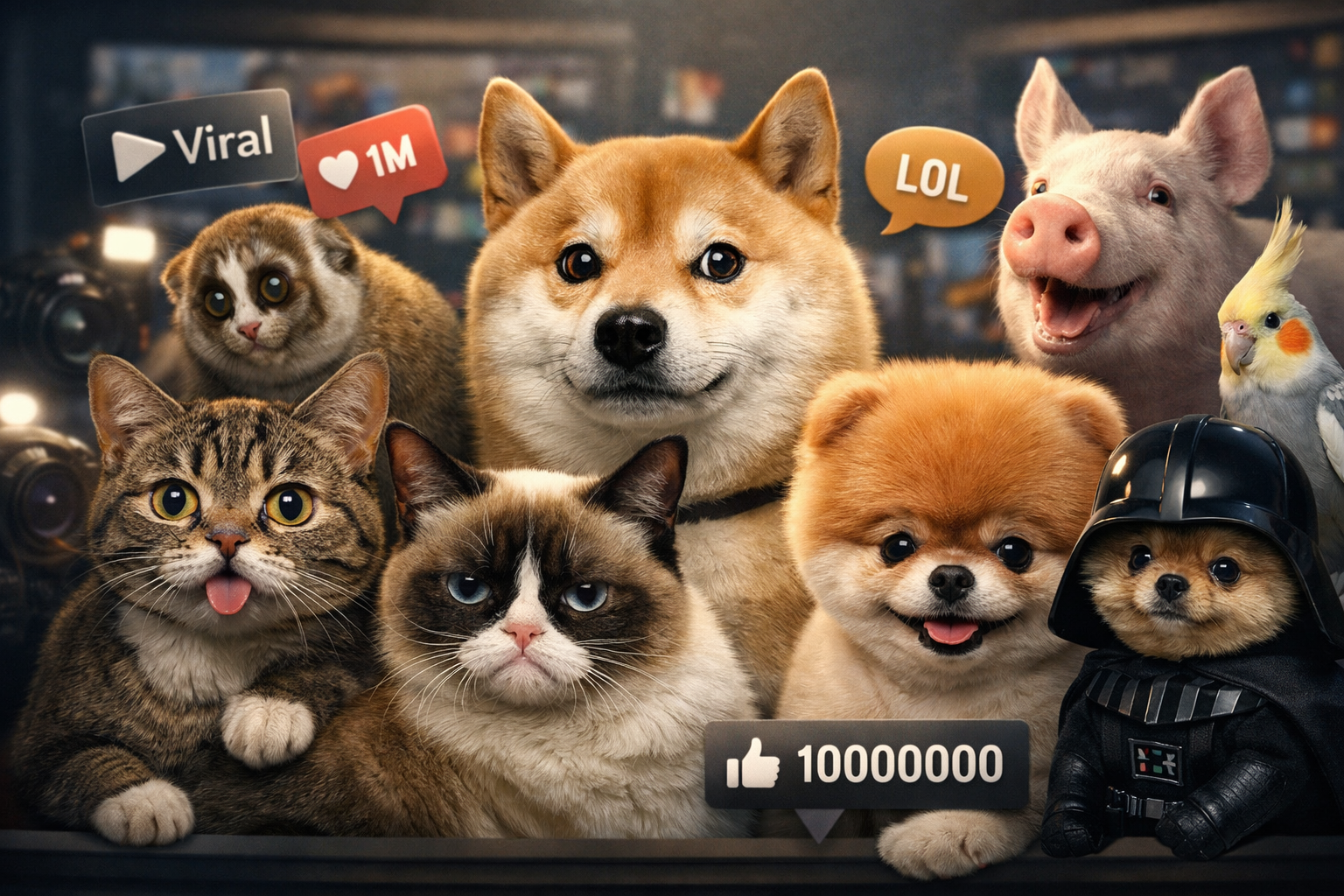
Sometimes it starts with a single photo. Not a rare species or a scientific discovery, but a regular image taken at the right moment. An animal might have an unusual facial expression, an odd look, or simply a combination of features and angle that stands out. That is often enough for people to notice.
Then the distribution begins. First dozens of people see it, then hundreds, then thousands. Captions appear, jokes follow, reposts multiply. At a certain point the animal stops being just a subject in a photo. It becomes a recognizable image that exists separately from the original context.
How the viral effect actually forms
Virality is rarely completely random. There are several factors that appear again and again.
The first factor is simplicity. The image must be understood instantly, without explanation. A person should read the expression and the “meaning” in a second.
The second factor is emotional response. It can be amusement, surprise, or a sense of something unusual. The key is that the reaction happens immediately.
The third factor is interpretability. People need to be able to add their own meaning through captions and context. This is what turns an image into a meme.
When these elements align, the image spreads much faster.
Doge as a near perfect internet image
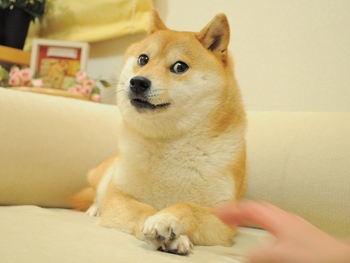
By Atsuko Sato – https://kabosu112.exblog.jp/iv/detail/?s=9944144&i=201002%2F12%2F90%2Fa0126590_22301391.jpg, Fair use, https://en.wikipedia.org/w/index.php?curid=41704519
One of the most well known examples is Doge. It is based on a photo of a Shiba Inu named Kabosu. The picture was taken at home and originally had no special purpose.
However, the expression was unusual. Slightly narrowed eyes and a tense, observant look created the impression of evaluation or internal commentary. This allowed users to add text that seemed to represent the dog’s thoughts.
The format stabilized quickly. Short phrases, intentionally simplified language, and repetition made Doge one of the most recognizable memes online. The image later moved beyond internet culture and even influenced the creation of the cryptocurrency Dogecoin.
Grumpy Cat and anatomy as a symbol
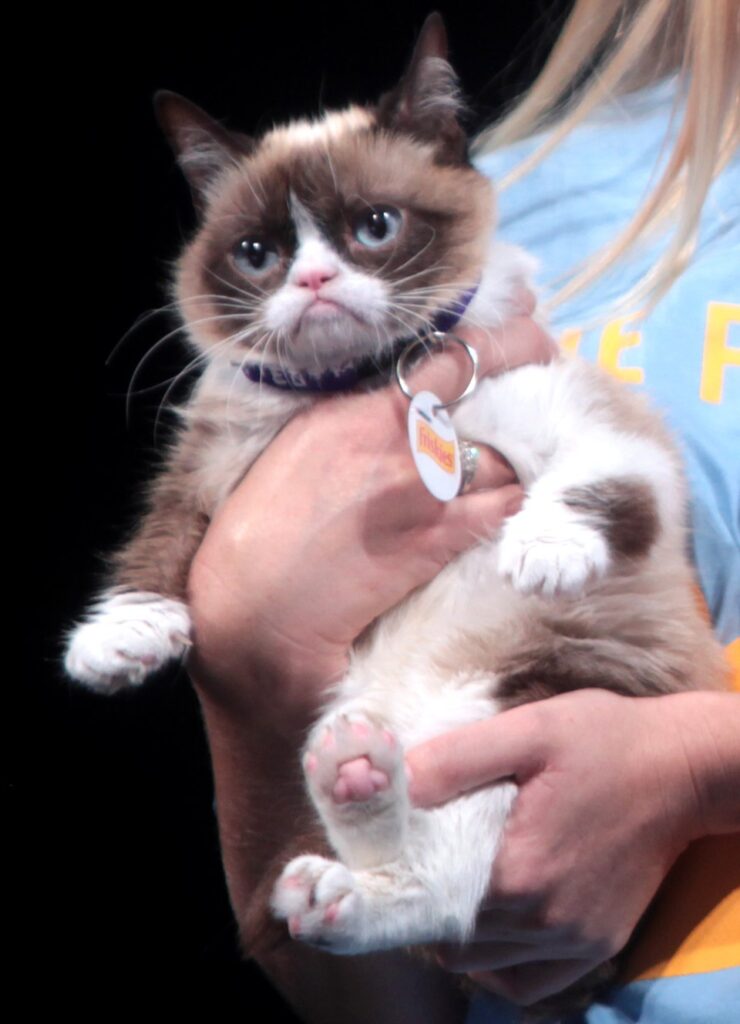
By Gage Skidmore from Peoria, AZ, United States of America – Grumpy Cat & Rafi Fine, CC BY-SA 2.0, https://commons.wikimedia.org/w/index.php?curid=90044152
Another clear case is Grumpy Cat. The cat had a genetic condition affecting its bite and facial structure. Because of this, its face appeared permanently displeased.
This was not an emotional state. It was physiology.
Yet this exact expression matched a strong demand in online communication. People used the image to express sarcasm, irritation, and fatigue.
Unlike most memes, this one expanded into offline use. There were books, advertising campaigns, and media projects. It is a rare example of a single expression turning into a commercial brand.
Why some animals spread and others do not
Every day, thousands of animal photos appear online. Only a few become widely known.
The difference is not uniqueness in a biological sense. It is how easily the image is processed by human perception.
If an expression can be interpreted quickly and reused across contexts, the chance of spread increases sharply. If an image requires explanation or does not trigger an immediate response, it almost never becomes viral.
The role of repetition and adaptation
Once an image starts to spread, repetition becomes critical. Users create variations, add captions, and change context.
Each new version reinforces recognition. Over time, the image exists independently of the original photo.
At this stage, it becomes a “legend.” Not just a picture, but a cultural reference understood without explanation.
Connection to how we read animal emotions
This process is directly linked to how we interpret animals in general. We explored this in the article Do Animals Feel Guilt. In that case, the focus was on how humans assign emotional meaning to animal behavior even without clear evidence.
The same mechanism works here. We see an expression and immediately assign meaning. In viral images, this effect is amplified by repetition and scale.
What matters to understand
The animals themselves are not participating in this process. They are not aware of being “famous.” Everything that happens exists within human perception and digital systems.
We create meaning, interpret images, and distribute them. The animal becomes a carrier of the image, not the source of its meaning.
Final thought
Animals become internet legends not because of rarity or behavior, but because of how their appearance is processed by humans. Simplicity, emotion, and interpretability create the conditions for rapid spread.
This is where biology, perception, and technology intersect. That is why these cases feel accidental, yet follow the same pattern again and again.
If this made you pause and think, there is more behind it.
Do Animals Feel Guilt – what we think we see and what is actually happening.
Do Animals Have a Sense of Fairness – how animals react when something feels unfair.
And if you like looking at the world this way
clearer, deeper, without obvious answers.
Telegram: Wonderful World