
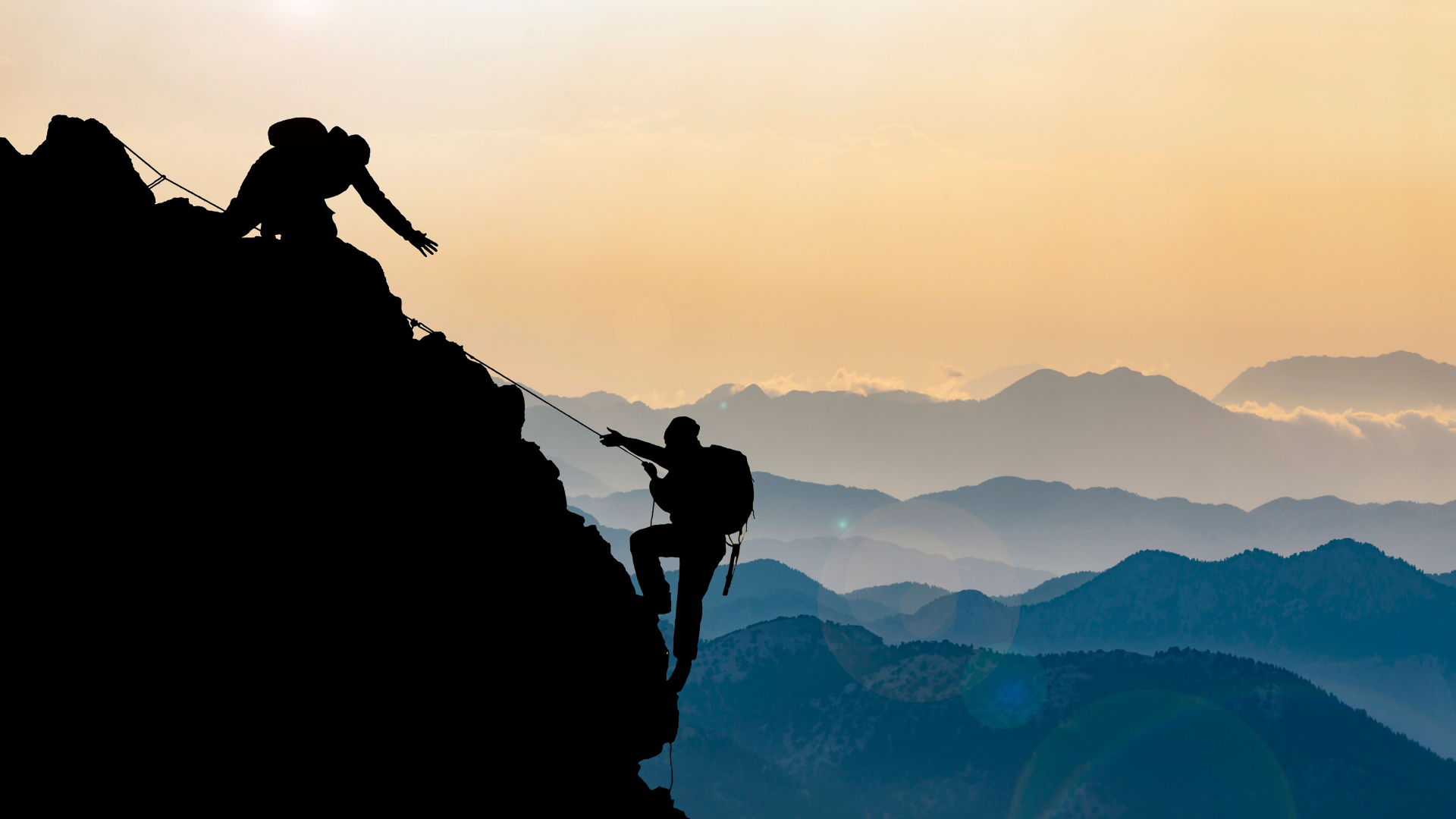
When Mountains Become Legends
Mountains are never just geography. They are stories carved in stone, places where triumph and tragedy meet, where myths blend with reality. Let’s look at five peaks that have changed not only landscapes, but also human destinies.
Everest – Where Man Meets His Limit

In 1953, the world held its breath as Edmund Hillary and Tenzing Norgay became the first to reach the summit of Everest. But decades earlier, in 1924, George Mallory disappeared high on the mountain. His body was only found in 1999, and to this day no one knows if he reached the top before vanishing into the snow.
Everest is called “The Mother of the World.” From afar it looks calm, but above 8,000 meters lies the “death zone,” where the air is too thin to sustain life. Temperatures plunge to -40°C, and winds scream at 200 km/h. Yet every year climbers return. Not just for records, but to answer a deeper question: where do my limits end?
Matterhorn – Beauty and Tragedy of the Alps

The Matterhorn looks almost too perfect to be real – a sharp, triangular peak rising above the Swiss Alps. Its shape is so iconic it decorates every Toblerone bar.
But beauty here came with blood. In 1865, seven climbers made the first successful ascent. On the way down, four fell to their deaths, their rope snapping in front of the survivors. Newspapers branded it the “murderous mountain.”
Today, from the village of Zermatt, the Matterhorn glows in sunset light like a painting. It’s hard to believe how much sorrow it has seen. Perhaps that’s why it fascinates so much: it embodies both elegance and danger, beauty and fear.
Kilimanjaro – Africa’s Snow-Capped Mystery

In Tanzania, the savanna bakes under the equatorial sun and suddenly, Kilimanjaro rises, crowned with snow. It’s the only place where you can walk from jungle to icy glaciers in less than a week.
Kilimanjaro is made of three volcanic cones: Kibo, Mawenzi, and Shira. The summit, Kibo, still bears glaciers – though scientists warn they may vanish within decades. Ernest Hemingway saw in this mountain both pride and inevitability, writing The Snows of Kilimanjaro.
For local Chagga people, Kilimanjaro is the “House of God.” Standing beneath it, with clouds wrapped around the peak, it’s easy to see why they believe the divine chose this mountain as a throne.
Fuji – Japan’s Sacred Cone

Fuji isn’t just a volcano. It is Japan’s eternal symbol, rising as a perfect cone above lakes, shrines, and cherry blossoms.
Climbing Fuji is less about sport than spirit. Every summer, thousands ascend in a modern pilgrimage. A Japanese saying goes: “A wise man climbs Fuji once, a fool climbs it twice.”
Fuji last erupted in 1707, dusting Edo (Tokyo) with ash. Yet the volcano remains beloved. Poets wrote haiku about it, painters immortalized it in woodblock prints, and even today, airplane passengers press against windows when Fuji appears through the clouds.
Roraima – A Mountain from Another World

On the border of Venezuela, Guyana, and Brazil stands Mount Roraima – a flat-topped giant that seems transported from another planet. Its sheer cliffs rise nearly three kilometers, its summit hidden in rolling clouds.
Roraima holds plants and animals found nowhere else on Earth, fed by rains that pour year-round, sending waterfalls spilling straight from the plateau. Local Pemon people say this is the home of the great spirit Makunaima. Sir Arthur Conan Doyle imagined dinosaurs roaming here in The Lost World.
Looking up at Roraima feels like staring at a gateway to another dimension – a place that doesn’t belong to this Earth.
Why Mountains Stay With Us
Everest keeps Mallory’s mystery. The Matterhorn guards a tragedy. Kilimanjaro carries both glaciers and legends. Fuji embodies the spirit of Japan. Roraima whispers of lost worlds.
Mountains humble us and at the same time make us greater. They remind us how small we are against the planet, and how limitless we can be inside. Maybe that’s why, again and again, we lift our eyes to the peaks – to the places where Earth almost touches the sky.