
Introduction
The ocean is not just water – it is a vast living system that constantly changes and surprises us. We know less about it than about outer space: only a fraction of its depths have been explored, and every year scientists discover new phenomena. Sometimes the sea shows us such breathtaking sights that even experts can’t decide whether to be amazed or puzzled.
At night, waves can suddenly start glowing as if sprinkled with stardust. Off the coast of Mauritius, you can witness an enormous waterfall that seems to pour into the abyss beneath the surface. Elsewhere, the water turns red or brown, transforming familiar beaches into a scene from a fantasy story.
Let’s dive into some of the most astonishing marine wonders – from bioluminescent plankton to underwater chimneys and mysterious glowing seas.
Red Tides
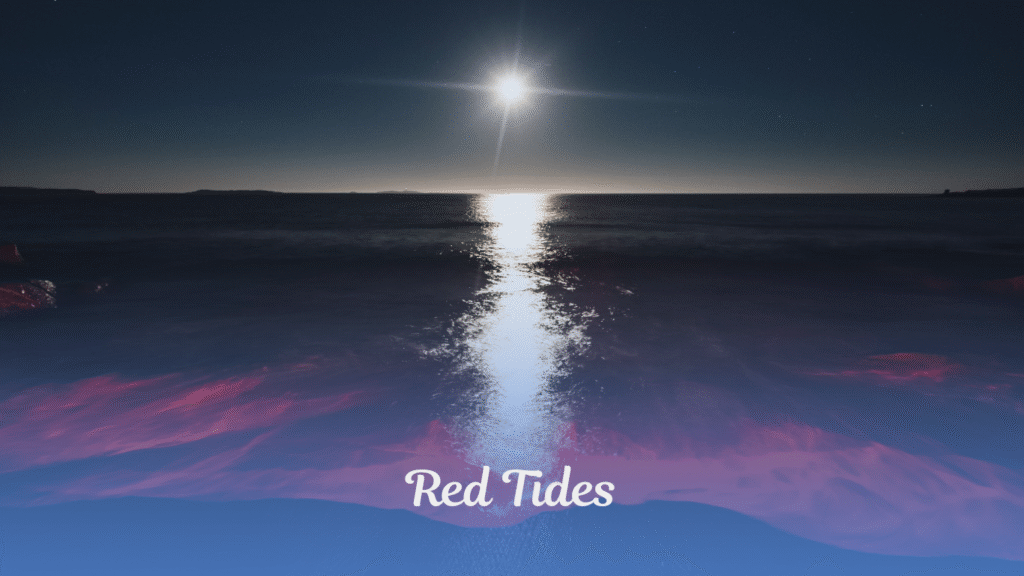
Sometimes the ocean changes color. The water can turn red, brown, or even green. This phenomenon is called a red tide. It happens when microscopic algae – dinoflagellates – multiply explosively. Their concentration can reach millions of cells per liter, painting the sea with unnatural shades.
📅 The first written descriptions of red tides appear in travel notes of Arab sailors in the 10th century. Today, they are reported worldwide – from Japan to the United States.
But beauty hides danger. Some dinoflagellates release powerful toxins. In 1947, more than 500 tons of fish died off the coast of Florida. In 2018, one of the longest red tides in history struck western Florida, lasting 16 months and stretching along 240 kilometers of shoreline. Sea turtles, manatees, and fish perished, while local tourism and seafood industries collapsed.
And yet, red tides also have a magical side. At night, many of these organisms glow, making the waves flicker with blue light. It’s as if the ocean itself breathes electricity.
The Underwater Waterfall of Mauritius
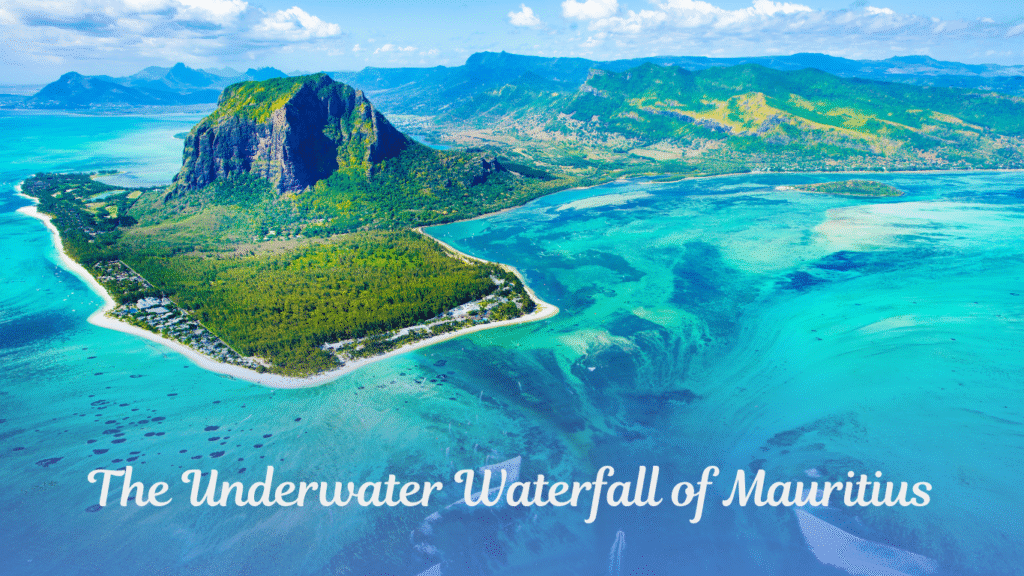
In the Indian Ocean, off the southwest coast of Mauritius, lies one of the planet’s most spectacular illusions: a giant underwater waterfall.
Of course, no water is falling. This breathtaking sight is created by the island’s unique topography. The seafloor drops suddenly to depths of over 4,000 meters, and ocean currents sweep sand and silt down the slope. From above, it looks as though a massive river plunges straight into the abyss.
📍 How to see it:
The phenomenon is visible only from the air, usually by helicopter or drone. When National Geographic published photos in 2011, they spread worldwide, making Mauritius famous as the “island with the underwater waterfall.”
Scientists estimate that the sand flows here in volumes comparable to Niagara Falls. It’s only an illusion – but so convincing that it leaves travelers stunned.
Bioluminescent Plankton
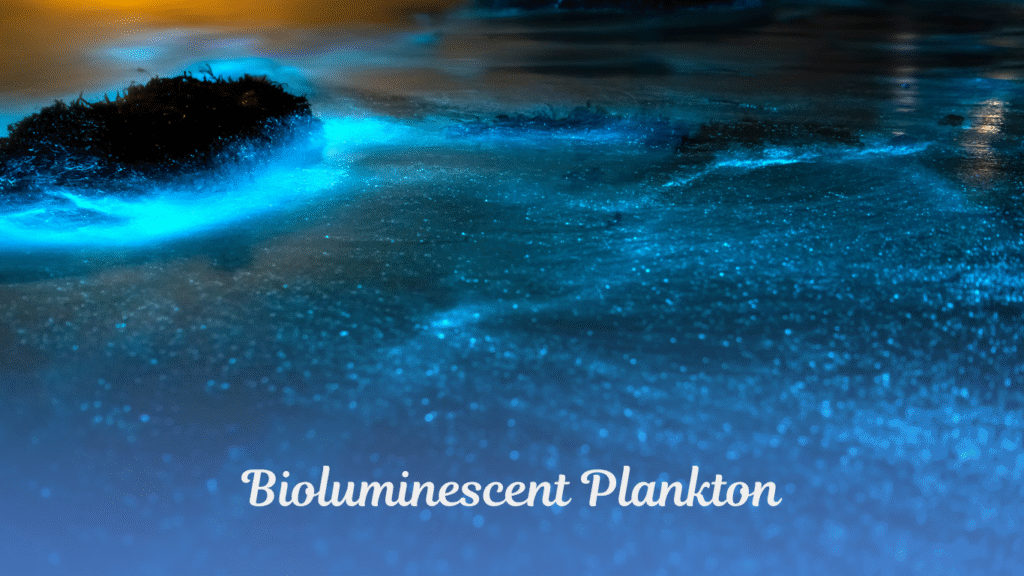
Perhaps the most enchanting ocean wonder is its ability to glow at night. This light show is created by bioluminescent plankton, mostly dinoflagellates, which emit flashes when disturbed.
When billions gather, the entire coastline shines. The Maldives are known for their “sea of stars,” where the beach sparkles under the dark sky. Another famous spot is Mosquito Bay in Puerto Rico, often called the brightest bioluminescent bay in the world.
📅 In 2008, scientists measured Mosquito Bay’s glow at over 700,000 organisms per gallon of water – a world record.
📖 Traveler’s story:
One tourist described stepping into the shallow waters of the Maldives: every movement of her feet lit up in glowing ripples. “It felt like walking through the universe,” she said.
For marine life, bioluminescence is more than beauty. Some species use it to scare predators, others to lure prey. For humans, it remains one of the most magical spectacles the ocean has to offer.
Blue Holes
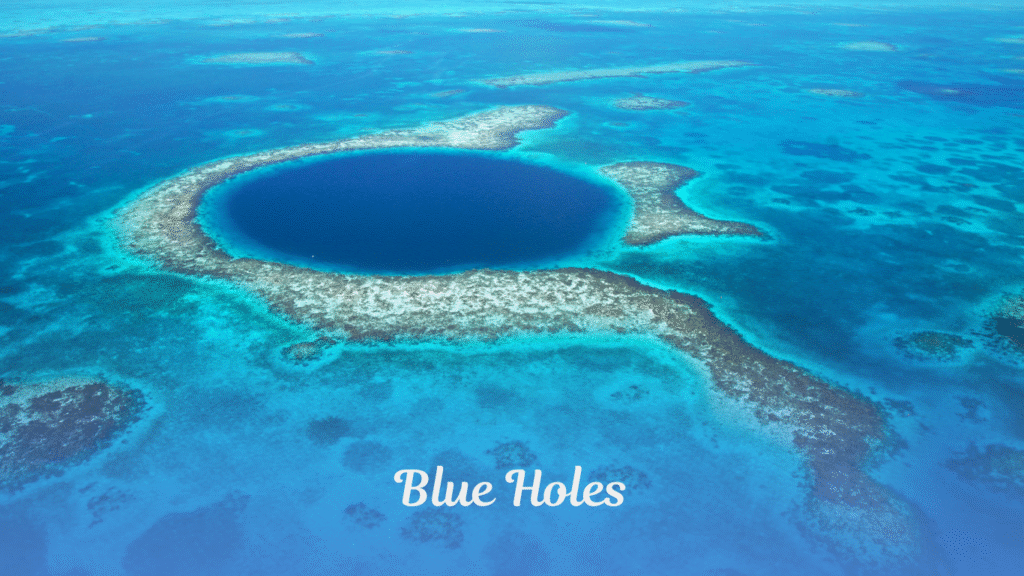
Across the world’s oceans lie enormous underwater sinkholes called blue holes. The most famous is the Great Blue Hole in Belize, with a diameter of about 300 meters and a depth of over 120 meters.
From above, it looks like a perfect dark circle set into turquoise waters. Inside are caves, stalactites, and rare marine life.
📖 In 1971, explorer Jacques Cousteau declared the Great Blue Hole one of the best diving sites on Earth. Since then, thousands of divers visit it every year.
Other blue holes exist in the Bahamas, the South China Sea, and off the coast of Egypt. Many remain only partially explored, leaving scientists guessing at what lies inside.
Milky Seas
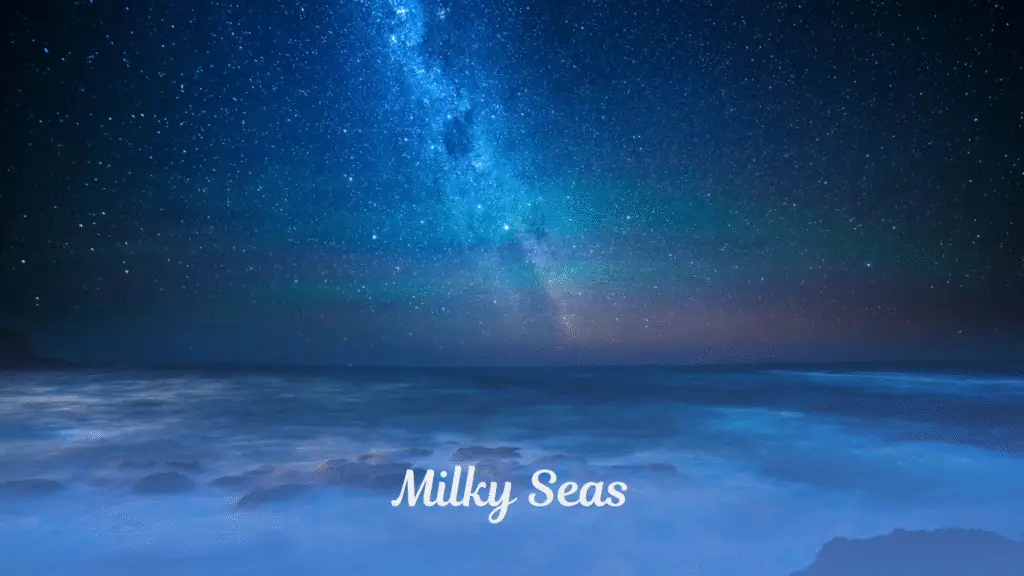
Sometimes the ocean glows not in dots, but in vast sheets of pale light. These are known as milky seas. Rare but massive, they can cover an area of up to 16,000 square kilometers – larger than Switzerland.
Sailors have reported them since the 18th century, but scientific proof came only in 2005, when a NOAA satellite detected a glowing patch off the coast of Somalia. Researchers believe it’s caused by trillions of bioluminescent bacteria, Vibrio harveyi.
Sailors describe the experience as surreal: the ship seems to sail through glowing milk, with the horizon blending into a continuous pale shine.
Black Smokers
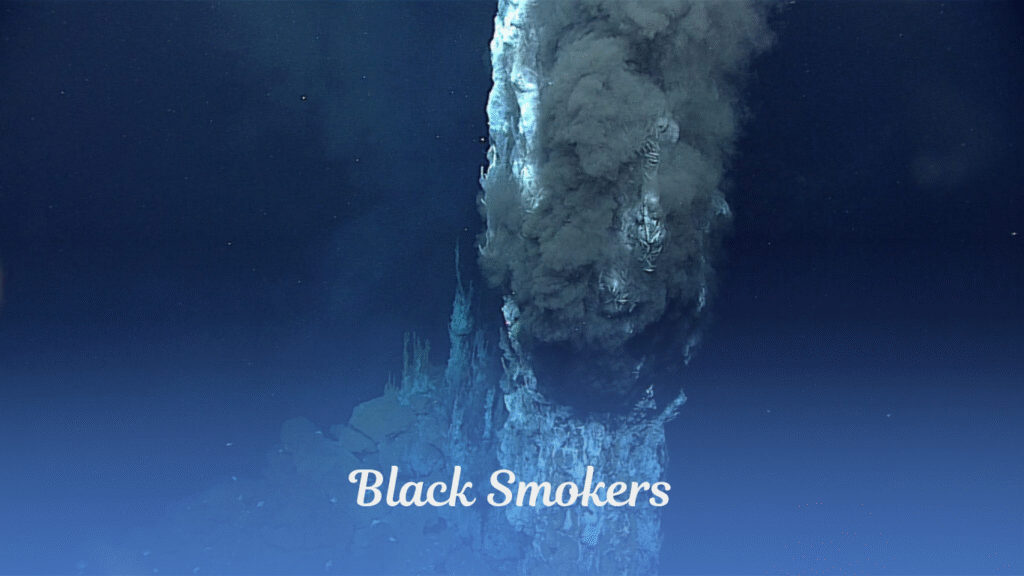
Deep below the surface, where no sunlight penetrates, the ocean creates its own volcanoes – hydrothermal vents, also called “black smokers.”
From cracks in the seabed, jets of superheated water gush out, rich in minerals. The temperature can reach 400°C, but the immense pressure prevents the water from boiling. Minerals precipitate and form towering chimneys that constantly “smoke” with dark plumes.
📅 The first black smokers were discovered in 1977 near the Galápagos Islands. The finding revolutionized biology: scientists discovered thriving ecosystems with giant tube worms and unique bacteria that live entirely without sunlight, drawing energy from chemical reactions instead.
Conclusion
Red tides, glowing plankton, underwater waterfalls, blue holes, milky seas, and black smokers – all remind us that the ocean is still the most mysterious place on Earth. Here, reality often looks like fantasy, and wonders appear without magic.
We like to think we know our planet well, but a glimpse into the depths proves otherwise: this is a world with its own laws, where humans are merely guests.
Want more unusual facts and legends about our planet?
Join our Telegram channel Wonderful World and discover amazing stories every day.