
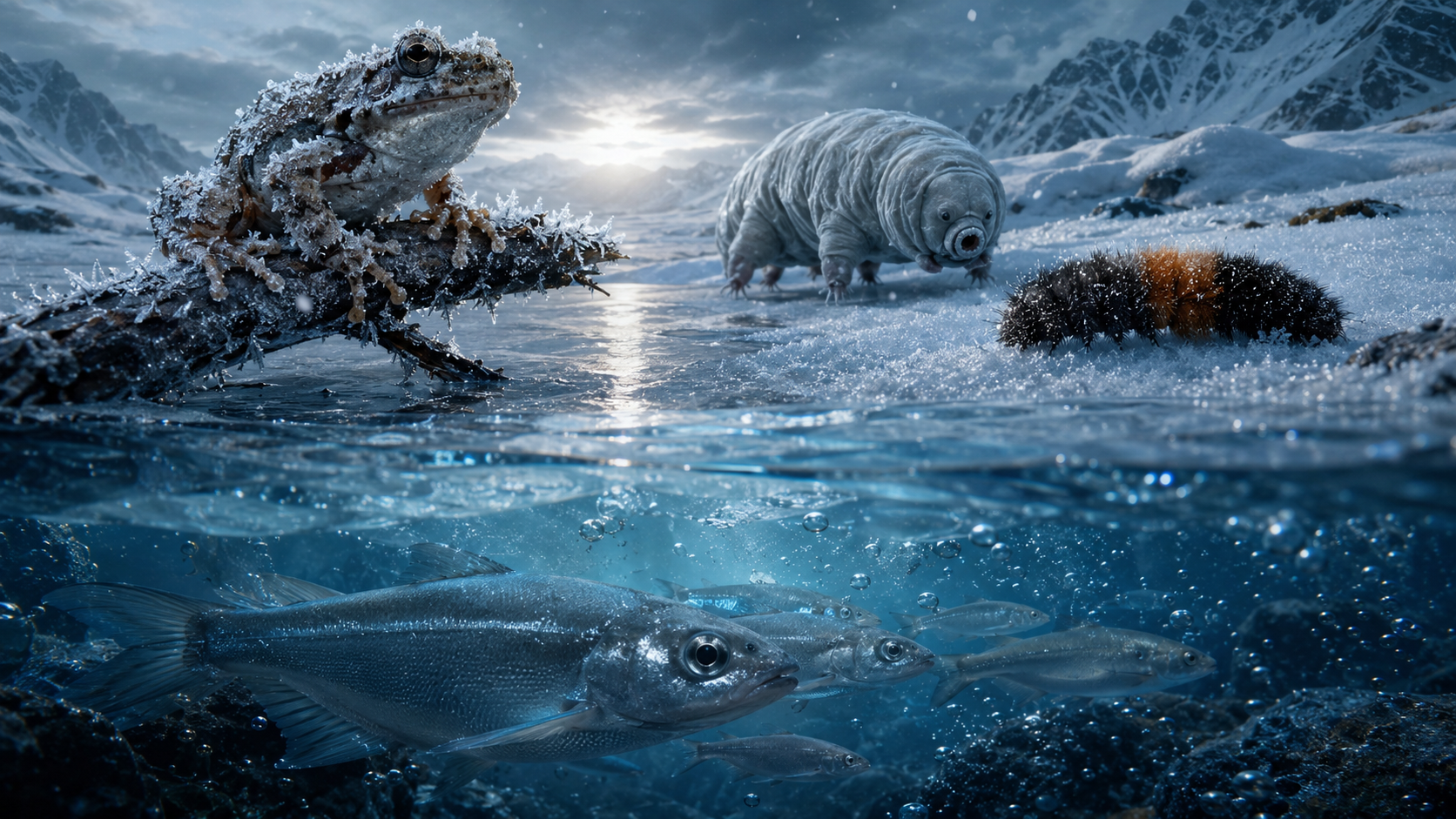
Imagine this. The temperature drops below zero, water turns into ice, and for most living creatures that would be game over. But nature has some absolute survival champions that treat extreme cold like a pause button. Some animals can literally freeze and then come back to life.
Why freezing is so dangerous
The biggest problem is not just the cold itself. It is ice.
When water inside cells turns into ice crystals, those crystals can damage tissues like tiny shards of glass. For most animals, that is a disaster.
But some species found clever workarounds. Some make their own natural antifreeze. Others move water out of their cells before freezing happens. And some slow their bodies down so dramatically that life almost stops until things warm up again.
Nature’s freezing survival champions
1. The wood frog that basically comes back from the dead
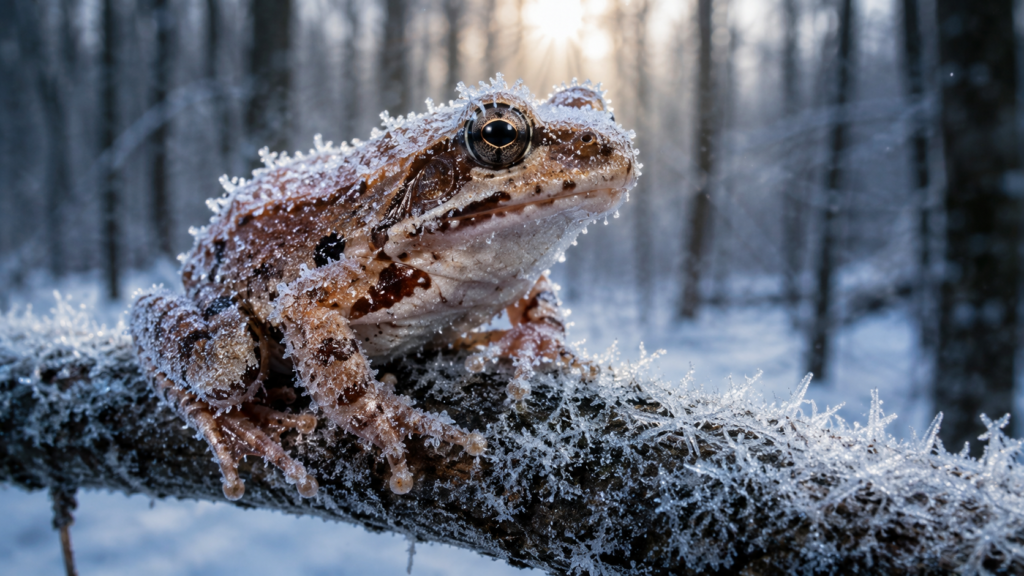
If someone told you a frog could survive with its heart stopped, you would probably call that science fiction. But the North American wood frog actually does exactly that.
During winter, as much as 60 to 70 percent of the water in its body can freeze. Its heart stops beating. Breathing stops too. It looks completely dead.
But right before freezing, the frog’s body goes into emergency mode. It floods itself with glucose and special protective chemicals that work like natural antifreeze. That helps protect its cells from serious damage.
When spring arrives, the ice melts, the heart starts beating again, and the frog goes right back to normal life.
2. Tardigrades, the tiny creatures that refuse to quit
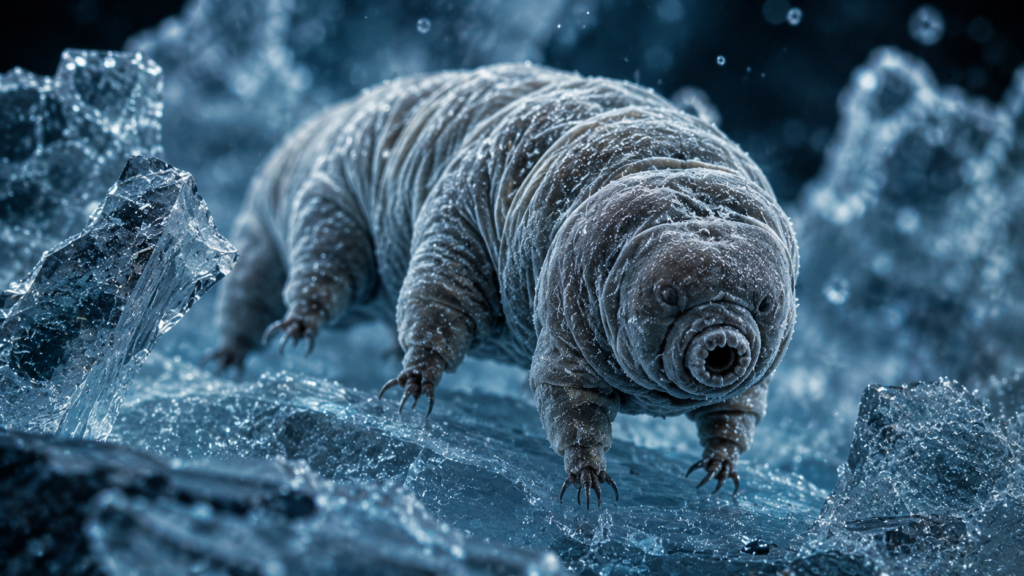
Tardigrades look like tiny adorable microscopic bears. Do not let that fool you. These things are survival monsters.
When conditions become extreme, including deep freezing temperatures, they can enter a state called cryptobiosis. Think of it like pressing pause on life.
Their metabolism drops so low that they are barely doing anything at all.
They can survive brutal cold, dehydration, extreme pressure, and even the vacuum of space.
So technically, tardigrades do not just survive freezing. They practically shut themselves down and wait it out.
3. Antarctic fish with built in antifreeze
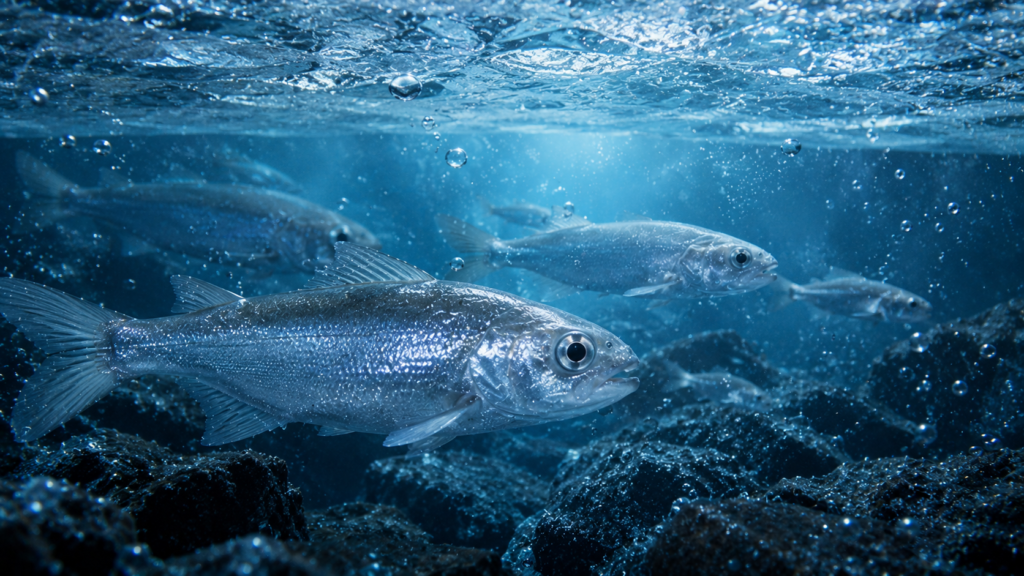
Some fish living in Antarctic waters survive in temperatures where normal blood would freeze.
How?
Their bodies produce special antifreeze proteins that stop ice crystals from growing.
Without this trick, they would basically become frozen fish sticks.
Nature’s engineering is wild.
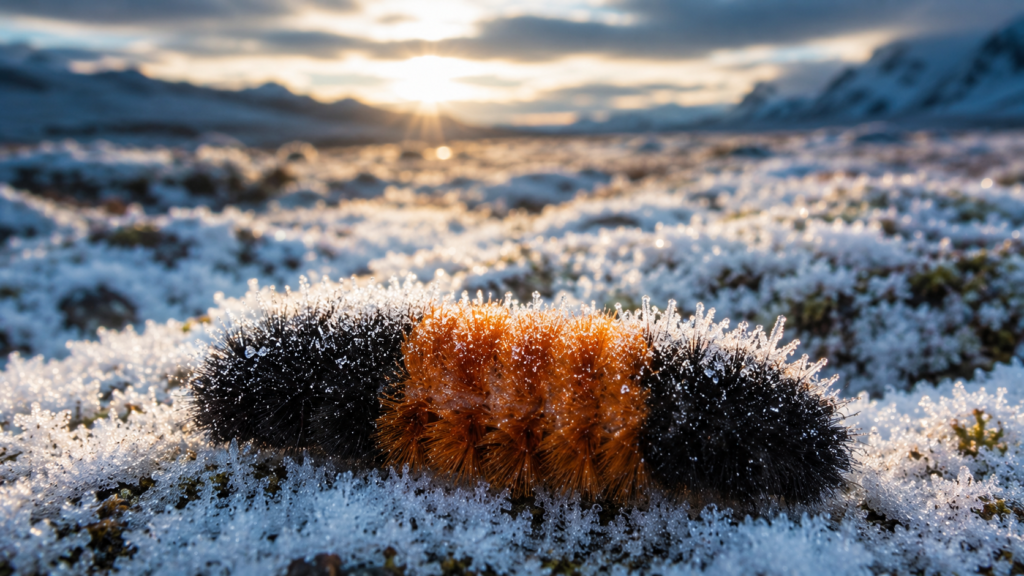
4. The caterpillar that freezes over and keeps going
The Arctic woolly bear caterpillar lives in brutally cold conditions and can survive repeated freezing.
Because the Arctic summer is so short, its life cycle can take several years.
It freezes during winter, thaws when temperatures rise, and keeps developing like nothing happened.
Basically, it lives life in seasonal installments.
5. Nematodes, the masters of waiting
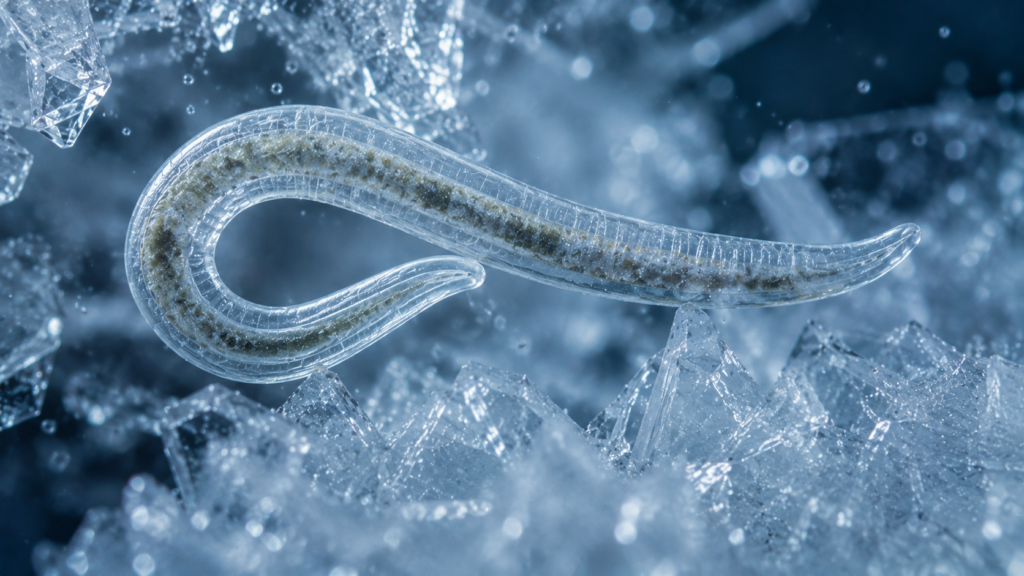
Some microscopic worms called nematodes can survive freezing, drying out, and extremely harsh environments.
They slow their metabolism down so much that they can outwait terrible conditions for surprisingly long periods.
Their strategy is simple. If the world becomes unbearable, just wait.
How these animals actually survive freezing
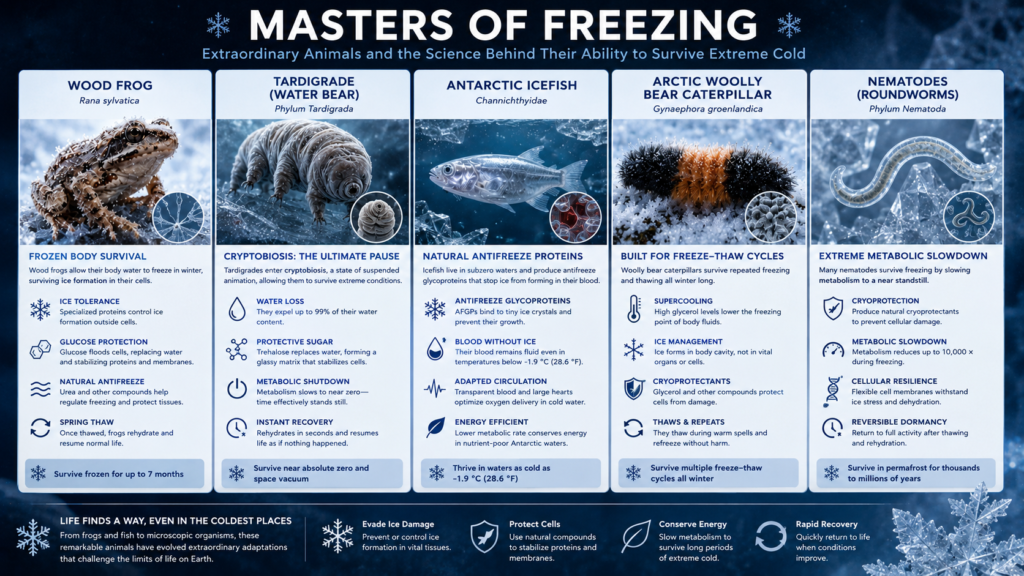
They all deal with extreme cold differently.
Some protect their cells with natural antifreeze chemicals.
Some remove water from vulnerable tissues before freezing can cause damage.
Others slow their metabolism down so dramatically that life almost looks paused.
That is what makes this so fascinating. Nature did not invent one solution. It invented several.
Could humans ever do this?
Short answer: no.
Human cells are far too vulnerable to damage from ice crystals. That is why severe hypothermia is dangerous, and why freezing a whole human like in science fiction is not something we can actually do.
Yes, scientists can preserve certain cells and biological materials in controlled conditions. But freezing and restarting an entire human body is a completely different story.
Why this matters
This is not just fun nature trivia.
Scientists study these survival tricks for medicine, organ preservation, cryobiology, and long term biological storage.
Nature figured out solutions long before humans even started asking the questions.
Final thought
The next time you complain about cold floors in winter, remember there is a frog out there whose heart literally stops for the season.
Suddenly warm socks seem like a pretty good deal.
Nature never runs out of surprises.
From animals that survive freezing to creatures that may sense earthquakes before instruments or seem to barely sleep, the animal world keeps getting stranger. Read Animals That Sense Earthquakes Before Instruments and Animals That Never Sleep: Myth or Reality?
And if you enjoy fascinating stories about wildlife, mysterious places, and incredible facts about our world, follow our Telegram channel Wonderful World.