
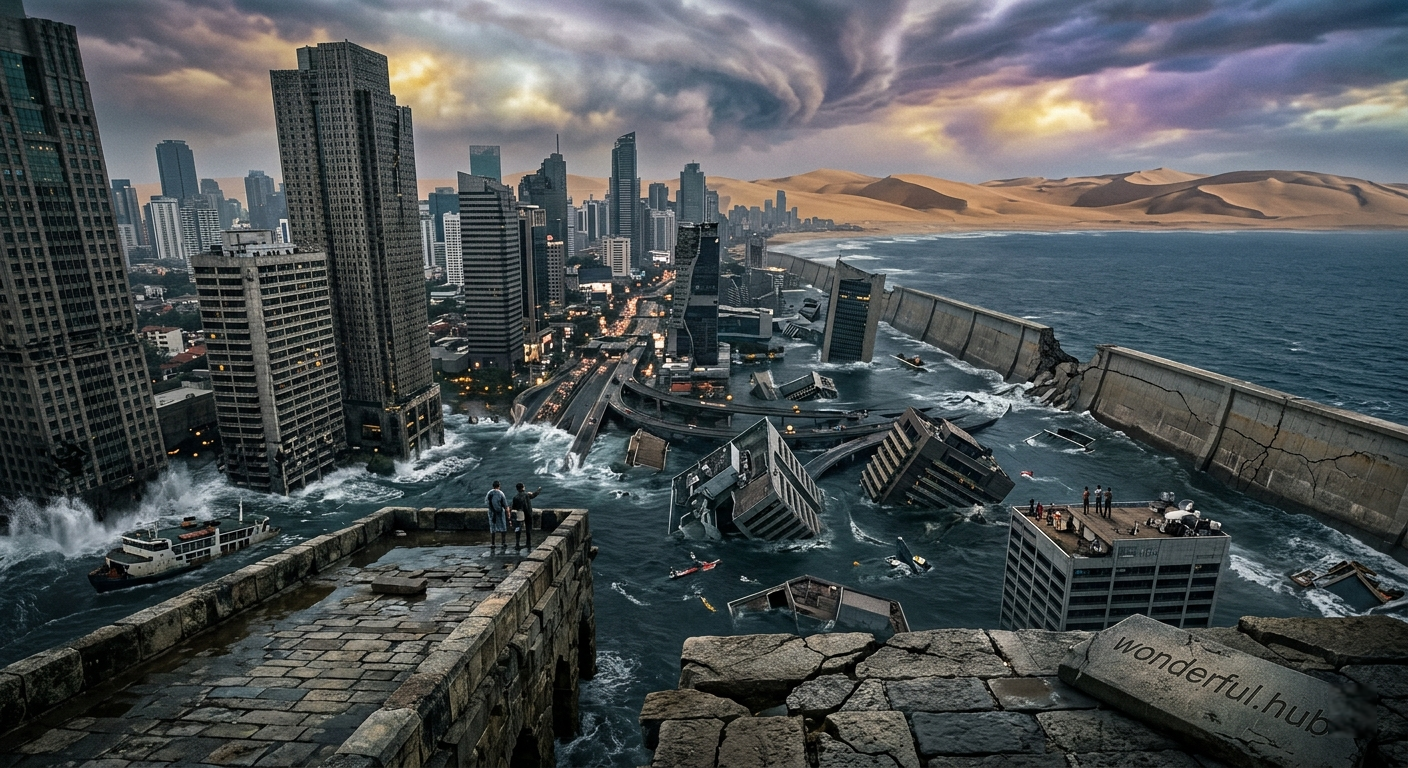
Imagine waking up in the morning and finding that your front door will not open because your house sank another few centimeters overnight. This is not a horror movie plot but a typical Tuesday for residents in parts of Jakarta or Mexico City. We are used to thinking of the ground as something immovable but in reality many of the world’s great cities are behaving like sinking ships. The most surprising part is that they are not just drowning because of rising oceans they are literally being pressed into the planet by their own weight.
The Aztec Curse and the Thirst of Mexico City
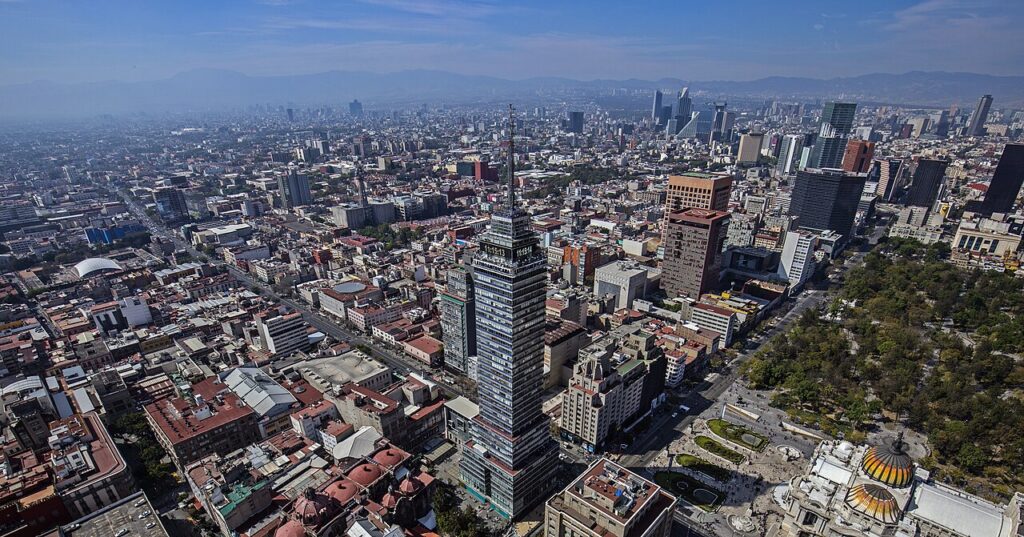
By Gobierno CDMX – HJ2A4913, CC0, https://commons.wikimedia.org/w/index.php?curid=115335826
The history of Mexico City is a perfect example of how human stubbornness clashes with nature. Long ago this was the site of Tenochtitlan the Aztec capital built right in the middle of the massive Lake Texcoco. The Aztecs were masters of water management they created floating gardens and lived in harmony with the lake. However the arriving conquistadors decided the water was in their way and drained the lake entirely.
Today Mexico City sits on soft and porous lake silt that acts like a giant sponge. The city pumps out massive amounts of water to quench the thirst of twenty million residents and the soil beneath their feet simply collapses. In the center of the city stands the famous Angel of Independence column. When it was built at the start of the last century it was level with the sidewalk. Now workers have to add new steps every few years because the surrounding ground is dropping while the column itself rests on deep pylons. Mexico City is sinking at a rate of up to fifty centimeters per year. This is an absolute world record that cannot be stopped by any dams.
Jakarta: The City That Gave Up
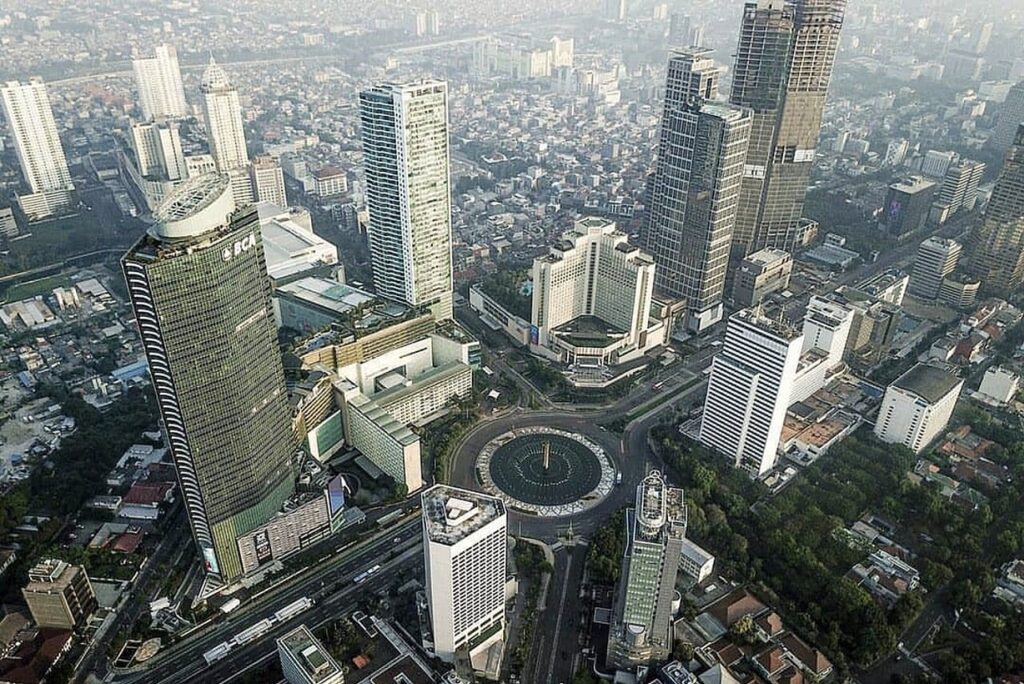
By Jakartadunia – Own work, CC BY-SA 4.0, https://commons.wikimedia.org/w/index.php?curid=127198725
While Mexico City is still trying to fight the authorities in Indonesia have effectively admitted defeat. Jakarta is sinking so fast that by the middle of this century most of the city will be underwater. There are surreal places here where massive concrete walls separate slums from the ocean and the water level behind the wall is higher than the roofs of the houses. Residents have grown used to water seeping through the walls during high tides and flooding their rooms.
The incredible part of the Jakarta story is that the country simply decided to build a brand new capital city called Nusantara in the jungles of Borneo. Imagine the scale of the disaster if it is cheaper to build an entire city from scratch in a wild forest than to save the old metropolis. People in Jakarta spent years drilling illegal wells in their backyards to get water and now the ocean is collecting the debt. Legends about the sea swallowing the city for the sins of its people have long been treated as documentary facts here.
Treasures of the Pirate Capital
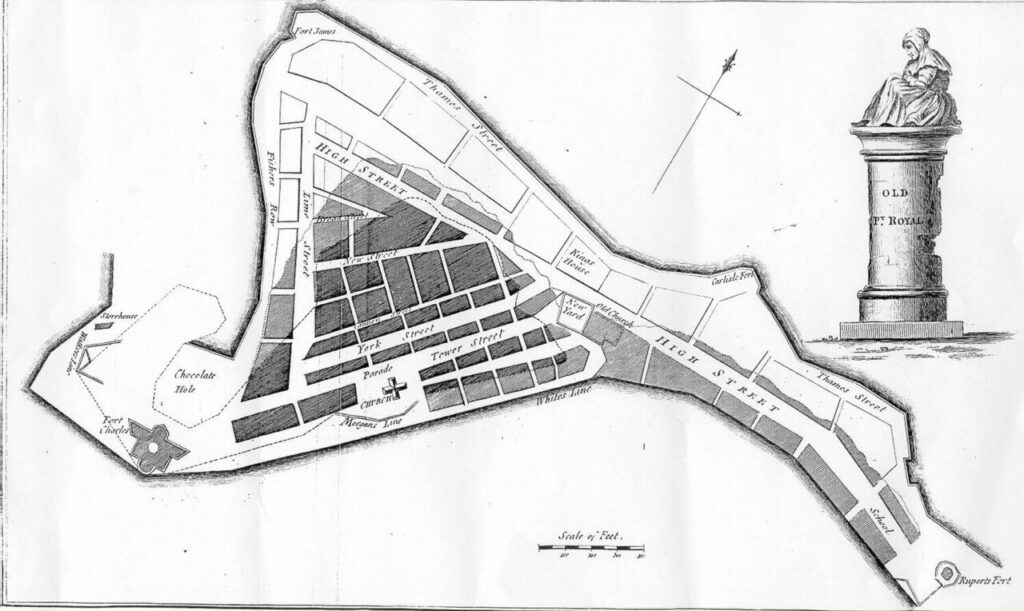
By Old map. Drawn from The Gentleman’s Magazine 55 (1785), plate inserted between p. 864 and 865 (Gent. Mag. Nov. 1785).Transferred from nl.wikipedia; transferred to Commons by User:Koektrommel using CommonsHelper., Public Domain, https://commons.wikimedia.org/w/index.php?curid=7825534
When talking about sinking cities we must mention Port Royal in Jamaica. In the seventeenth century it was the richest and most wicked city in the world the capital of the Caribbean pirates. In 1692 a powerful earthquake struck and due to the specific soil known as liquid sand a huge part of the city simply slid into the sea in a matter of minutes.
Eyewitnesses claimed the earth literally opened up and swallowed people alive. Today this city lies on the ocean floor just off the coast. Divers find taverns frozen in time bottles of rum and even pocket watches that stopped exactly at the moment of the disaster. It is a vivid reminder of how quickly and mercilessly nature can erase even the most fortified port from the face of the earth.
Why Dams Are Just a Band-Aid
Public Domain, https://commons.wikimedia.org/w/index.php?curid=316047
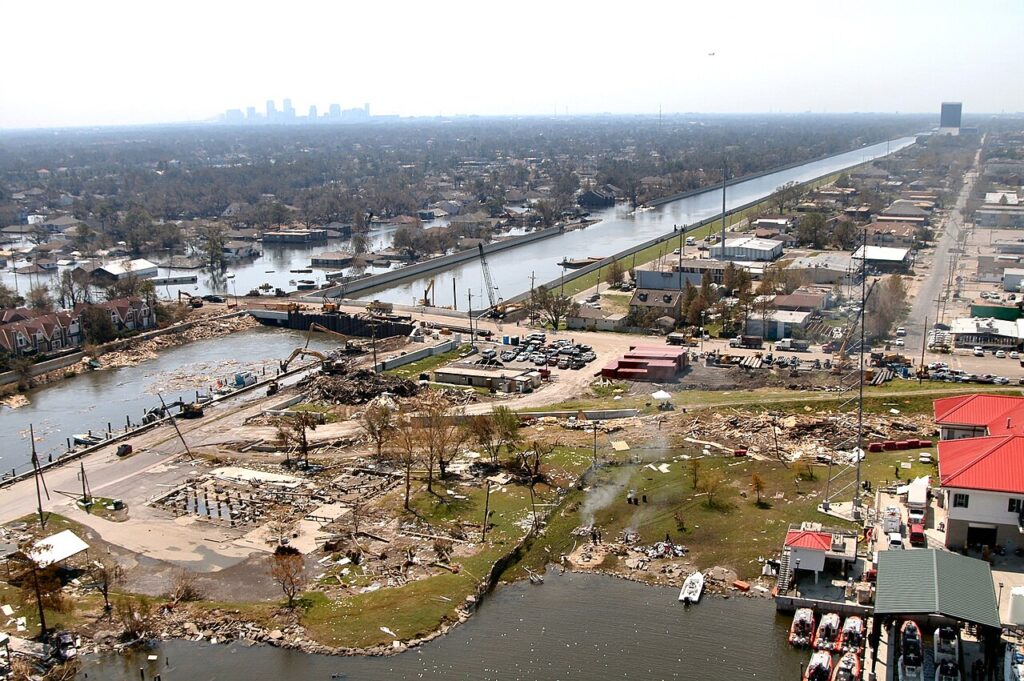
Many people think that building a high wall is enough to solve the problem. But engineers know a terrifying fact dams are incredibly heavy. When we build a giant concrete wall to protect ourselves from water we press even harder on the soft soil of the shore. This is exactly what happened in New Orleans. The levee system protected the city from floods but it also prevented the Mississippi River from bringing in fresh silt. As a result the city ended up in a deep bowl with a bottom that is constantly sinking.
When Hurricane Katrina hit the dams did not just fail under the pressure they began to crumble from within because the ground beneath them shifted. This is a clear example of how attempts to cheat nature lead to even greater casualties. We try to lock the ocean outside but we forget that the danger is right under the soles of our shoes.
Myths of Divine Wrath and the Reality of Skyscrapers
In ancient times people believed that if a city went underwater it meant the sea god was angry. In China there is a legend of the sunken city of Shicheng often called the Atlantis of the East. In reality it was flooded on purpose during the construction of a hydroelectric power station but it remains perfectly preserved at the bottom with all its temples and arches.
Modern myths look different. People in New York often say that Manhattan will never sink because it stands on solid bedrock. However recent studies have shown that even granite bends under the colossal weight of skyscrapers. Scientists calculated that the total weight of New York buildings is about seven hundred and sixty billion kilograms. This pressure is causing the island to slowly submerge. So even the most advanced technologies offer no guarantee of stability.
What Awaits Us Next
We are entering an era where the map of the world will be redrawn in real time. This does not mean all cities will disappear tomorrow but their appearance will definitely change. We might see a revival of the Venetian lifestyle in the most unexpected places or get used to the first floor of a house being a technical pool for receiving tidal water.
The main lesson that sinking megacities teach us is simple you cannot infinitely take water from the earth and give nothing back. Nature always seeks balance and if we create a void beneath our feet it will inevitably be filled. And most often it will be salty ocean water.
If you think sinking cities are only about concrete and skyscrapers check out our story about The Village That Lives on Water. There people have been building lives right on the waves for centuries and know much more about water than modern engineers.
And to find out every day how nature rewrites the rules and where else on the planet the ground is moving beneath our feet subscribe to our Wonderful World channel. There we show a world that never stops amazing us.