
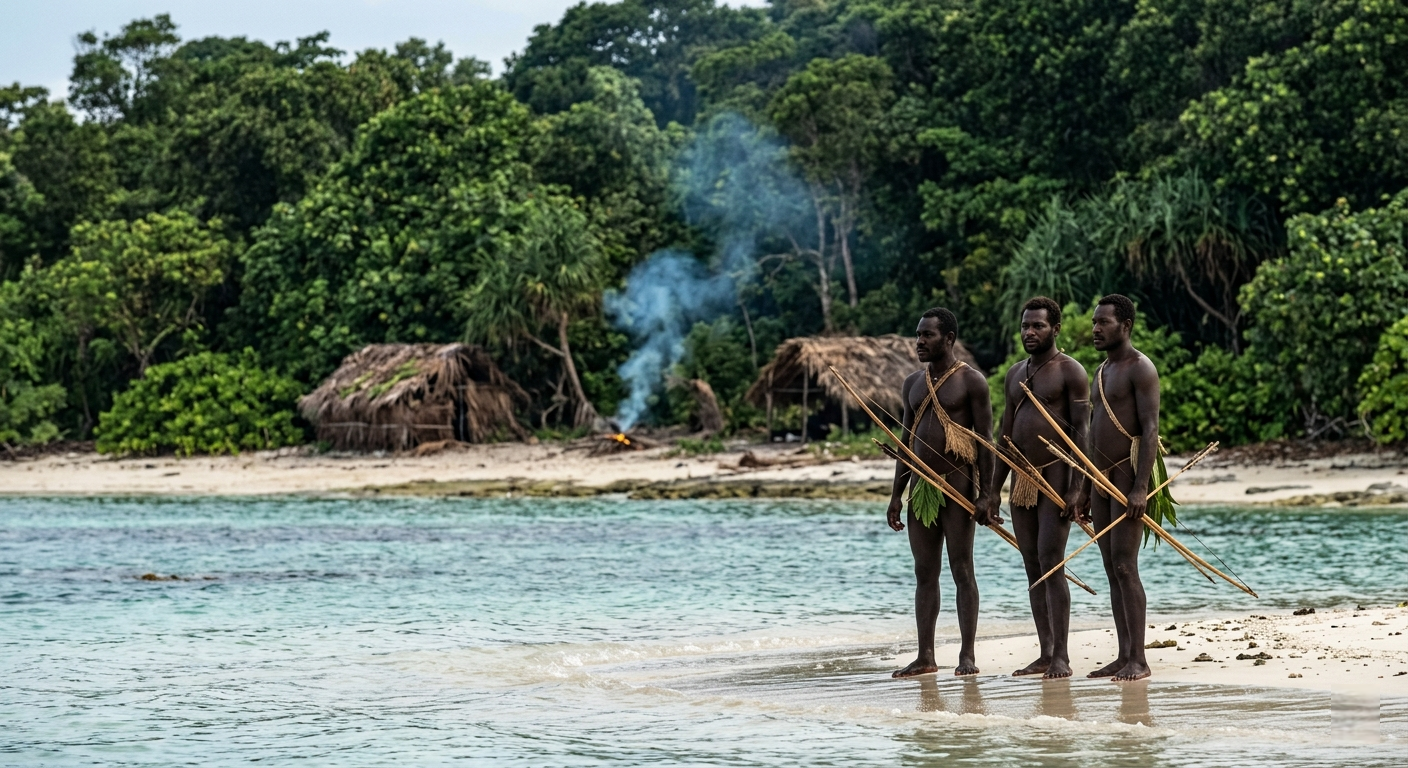
There are places on Earth where humans shouldn’t go. Not because it’s difficult. Not because it’s far. But because it’s simply not allowed.
In the Bay of Bengal, among the Andaman Islands, there is North Sentinel Island. A small piece of land, about 59.67 square kilometers, roughly 7 by 8 kilometers in size, located around 36 kilometers from South Andaman and 50 kilometers from Port Blair. The island is surrounded by coral reefs, has no natural harbors, and is almost entirely covered with dense tropical forest, with only a narrow strip of white sand along the shore. The land rises gently from the coast, reaching about 46 to 122 meters at its highest point.
But geography isn’t the real reason.
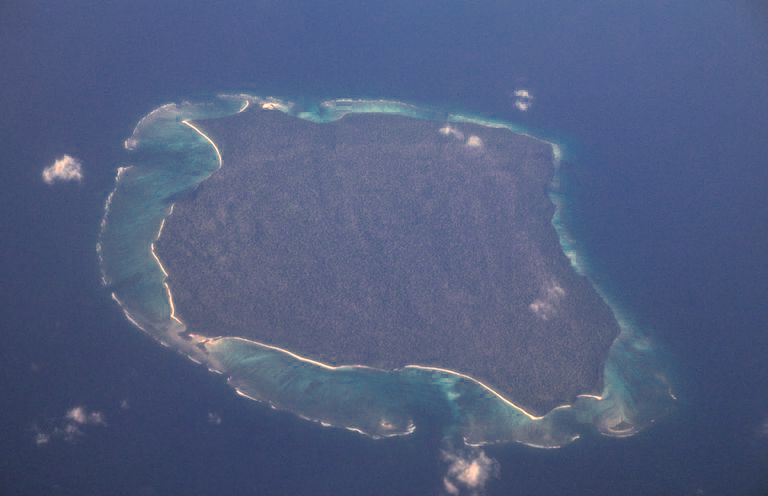
By Medici82 – Own work, CC BY-SA 4.0, https://commons.wikimedia.org/w/index.php?curid=67350057
You can’t fly there, sail there, or even get close. Not because it’s impossible, but because it can end very quickly. The reason is the people who live there.
An Island That Stayed on Its Own
One of the most isolated tribes on Earth lives here – the Sentinelese. No one knows their exact number. In 2001, 39 people were recorded. In 2011, only 15 were seen. Those numbers are rough estimates. The real population could be anywhere between 50 and 400, possibly more.
It’s believed their ancestors split from the rest of humanity around 30,000 years ago. Some theories suggest they may have lived on this island for 60,000 to 70,000 years.
They belong to a group known as Negritos, indigenous peoples of Southeast Asia. On average, men are about 1.6 meters tall, and women around 1.5 meters.
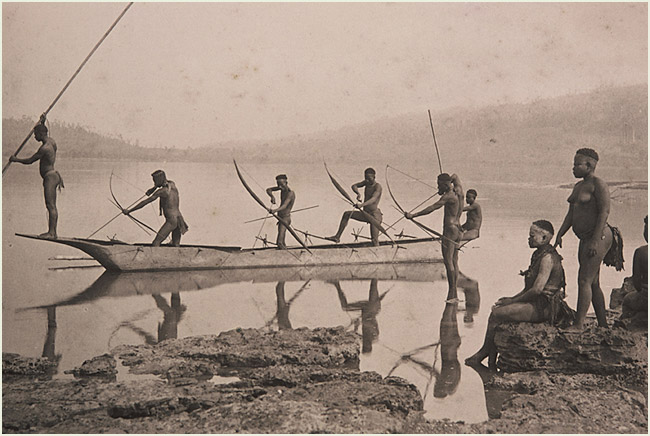
By Unknown author – http://www.oldindianphotos.in/2011_10_10_archive.html, Public Domain, https://commons.wikimedia.org/w/index.php?curid=39717651
How They Live
Their way of life remains extremely simple. They hunt, fish, and gather plants. They do not practice agriculture. They use small canoes, mostly around the reefs, and build simple shelters made from branches and leaves.
They use fire, but likely do not create it themselves, instead keeping embers alive.
There is one detail that stands out: metal.
After shipwrecks near the island in 1977 and 1981, including vessels named MV Rusley and MV Primrose, the Sentinelese began using metal from the debris. They learned how to shape and sharpen it, turning it into arrowheads and spear tips.
They didn’t accept the outside world, but they learned how to use parts of it.
Why No One Is Allowed to Go There
The island officially belongs to India, but all contact is banned for two reasons.
The first is danger. The Sentinelese see outsiders as a threat and act immediately, without warning. In 2006, two fishermen drifted near the island and were killed. In 2018, an American man named John Allen Chau attempted to make contact. He returned several times and was ultimately killed.
Even helicopters flying low have been met with arrows. This happened in 2004 after the tsunami.
This is not random aggression. It is protection.
The second reason is disease. The Sentinelese have no immunity to modern illnesses. Even a simple infection could wipe out the entire tribe.
A History of Failed Contact
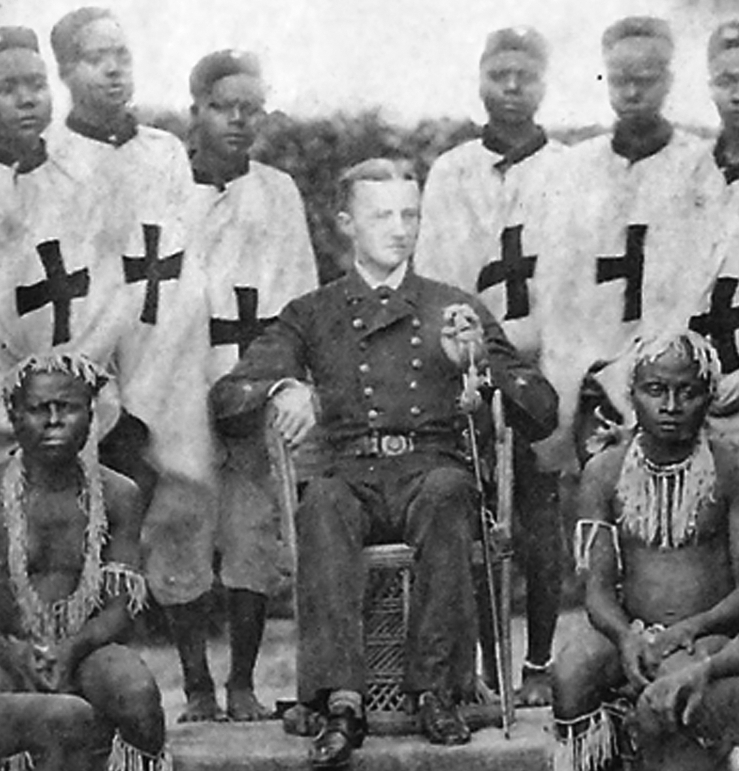
By Unknown author – Reprinted in Satadru Sen (2009) Savage Bodies, Civilized Pleasures: M. V. Portman and the Andamanese . American Ethnologist36(2):364-379., Public Domain, https://commons.wikimedia.org/w/index.php?curid=74575811
The first recorded sighting of the island dates back to 1771, when a British sailor observed lights on the shore.
In 1880, a British officer named Maurice Portman landed on the island and captured several people. The adults died quickly from disease, and the children were returned. This likely shaped the tribe’s hostility toward outsiders.
From 1967 onward, Indian expeditions attempted contact by leaving gifts such as coconuts, animals, plastic buckets, and toys. The reactions were unpredictable. Some items were accepted, others were destroyed and buried.
In 1991, there was a rare peaceful moment when the Sentinelese approached without weapons and accepted coconuts directly. However, this did not lead to ongoing contact, and by 1997 all such attempts were stopped.
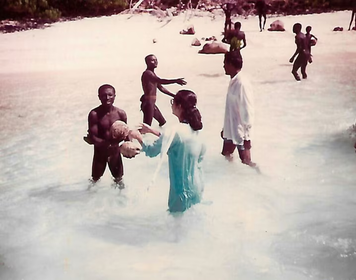
By Anthropological Survey of India – https://archive.today/20250822202349/https://www.nationalgeographic.com/premium/article/first-woman-chattopadhyay-contact-sentinelese-andaman, Fair use, https://en.wikipedia.org/w/index.php?curid=82032531
After the Tsunami
In 2004, a massive earthquake and tsunami struck the region. The island itself changed, rising by about 1 to 2 meters. Reefs became shallower, coastlines shifted, and lagoons disappeared.
For some time, it was unclear whether the tribe had survived. When a helicopter later flew over the island, a man appeared on the shore and aimed a bow at it.
That was the answer. Nothing had changed.
A Restricted Zone
Today, a strict exclusion zone surrounds the island. Approaching closer than about 5 kilometers is prohibited. The area is patrolled by the Indian Navy and Coast Guard.
The government follows a policy of observation from a distance, effectively allowing the tribe to remain independent.
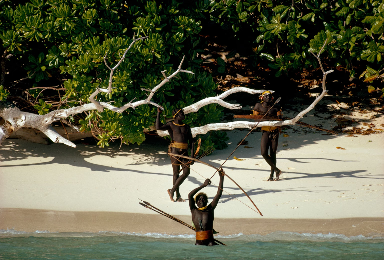
By Anthropological Survey of India – https://archive.today/20250822202349/https://www.nationalgeographic.com/premium/article/first-woman-chattopadhyay-contact-sentinelese-andaman, Fair use, https://en.wikipedia.org/w/index.php?curid=82032531
What We Still Don’t Know
The Sentinelese language remains unknown. There are no recordings, no dictionaries, and even nearby tribes cannot understand it.
Satellite images show paths and small structures, but that is all that can be observed.
Everything else remains inside the island.
Final Thought
North Sentinel Island is a rare place where the world chose to step back. Not because it couldn’t go further, but because it understood that it shouldn’t. Some boundaries are not meant to be crossed, and this island is one of them.
Want to continue exploring unusual places? Read our article on The Village That Lives on Water.
Join our Telegram channel Wonderful World for more unique places, stories, and discoveries from around the planet.