
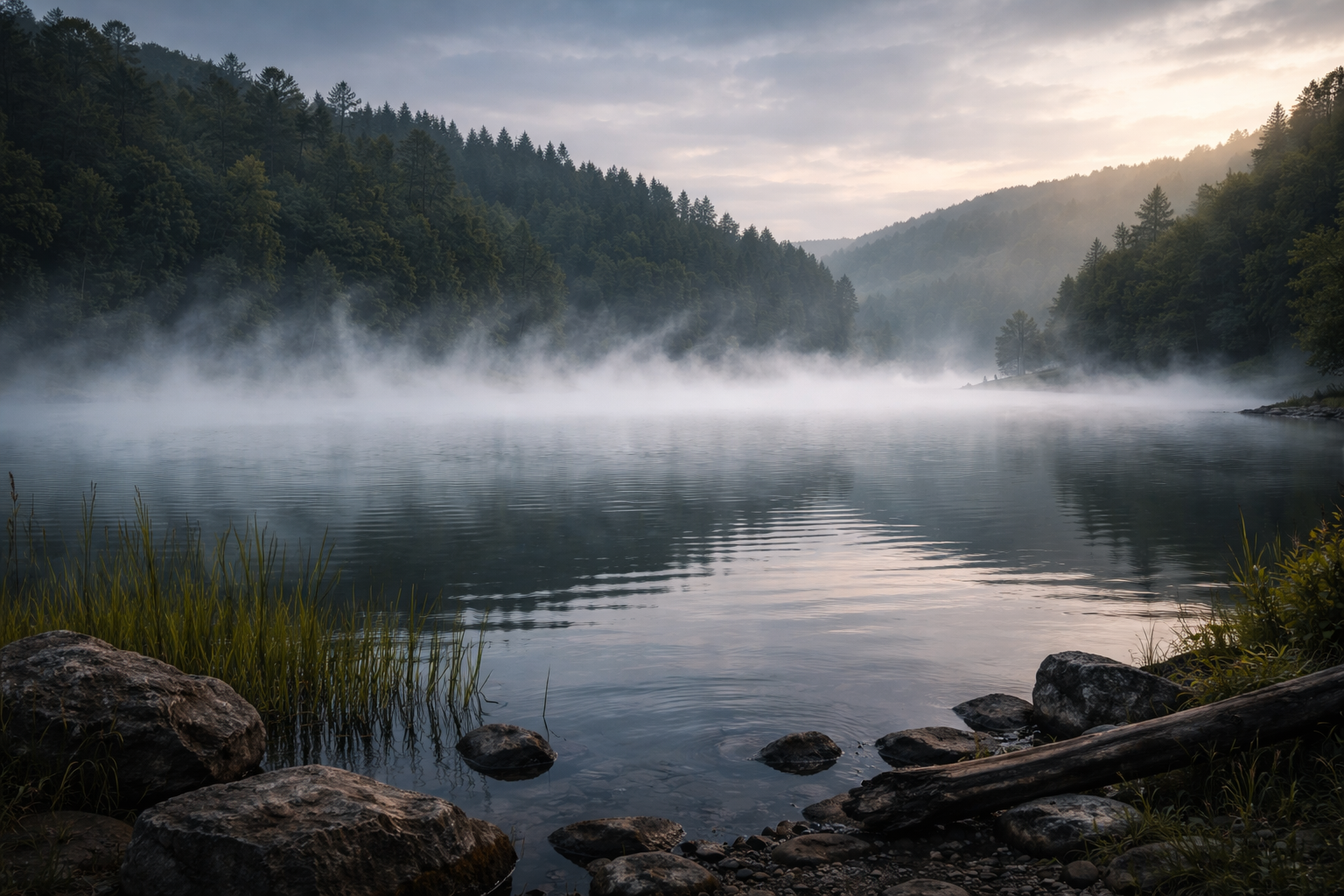
When you look at a lake, it feels like one of the calmest things in nature. The surface is still, almost unchanged, and everything about it suggests stability. People come to places like this to relax, build homes nearby, go fishing, and treat the lake as a safe part of the landscape. Most of the time, that assumption is correct.
But there are rare exceptions that completely change this perception. In some places, a lake can suddenly release a massive amount of gas. No warning. No obvious signs beforehand. And the consequences can be severe precisely because nothing seems unusual until it is too late.
The event that changed everything
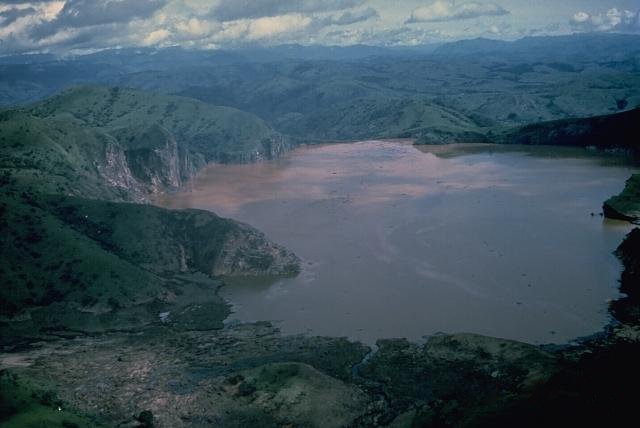
By Jack Lockwood, USGS – http://www.volcano.si.edu/world/volcano.cfm?vnum=0204-03-&volpage=photos&photo=002064, Public Domain, https://commons.wikimedia.org/w/index.php?curid=2766399
In August 1986, something happened in Cameroon that forced scientists to rethink what lakes are capable of. Lake Nyos suddenly released a large cloud of carbon dioxide.
People in nearby villages did not see fire or hear an explosion in the usual sense. Many simply lost consciousness in their sleep. By morning, the situation became clear: animals were lying motionless, people were not waking up, and the lake itself looked almost unchanged.
Later, researchers confirmed that gas had risen from the depths and spread across the ground. It is estimated that more than 1,700 people and thousands of animals died. This became one of the clearest examples of how something that looks completely harmless can hide a serious threat.
How gas ends up in a lake
To understand this, it helps to know where the gas comes from. In regions with volcanic activity, carbon dioxide can rise from deep underground. It moves through cracks in the Earth and enters the water.
At depth, pressure is much higher than at the surface. Because of this, the gas does not escape but dissolves in the water, similar to what happens in carbonated drinks. The deeper the layer, the more gas it can hold.
If you imagine opening a bottle of soda, the gas quickly escapes once the pressure is released. In lakes, a similar process can happen, but on a much larger scale.
Why it can stay hidden for years
One of the key reasons this process is so dangerous is that it can remain invisible for a long time. In deep lakes, water forms layers that do not mix easily.
The upper layer interacts with the air and changes constantly. The deeper layers remain isolated. Gas accumulates there slowly, without any visible signs at the surface.
This means a lake can look completely normal while a large amount of dissolved gas is building up below.
What triggers the release
For a gas release to happen, something has to disturb the balance. This could be a sudden drop in temperature, strong winds, a landslide, or even a small shift in the water.
When deeper water rises, pressure decreases. The dissolved gas begins to form bubbles and escape.
This process accelerates itself. As bubbles form, the water becomes lighter and rises faster, pulling more gas rich water upward. Within a short time, a large volume of gas can be released.
Why it is called an explosion
There is no fire or blast in the usual sense. But the speed and scale of the gas release can resemble an explosion.
The key difference is that the gas is invisible. Carbon dioxide has no color and no smell.
Why it is so dangerous
Carbon dioxide is heavier than air. Instead of rising, it spreads along the ground and collects in low areas.
This makes it especially dangerous for people and animals nearby. There are no clear warning signs. Breathing becomes difficult without understanding why.
This is exactly what happened at Lake Nyos. The danger was not visible, and that made it far more deadly.
Are there other cases
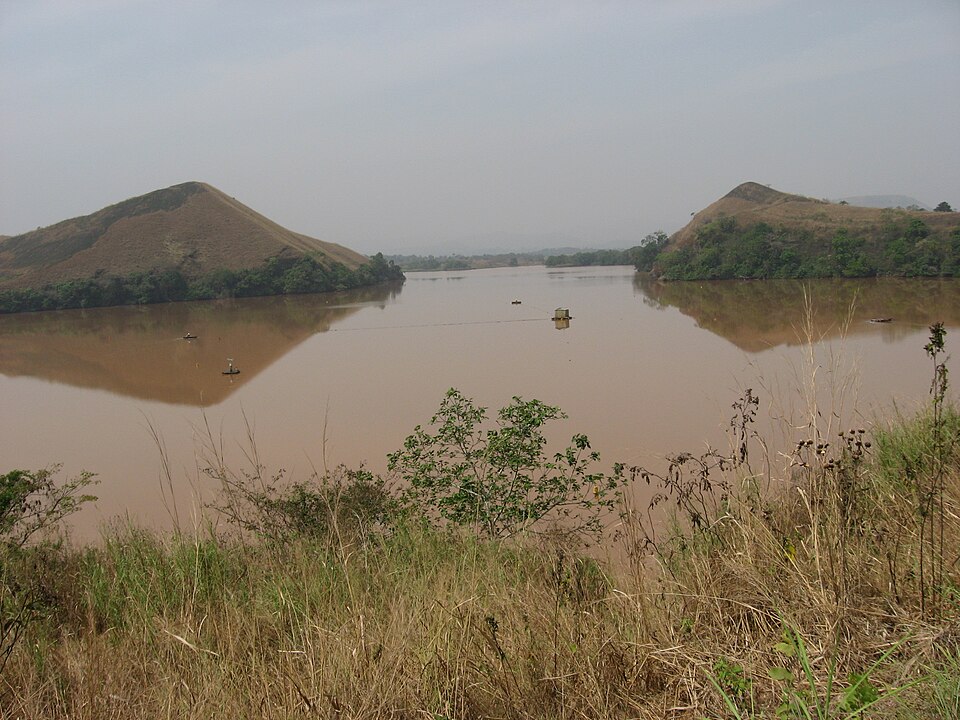
By Prosper Mekem – Own work, CC BY-SA 4.0, https://commons.wikimedia.org/w/index.php?curid=60839633
Yes, Nyos is not the only example. In 1984, a similar event occurred at Lake Monoun, also in Cameroon. That release killed dozens of people.
After these events, scientists began studying such lakes more closely. They found that similar conditions exist in other regions, particularly in parts of Africa with volcanic activity.
Can this be prevented
Today, some of these lakes are monitored and managed. Special systems are installed to release gas gradually from the depths. This reduces pressure and lowers the risk of a sudden release.
Lake Nyos is now controlled in this way. It is a practical example of how science can reduce risk without drastically changing the natural system.
What this tells us
This phenomenon shows that even the most peaceful looking parts of nature can hide complex processes. A lake is not just water. It is a system where changes are happening all the time, even if they are not visible.
And sometimes, the most important processes are the ones we cannot see.
Conclusion
Lakes capable of releasing gas are a reminder that stability in nature can be temporary. Processes can build up quietly over years and then unfold very quickly.
These events are rare, but they are real and well studied. And understanding them is the key to reducing their danger.
If you’re curious about other natural phenomena that seem impossible but are very real, it’s worth exploring The Strangest Natural Phenomena That Actually Exist. It brings together rare and little known processes that reshape how we understand the natural world and reveal just how complex it really is.
And if you want to keep discovering more of these stories, you can follow the Wonderful World Telegram channel, where new ideas, insights, and articles are shared regularly.