
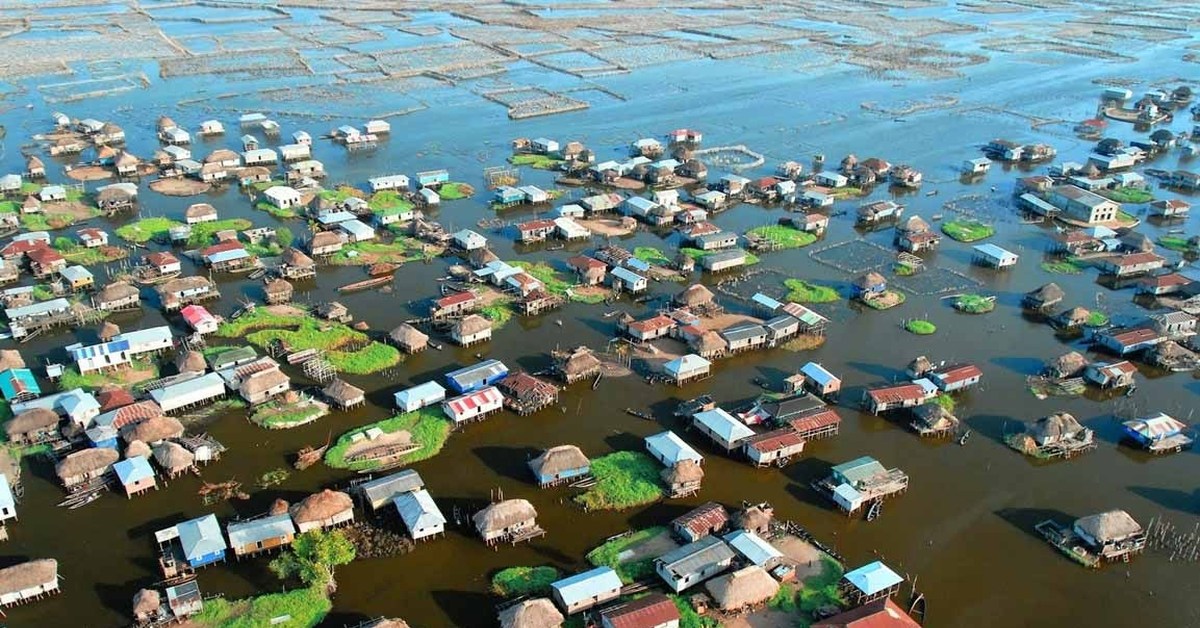
Imagine a town where you can’t just walk outside and go down the street. There are no roads, no sidewalks, no intersections. Everything works differently. Instead of streets, there’s water. Instead of traffic, there are boats moving between houses.
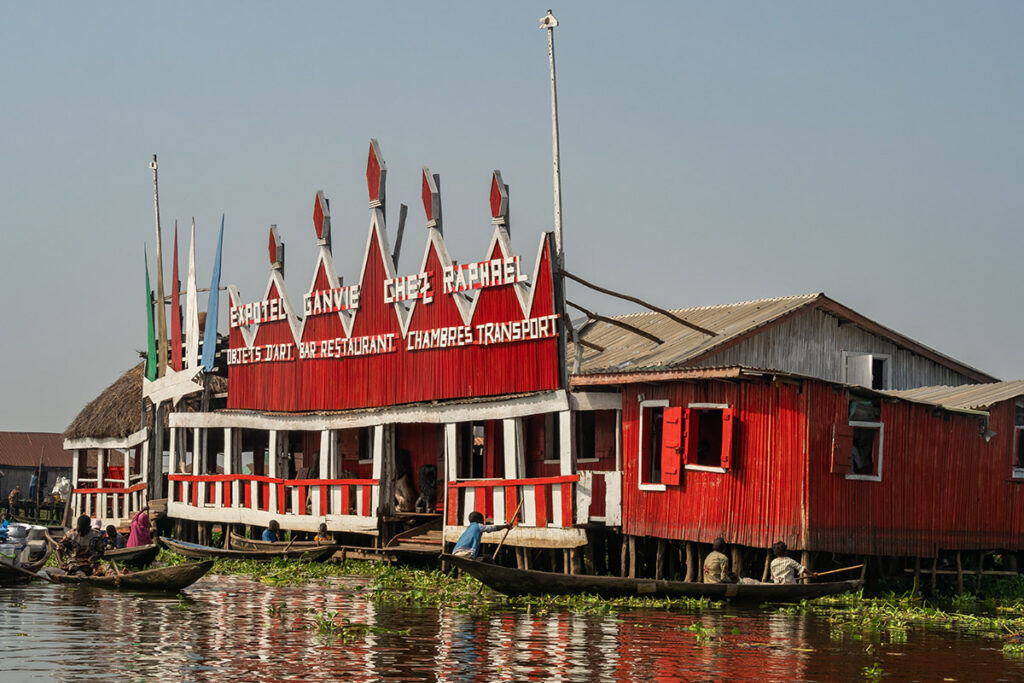
That’s Ganvie the largest stilt village in Africa, built on Lake Nokoué in Benin. Around thirty thousand people live here, and almost everything they do happens on the water.
At first glance, the place looks fragile. Wooden houses stand on stilts, narrow canals run between them, and everything depends on the lake. But in reality, this system has worked for centuries.
The Story of an Escape
Ganvie didn’t start as a comfortable place to live. It started as a way to survive.
In the 17th century, this region was controlled by the Kingdom of Dahomey. Warriors from the Fon people raided nearby communities, capturing people and selling them into slavery to European traders. For local tribes, this was a constant threat.
The Tofinu people couldn’t fight back. So their leader came up with a simple idea that changed everything. The Fon believed that entering deep water was forbidden because of spirits that lived there.
So the Tofinu moved onto the lake and began building shelters.
At first, these were temporary structures. Over time, people started driving wooden poles into the lakebed, building stronger houses, and expanding the settlement. What began as a refuge slowly became a permanent village.
The name “Ganvie” is often translated as “we survived,” and that meaning still defines the place today.
Building Homes Without Land
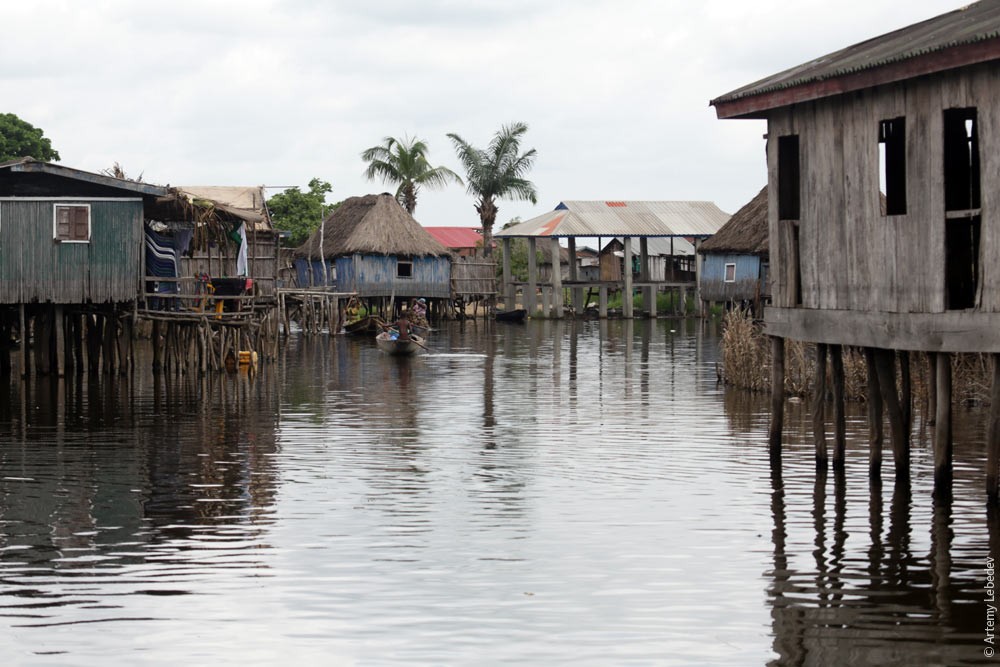
Homes in Ganvie are built on wooden stilts driven into the muddy bottom of the lake. The structure is simple: wood for the frame, reeds or bamboo for the walls, and palm leaves for the roof. Today, many houses use metal sheets because they last longer.
These homes may look basic, but they are well adapted to the environment. The height of the stilts accounts for changing water levels, and the lightweight materials make repairs easier.
Still, nothing lasts forever. After about ten to fifteen years, the lower supports begin to wear out and must be replaced. This is hard, physical work, and there are local builders who specialize in it.
Inside, the homes feel familiar. There are sleeping areas, cooking spaces, and storage. The only real difference is what lies beneath the floor water.
Boats Are Part of Everyday Life
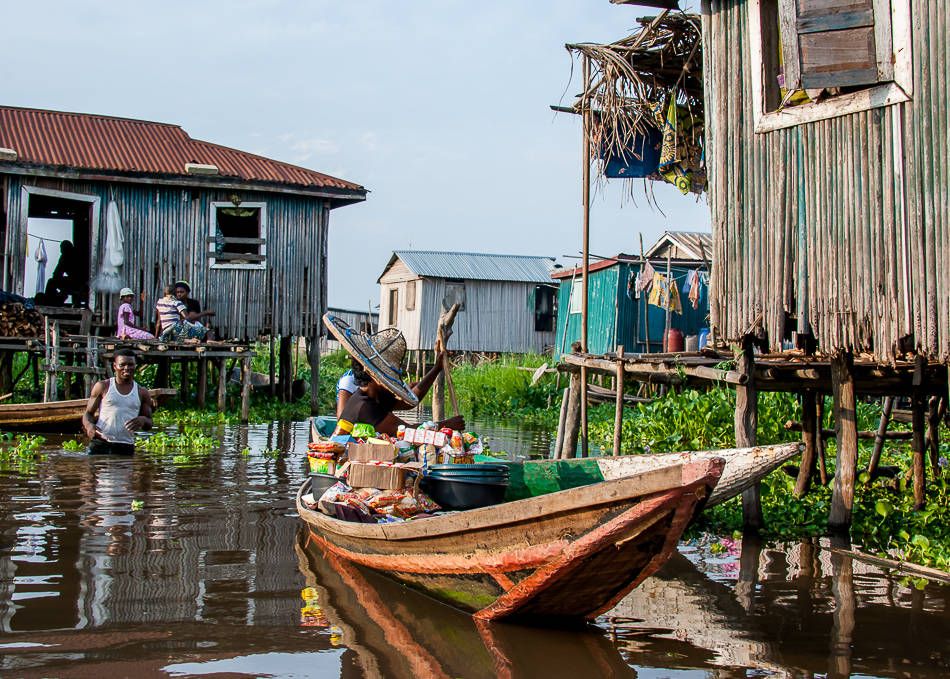
Life in Ganvie is built around boats.
To visit a neighbor, you take a boat. To go to school, you take a boat. To reach the market, you take a boat.
Children learn to row at a very young age. For them, it’s as natural as walking.
At busy times, the canals fill up. Boats move in every direction, people transport goods, and the space becomes crowded. It starts to feel like city traffic, just without roads.
There are also water taxis long boats that carry groups of people between different parts of the village.
The Floating Market
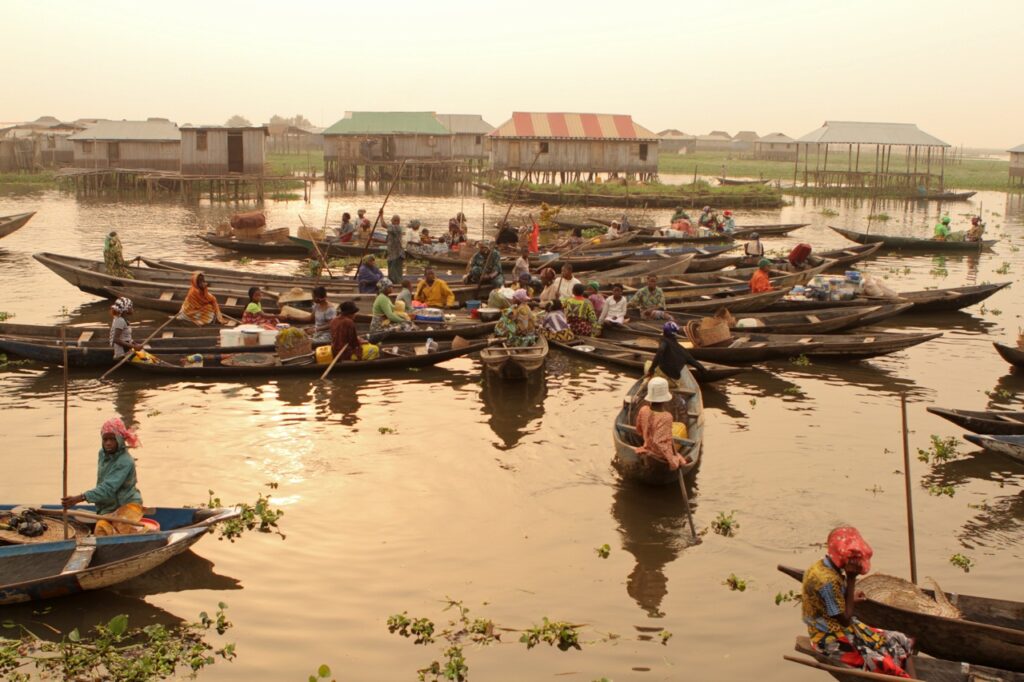
One of the most distinctive parts of Ganvie is its floating market.
It doesn’t stay in one place. It moves with the people.
Vendors paddle up in boats loaded with goods fish, bread, spices, clothes, everyday items. Buying something is simple: you just pull up next to the seller and trade.
Women play a central role here. They manage the trade, negotiate prices, transport goods, and keep the local economy running. The market is not just about buying and selling it’s also where people meet, talk, and share news.
What People Do for Work
Fishing is the main source of income.
But people here don’t just catch fish they grow it. A traditional method called acadja uses branches and vegetation placed in the water to create shelter for fish. Over time, these areas become rich breeding zones. Later, they are harvested.
This system provides a steady supply of fish, which is sold in nearby cities, especially Cotonou.
Besides fishing, there is small trade and craftsmanship. Some residents work outside the village and commute by boat every day.
Everyday Life
Despite how unusual it looks, Ganvie works like a real town. There are schools, small shops, and public buildings, and all of them stand on stilts above the water.
Children go to school by boat. Sometimes with their parents, sometimes on their own. For them, it’s just part of daily life.
The rhythm here is familiar. People work, study, meet each other, and rest. In the evening, when the heat drops, the village slows down. People sit near their homes, talk, fix boats, and watch the water.
Everyday Challenges
Life on water is not easy.
Fresh water is one of the biggest problems. The lake can’t be used for drinking, so water has to be brought from the mainland. That takes time and effort.
Sanitation is another issue. Some waste ends up in the water, and that affects both people and the environment.
There is also the problem of trash. Plastic and other waste collect in the canals and don’t disappear.
Tourism and the Future
Today, Ganvie attracts visitors from all over the world.
Tourism brings money, and that helps the village. But it also creates pressure on daily life and the environment.
At the same time, there are projects aimed at improving conditions. These include water cleaning, better infrastructure, and access to healthcare.
A Town Without Streets
Ganvie shows that a town doesn’t have to follow the usual rules.
There are no roads and no solid ground under your feet, but life still works.
People didn’t try to change the environment. They adapted to it.
And that’s what makes Ganvie one of the most unusual places on Earth.
If you enjoyed this story, you might want to read “The Village Where People Walk on Rooftops.” It’s about a city where people didn’t build outward but upward, creating one of the oldest vertical towns in the world.
And if you like discovering unusual places and real stories from around the world, check out our Telegram channel Wonderful World.