
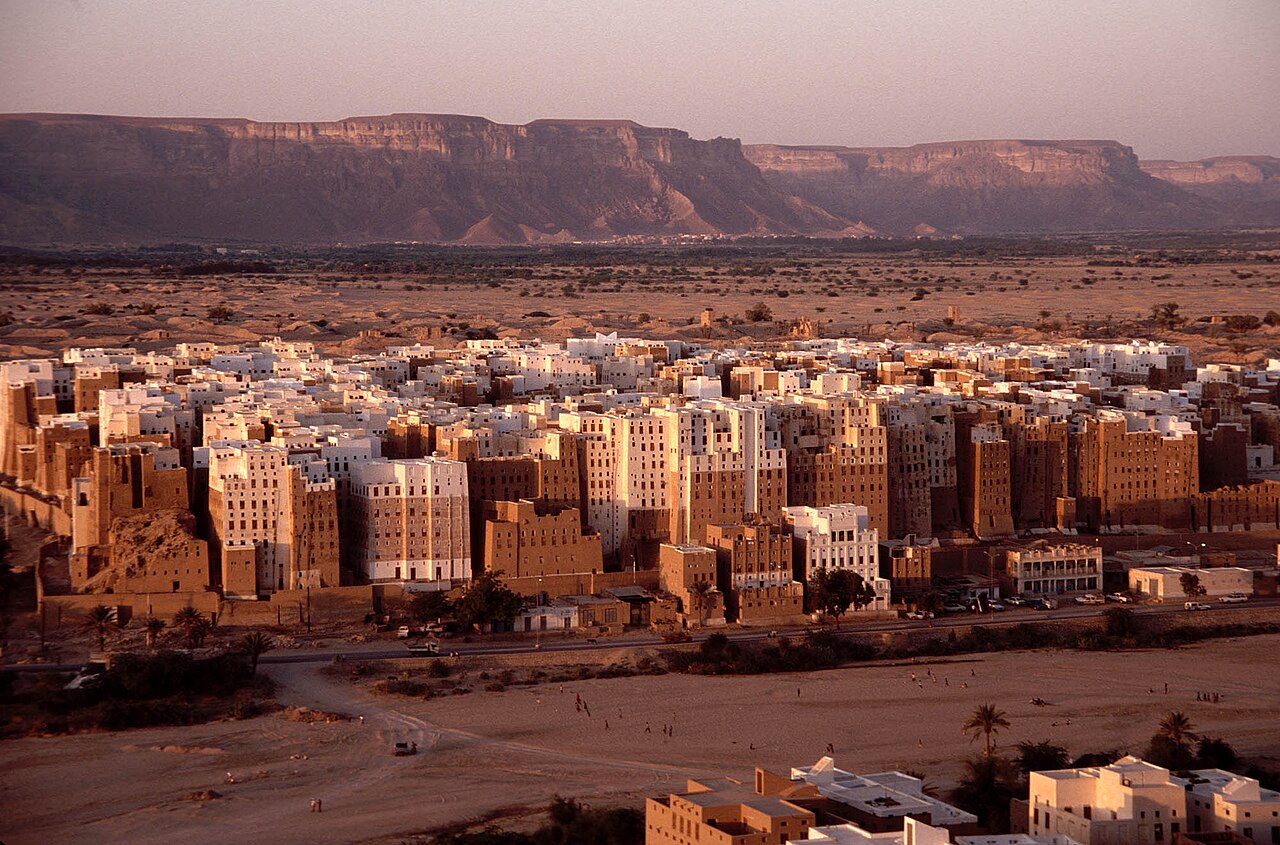
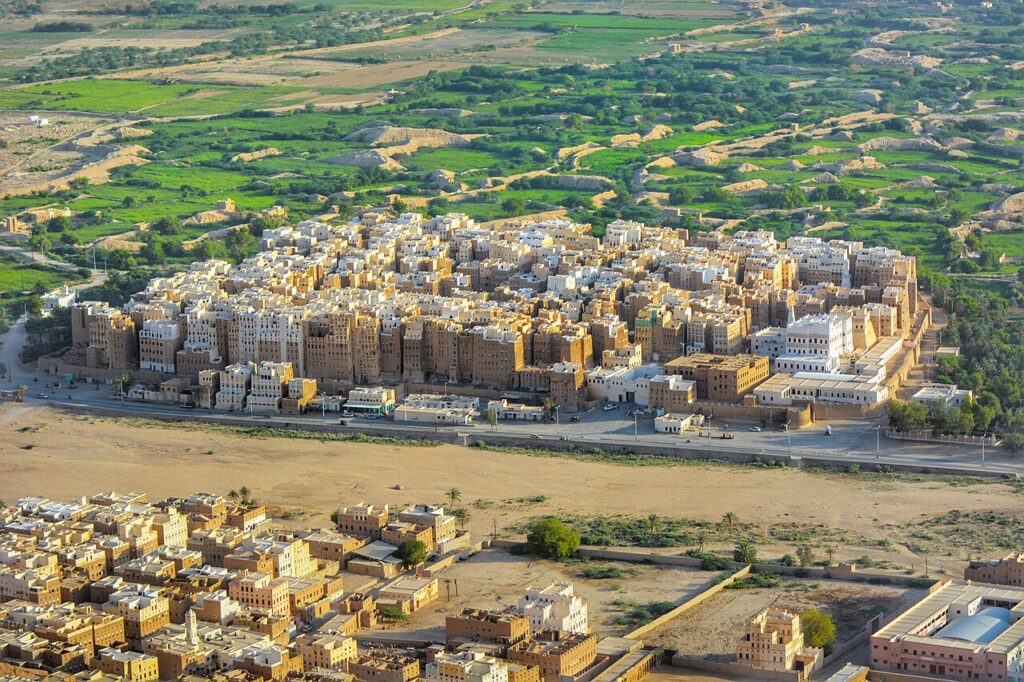
Imagine a city of skyscrapers in the middle of the desert.
Narrow streets. Tall towers. Houses rising ten or even eleven stories high, packed tightly together like a maze of walls and passageways.
But the most surprising thing isn’t the height.
All of these buildings are made from mud.
This is Shibam, an ancient city on the Arabian Peninsula often called the “Manhattan of the Desert.” The nickname sounds modern, but most of these buildings were constructed more than five hundred years ago.
From a distance, it’s hard to believe what you’re looking at. Yet Shibam is one of the earliest examples of a vertical city in human history.
A City in the Desert
Shibam sits in the Wadi Hadramawt valley in eastern Yemen. The valley stretches between dry mountains and wide desert plateaus. Today it feels remote and isolated, but centuries ago this place was part of a major trade route.
Caravans once passed through the valley carrying frankincense, spices, and textiles between southern Arabia and other parts of the Middle East. Traders stopped here to rest, exchange goods, and prepare for the next stretch of their journey.
Over time, Shibam became an important trading hub.
But prosperity also attracted danger. Wealthy caravans drew the attention of raiders and rival tribes. The town needed protection.
So residents built their homes inside fortified walls. Space was limited, and eventually someone came up with a simple solution.
Build upward.
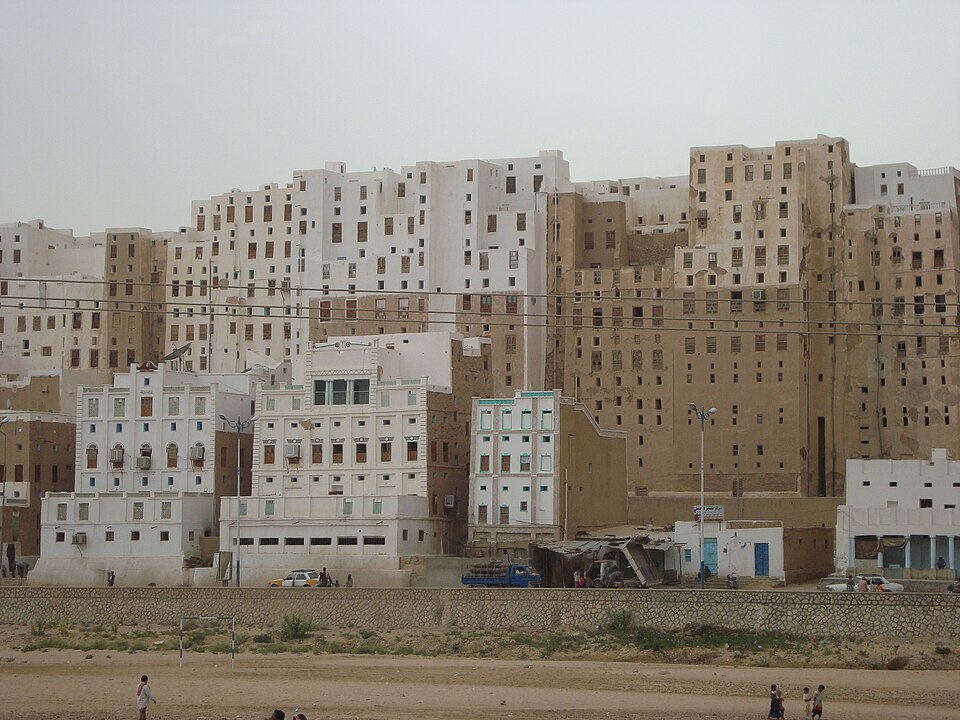
During the 15th and 16th centuries, tall mud-brick towers began to rise above the valley floor. Those towers are still standing today.
Author: Aiman titi. Own work, CC BY-SA 3.0, https://commons.wikimedia.org/w/index.php?curid=17447458
Skyscrapers Made of Mud
Today, Shibam contains around five hundred tower houses. Each one is built from sun-dried bricks made of mud, sand, and straw. The bricks are stacked into thick walls and covered with a protective plaster that shields the building from wind and occasional rain.
The base of each house is heavy and strong. Upper floors are built slightly lighter to reduce pressure on the structure.
Some buildings reach nearly 100 feet tall.
For traditional architecture, that’s remarkable.
The thick mud walls serve another important purpose. They naturally regulate temperature, keeping the interior cooler even during the hottest days in the valley.
In other words, these buildings function like natural climate control systems, something people here figured out centuries ago.
Author: Ljuba brank. Own work, CC BY-SA 3.0, https://commons.wikimedia.org/w/index.php?curid=47154453
Life Inside the Tower Houses
Inside these buildings, life is organized vertically.
The lowest floors were traditionally used for storage. People kept grain, tools, and food supplies there. Sometimes animals were kept on the ground level as well.
The middle floors served as living spaces where families slept, cooked, and hosted visitors.
Upper levels were often used for relaxation and observation. From the roof, residents could look out across the valley and keep watch over the surrounding area.
In many cases, several generations of one family lived in the same tower. Parents, children, and relatives occupied different floors.
A single house became a vertical family home.
Author: Central Intelligence Agency. This file was provided to Wikimedia Commons by the National Archives and Records Administration as part of a collaborative project. The donation was facilitated by the Digital Public Library of America through its partner, the Digital Public Library of America. Source catalog entry DPLA ID: 52ad307693aa247f96bb9dd69acff13a National Archives ID: 266784951, Public domain, https://commons.wikimedia.org/w/index.php?curid=155115229
Streets of Shadow and Rooftop Life
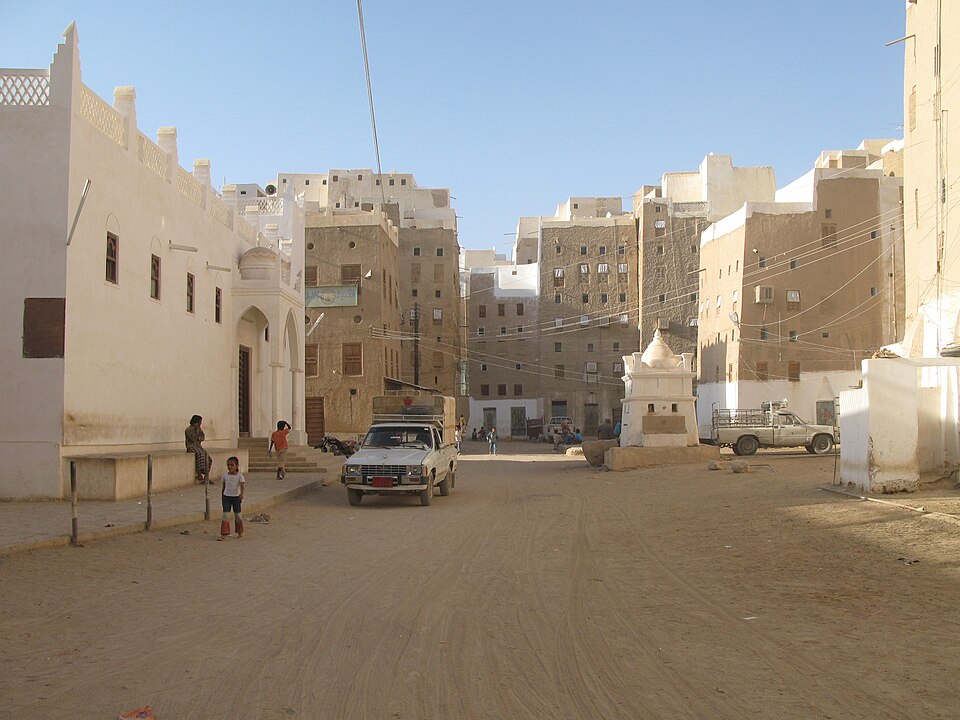
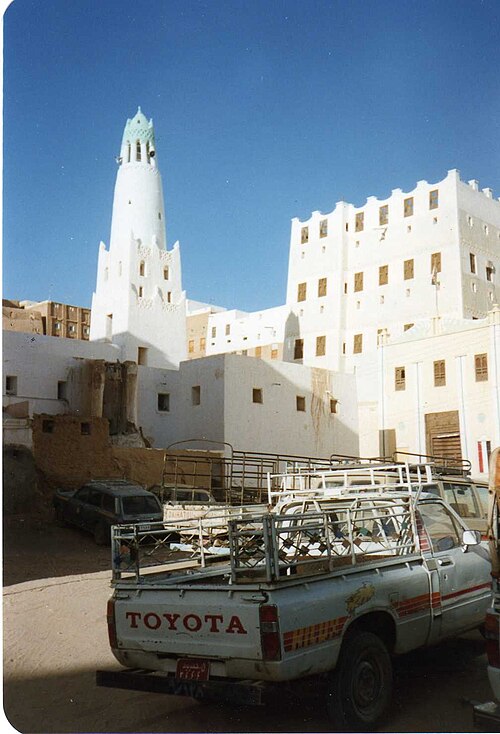
The streets of Shibam are extremely narrow. Houses stand so close together that only small walkways remain between them.
In the desert climate, this turned out to be an advantage. The tall buildings cast shade across the streets, protecting them from the intense sun.
Rooftops also play an important role in daily life.
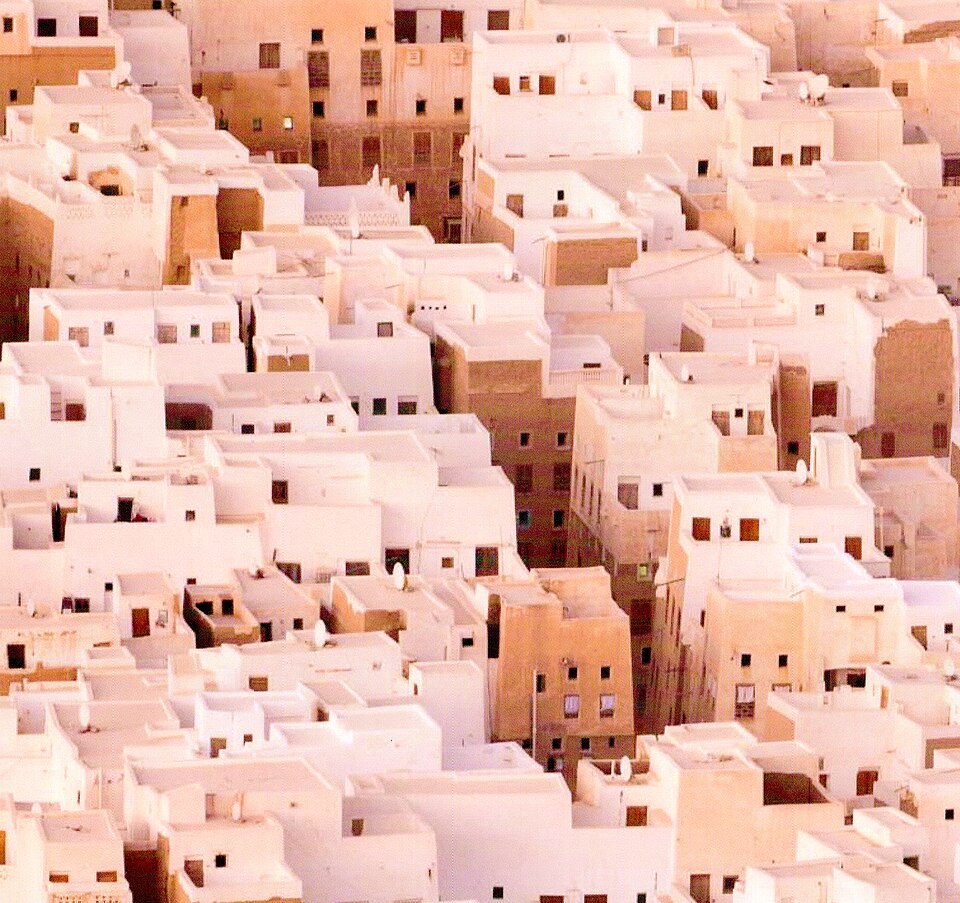
In the evening, when the heat begins to fade, people often move upward. Residents climb to their rooftops to catch cooler breezes from the valley. Neighbors talk across the narrow gaps between buildings, and fruit is often left out to dry in the open air.
In some places the roofs are so close together that people can step from one building to another.
That’s why people sometimes say that in Shibam, people walk on rooftops.
What People Do for Work
Today Shibam is home to several thousand residents.
Many people work in small shops, local markets, and service jobs within the town. Agriculture also plays a role in the valley around the city. Farmers grow dates, grains, and vegetables in the fertile areas near seasonal water sources.
Some residents are craftsmen who make traditional items such as textiles, wooden goods, and pottery.
Others travel to nearby towns for work or are involved in maintaining local infrastructure.
In recent decades tourism has also become important. Visitors from around the world come to see this remarkable desert city that has survived for centuries.
Author: Bkar6190. Own work, CC BY-SA 4.0, https://commons.wikimedia.org/w/index.php?curid=110698525
A City That Must Be Repaired Again and Again
Mud buildings may look fragile, but they can last a very long time if they are properly maintained.
Water and wind slowly erode the outer surfaces of the towers. Because of that, residents regularly renew the protective mud coating on the exterior walls.
It’s a cycle that repeats generation after generation.
In a way, the city is constantly rebuilding itself.
If maintenance stops, the towers can begin to crumble within a few decades. That is why traditional building knowledge is passed down through families.
Craftsmen still know how to mix mud, straw, and water to keep the walls strong.
Threats to the City
Despite centuries of survival, Shibam faces serious challenges.
One of the biggest threats is flooding. The Wadi Hadramawt valley occasionally experiences heavy seasonal rains. When water rushes through the valley floor, it can weaken the foundations of buildings.
In 2008, major floods damaged several historic structures. Some towers had to be reinforced, while others were rebuilt using traditional methods.
Another risk appears when buildings are abandoned. If residents leave and maintenance stops, structures begin to deteriorate much faster.
For that reason, the future of Shibam depends not only on preservation efforts, but also on people continuing to live there.
Authorship: Information about the author is missing or cannot be read by software. Presumably Raf24~commonswiki (based on the copyright statement). No machine-readable source provided. Presumably own work (based on copyright statement), CC BY-SA 2.5, https://commons.wikimedia.org/w/index.php?curid=1218858
Everyday Life in Shibam
Despite its ancient appearance, Shibam is still a living town.
There are schools, markets, and mosques. Small shops sell bread, fruit, spices, and everyday goods.
The local market remains the center of daily life. Residents buy fresh dates, vegetables from nearby farms, and handmade products.
Children walk to school and play in the narrow alleyways between the towers.
In the evening, families gather on rooftops or in cool interior rooms after the heat of the day fades.
Electricity, mobile phones, and modern services have slowly become part of life here, but the architecture around them remains almost unchanged.

Author: Jialiang Gao www.peace-on-earth.org. Original Photograph, CC BY-SA 3.0, https://commons.wikimedia.org/w/index.php?curid=1450142
The City That Grew Upward
Shibam shows how architecture often grows out of necessity.
Limited space inside the walls, threats from the outside, and the harsh desert climate forced people to find a different solution.
So they built upward.
Today, when you look at Shibam’s skyline of mud towers, it’s hard to believe that these buildings are more than five hundred years old.
Modern skyscrapers made of steel and glass appeared much later.
But here, long before modern construction, people were already building a vertical city using nothing more than mud, water, and sunlight.
That is why Shibam is often called one of the world’s first cities of skyscrapers.
If you enjoyed this story, you might also like our article “The Town That Lives Underground.” It tells the story of Coober Pedy in Australia, where thousands of people live in homes carved directly into rock to escape the extreme desert heat.
And if you enjoy discovering unusual places and hidden stories from around the world, you can find many more on our Telegram channel Wonderful World.