Imagine a place where summer temperatures climb past 110 degrees Fahrenheit. The air feels heavy. The ground radiates heat. Even standing in the shade barely helps. By midday, the streets empty out because being outside simply feels unbearable.
In most cities, people fight that kind of heat with air conditioning. In Coober Pedy, a small town in South Australia, they chose a different solution. Instead of cooling the air, they changed the way they live. They moved underground.
That is how a town was built where a large part of daily life happens beneath the desert surface.
Where Coober Pedy Is
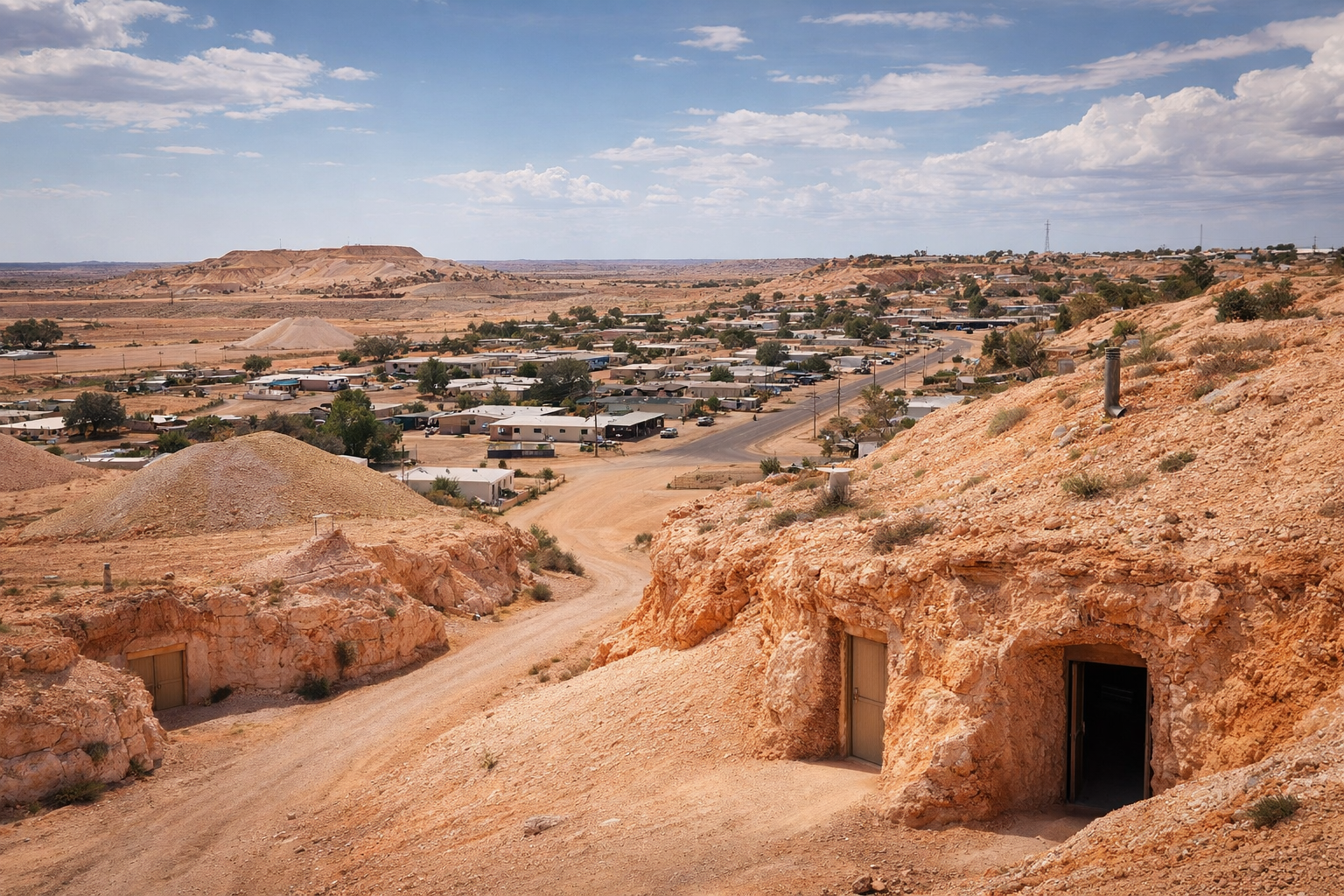
Coober Pedy sits in the remote interior of South Australia, surrounded by flat desert land and red earth stretching to the horizon. The nearest major city is hundreds of miles away. Rain is rare. Heat can last for weeks without relief.
Today, around 2,500 to 3,000 people live here. By Australian standards, that makes it a very small town.
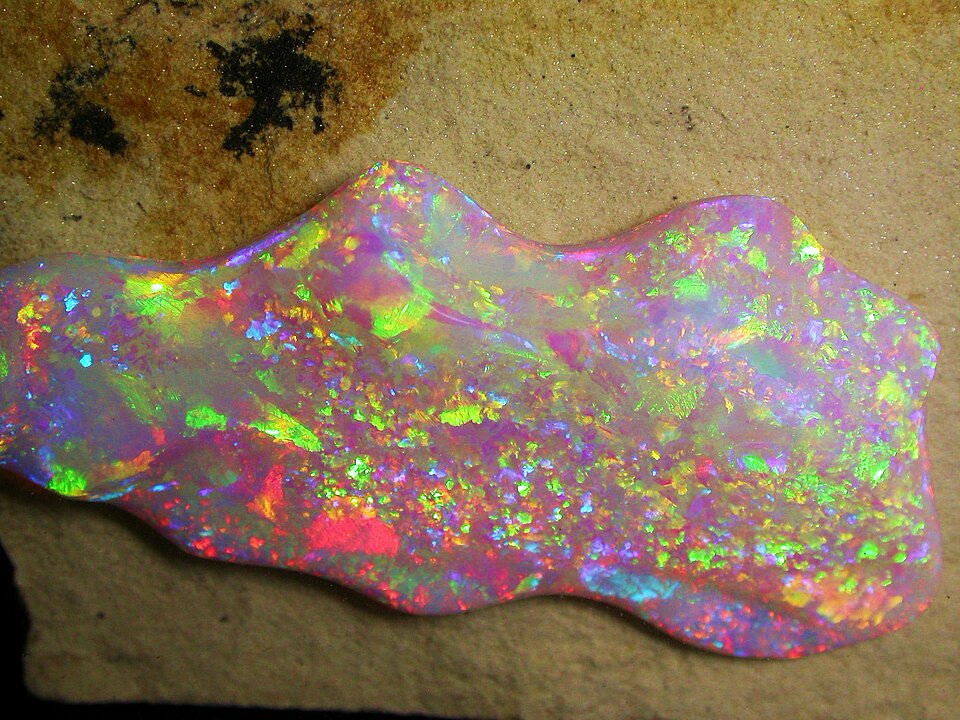
At first glance, Coober Pedy looks rough and exposed. Low buildings. Open land. Mounds of dug up rock scattered across the landscape. Those mounds are leftovers from mining. Opal is the reason this town exists.
Авторство: Daniel Mekis. Собственная работа, CC BY-SA 3.0, https://commons.wikimedia.org/w/index.php?curid=27929124
Opal and the Beginning of Underground Living
In the early 1900s, prospectors came here searching for opal, a gemstone known for its shifting colors. The sandstone in this region is soft enough to dig through, so mines spread quickly. While working underground, miners noticed something important. The temperature below the surface barely changed. Even when the desert above was scorching, underground it stayed close to 70 to 75 degrees Fahrenheit.
At first, miners simply rested in the tunnels to escape the heat. Then they carved out small rooms to sleep in. Over time, those spaces became permanent homes.
That is how the underground side of Coober Pedy slowly took shape.
What Underground Homes Look Like
The underground houses are called dugouts. From the outside, you might only see a door built into a hillside and a few ventilation pipes. If you did not know better, you could walk right past and never realize a home is inside.
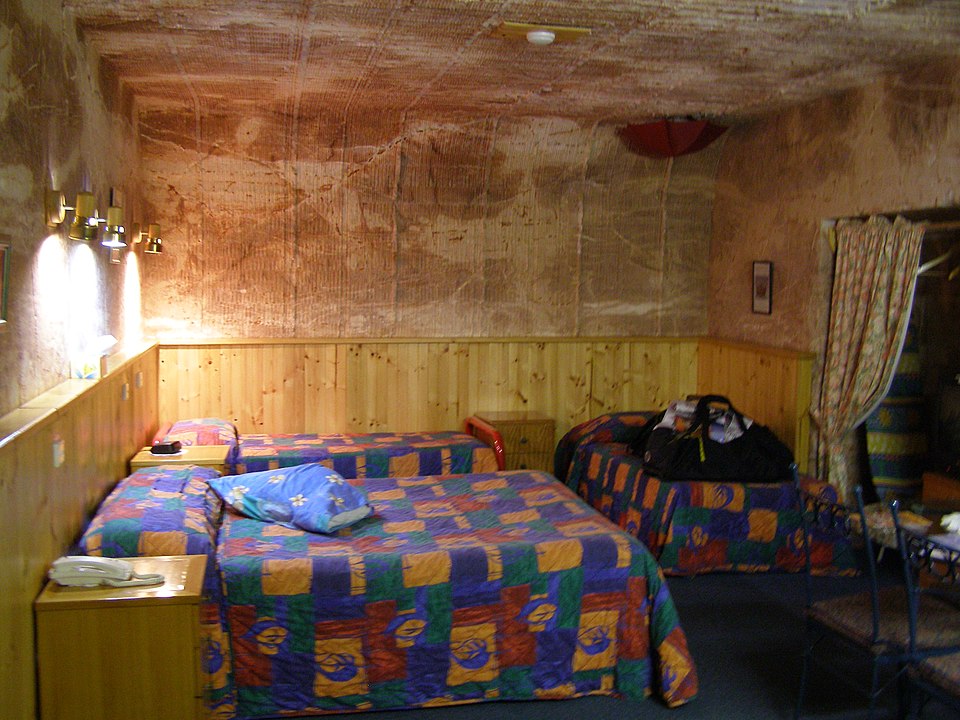
Step inside, and the space opens up. Large rooms carved directly into sandstone. Smooth pale walls. Soft lighting. Full kitchens, bedrooms, bathrooms, living areas. Some homes have multiple levels connected by hand carved hallways.
The biggest advantage is the stable temperature. It stays cool in summer and relatively warm in winter. There is no constant need for heavy air conditioning. Electricity is mainly used for lighting and appliances.
Prices vary depending on size and updates. A smaller dugout can cost less than a house in a major Australian city. Larger modern underground homes with several bedrooms and garages can sell for hundreds of thousands of Australian dollars. Some families expand their homes gradually, carving out new rooms when needed.
Daily Life Underground
Life inside these homes feels surprisingly normal. There is running water, internet access, modern furniture, and standard appliances. Ventilation is important, so vertical shafts are built into ceilings to allow air circulation. Some homes also use mechanical ventilation systems.
At first, living without traditional windows can feel unusual. But residents say they adjust quickly. With thoughtful lighting and interior design, the spaces feel comfortable rather than confined. Many decorate the rock walls with artwork and personal items to make the space their own.
Another benefit is protection from dust. Desert winds constantly move red sand across the surface, but underground homes are largely shielded from it.
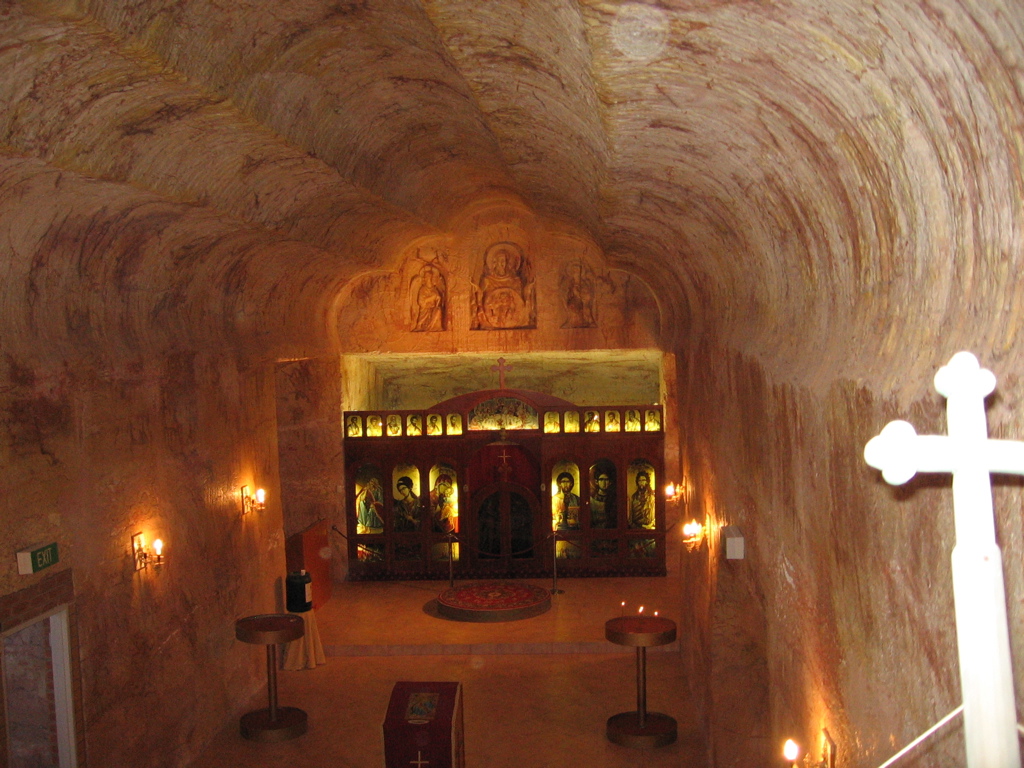
By Robert Link – Flickr: Dugout Church, CC BY-SA 2.0, https://commons.wikimedia.org/w/index.php?curid=12717735
Underground Churches and Hotels
Over time, more than just houses moved below the surface. Coober Pedy has underground churches representing different Christian denominations. One well known church is carved entirely into rock, with stone walls and a natural echo that gives the space a unique atmosphere.
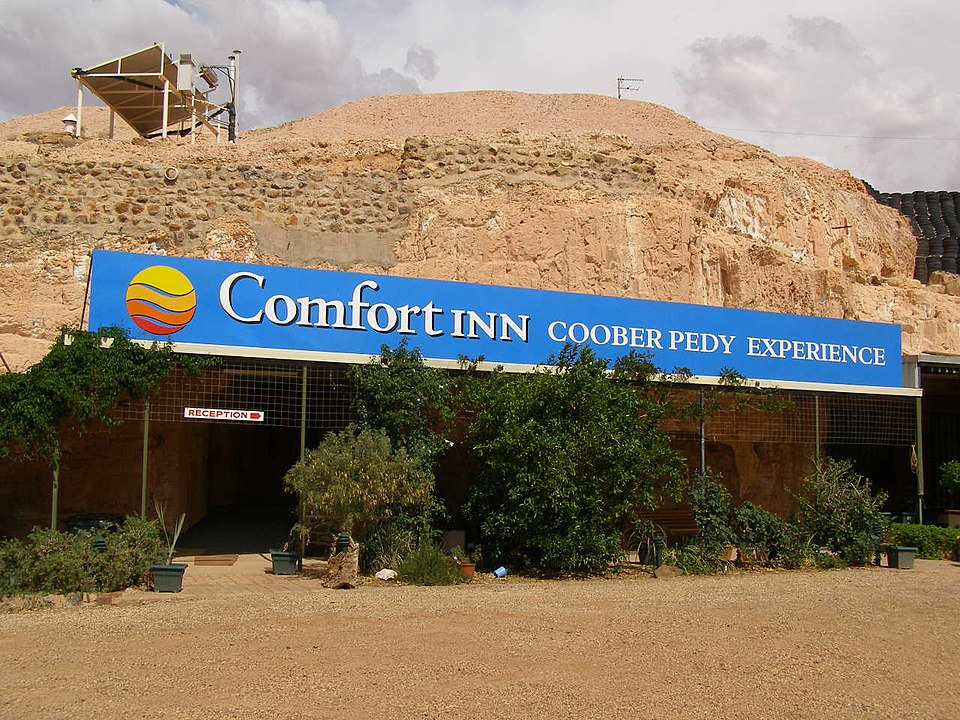
There are also underground hotels where visitors can spend the night in a dugout style room. Tourism has become an important part of the local economy, especially as opal mining has slowed compared to its peak years.
Still, the town is not entirely hidden below ground. Schools, shops, gas stations, and government buildings operate on the surface. Children attend regular classes and play sports. After school, many simply head back to homes built into the hills.
Mining Risks and Reality
Opal mining remains part of Coober Pedy’s identity, even if production has decreased over time. Historically, mining here involved small independent operators working individual claims. It could be dangerous, especially in older tunnels that required constant attention to safety.
Today, regulations are stricter and equipment is more modern. Even so, the dream remains the same. Many miners still hope to uncover a rare opal that could change their financial future.
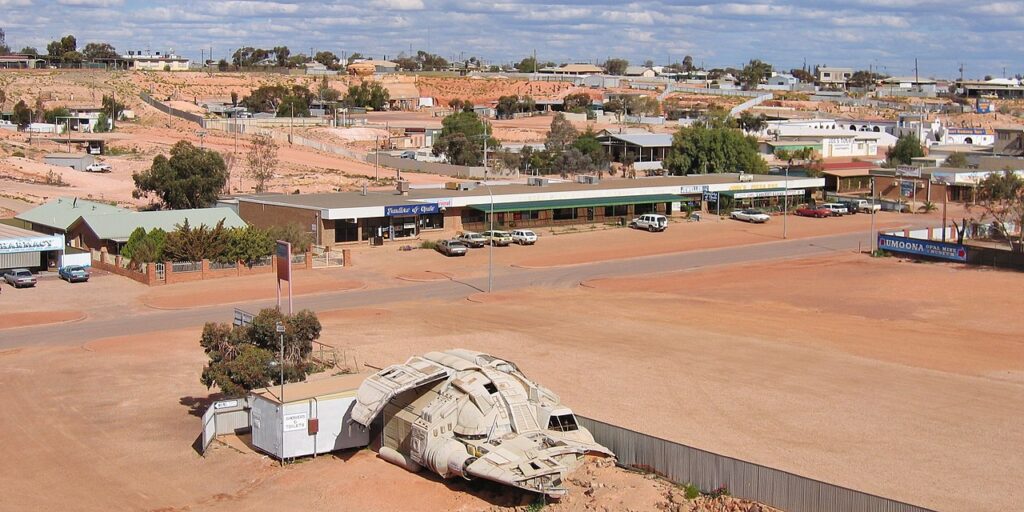
By qwesy qwesy, CC BY 3.0, https://commons.wikimedia.org/w/index.php?curid=58913610
A Landscape Like Another Planet
The surface of Coober Pedy is often compared to Mars. Uneven ground. Pale hills of excavated rock. Very little greenery. That unusual landscape has attracted film productions looking for otherworldly settings.
For locals, however, this is simply home. They are used to the dry wind and red dust. In the evening, when the heat fades, the desert sky fills with bright stars that feel closer than anywhere else.
Why People Stay
Despite the extreme climate and isolation, many residents choose to stay. Some remain because of mining or tourism jobs. Others appreciate the space and independence. There is little traffic and minimal city noise. The community is small, and people tend to know one another.
Compared to large coastal cities like Sydney or Melbourne, life here is quieter and often less expensive, especially when it comes to cooling costs. While homes in big cities rely heavily on air conditioning during summer, the underground dugouts stay naturally insulated by the earth.
Coober Pedy may not look futuristic, but in some ways it offers a practical model of adaptation. Instead of constantly fighting the desert climate, residents use the natural properties of the land to create stable living conditions.
The town proves that humans can adapt not only to Arctic cold, but also to intense desert heat, if they are willing to rethink how they build and live.
Sometimes, comfort is not about escaping the environment. It is about going a little deeper into it.
If you’re curious how far people are willing to push themselves, read our article “The Longest Staircases in the World – A Path You Can’t Shortcut.” It’s a completely different kind of challenge — not underground, but straight up, step by step.
And if you enjoy discovering unusual places and the ways people adapt to extreme environments, explore more stories on our Telegram channel Wonderful World. There’s always another place waiting to surprise you.
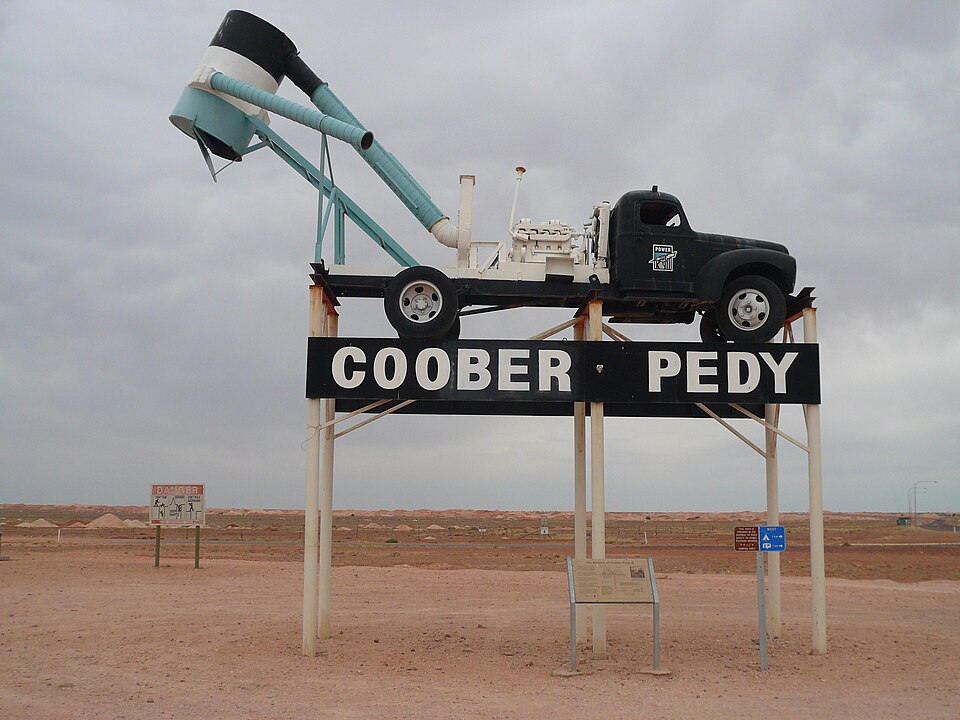
By eyeintim – Outback Trip – Coober Pedy Welcome Sign, CC BY 2.0, https://commons.wikimedia.org/w/index.php?curid=59284456
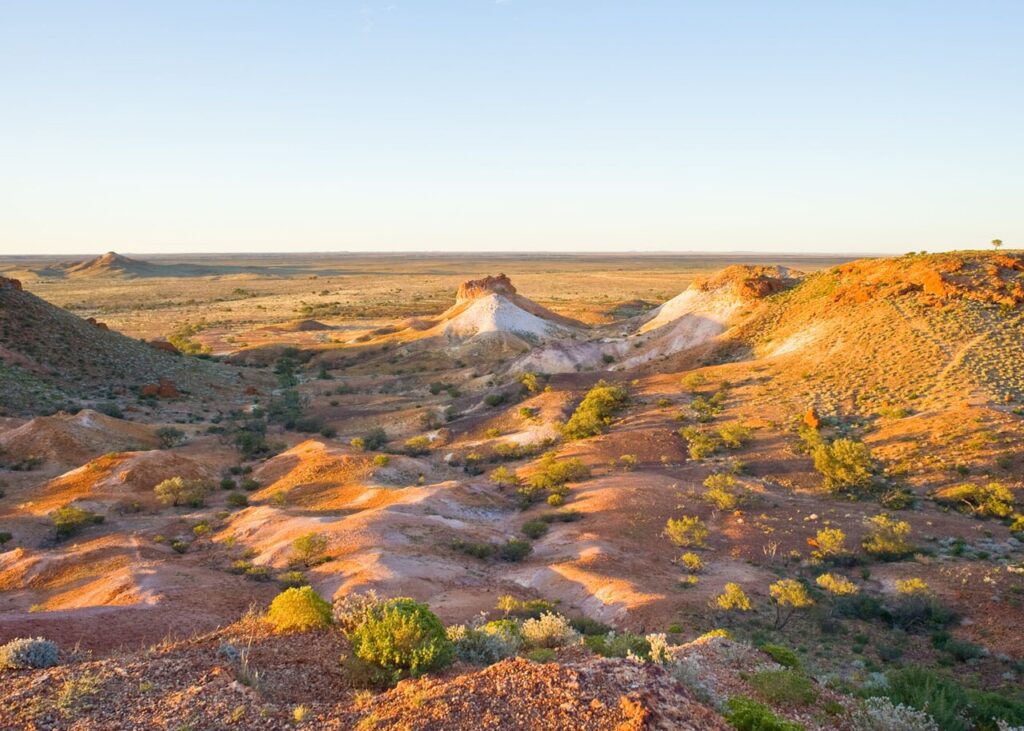
By Lodo27 from Moscow, Russia – Own work (Lodo27), CC BY-SA 3.0, https://commons.wikimedia.org/w/index.php?curid=16865663
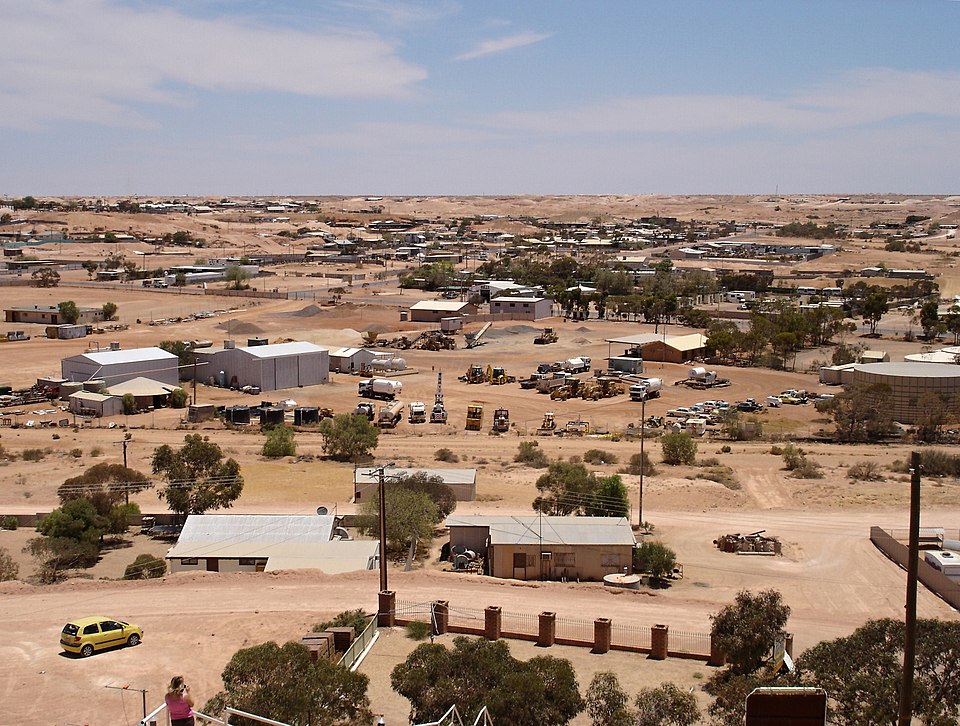
By Pavel Špindler, CC BY 3.0, https://commons.wikimedia.org/w/index.php?curid=54323035
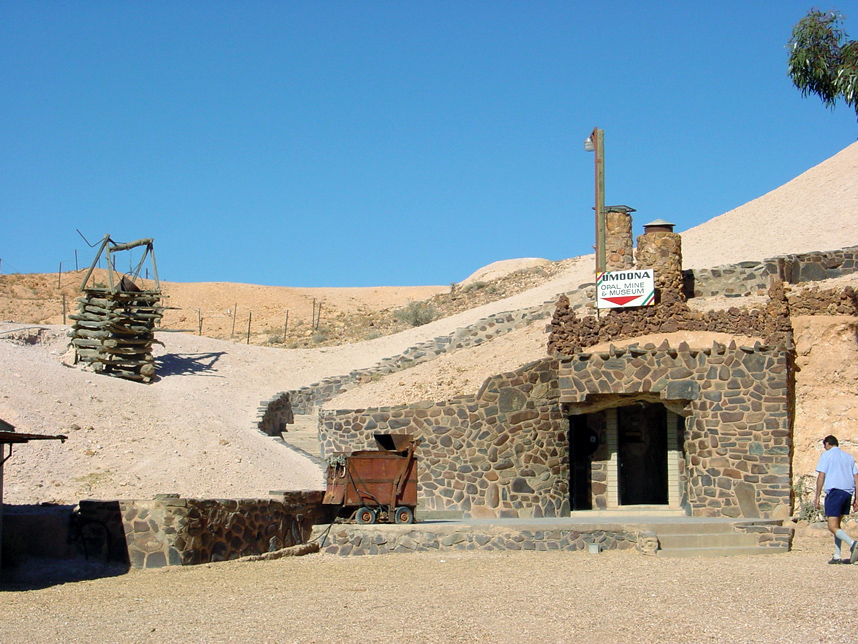
By Frans-Banja Mulder, CC BY 3.0, https://commons.wikimedia.org/w/index.php?curid=47420313
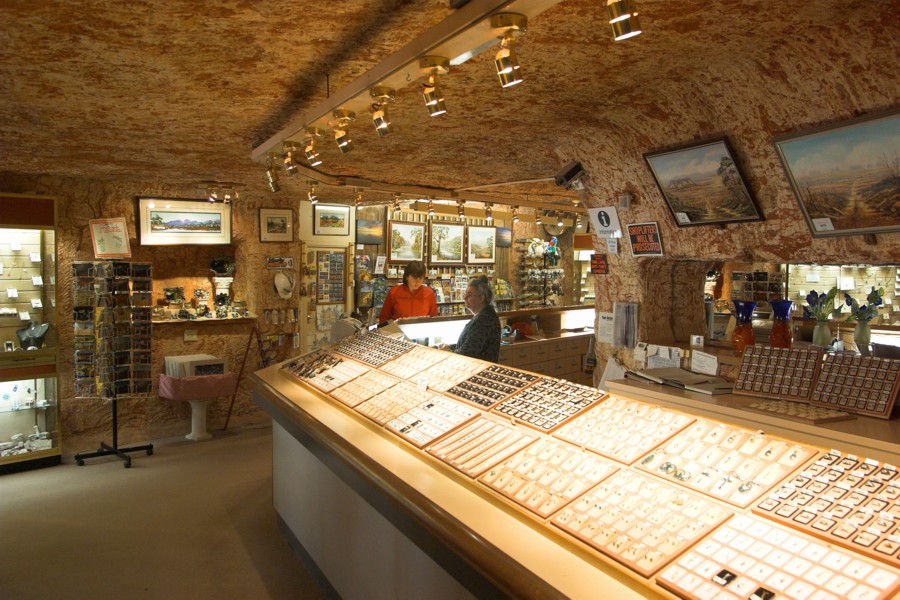
By Lodo27 from Moscow, Russia – Own work (Lodo27), CC BY-SA 3.0, https://commons.wikimedia.org/w/index.php?curid=16865648