
The day the air stopped moving
Sometimes, time doesn’t flow – it shifts.
People describe it like walking through invisible water – the light changes, the air thickens, and suddenly the world around them looks… wrong.
Old cars, vanished buildings, strange clothes, sounds that belong to another century.
They stand frozen, trying to understand what’s happening, and then – as abruptly as it began – everything snaps back to normal.
These moments are known as time slips – strange experiences where people seem to step, just for a few minutes, into another era.
They don’t faint, they don’t hallucinate – they simply walk through time and return confused, shaken, but utterly convinced of what they saw.
The Versailles incident – the first recorded “time travel”
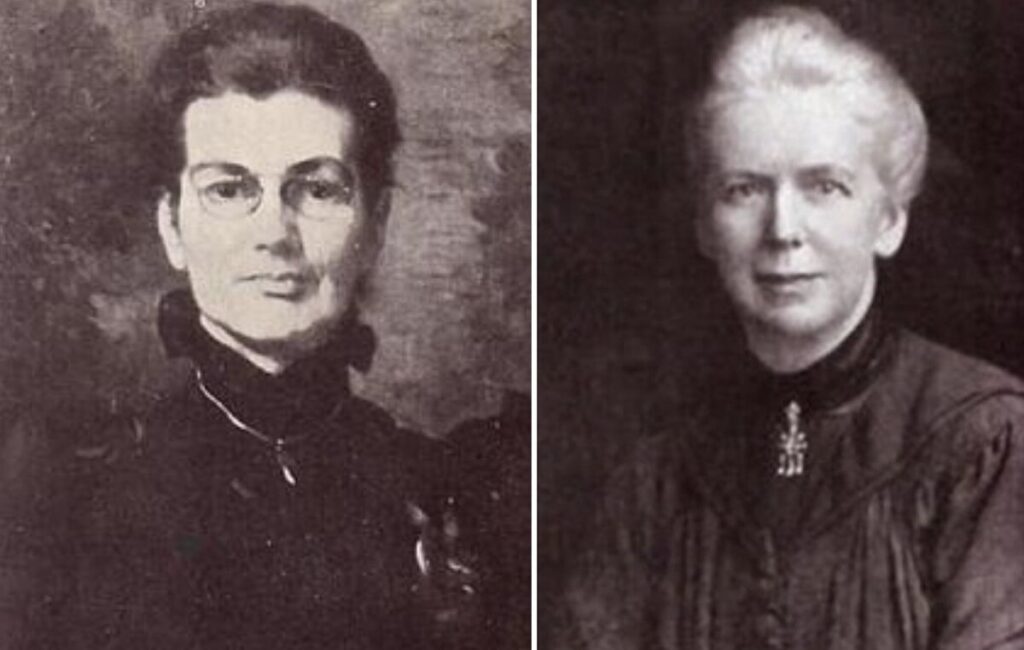
The most famous case dates back to 1901, in the gardens of Versailles, France.
Two English teachers, Charlotte Anne Moberly and Eleanor Jourdain, visited the Petit Trianon – a small palace once loved by Marie Antoinette.
As they wandered, both women suddenly felt “strange stillness,” as if the world had gone silent.
The trees looked different, the air turned heavy, and the path ahead seemed to shift.
They saw gardeners in 18th-century clothing and, most strikingly, a young woman sketching on the grass – wearing a pale green dress, with a large white hat.
When the women returned to England, they compared notes and realized they’d both seen the same figures.
Historians later confirmed: their descriptions matched the exact layout of the gardens before 1789, long before those paths were changed.
They published a book, “An Adventure” (1911), which became one of the earliest serious accounts of time slips – long before science fiction made “time travel” a fantasy.
Liverpool: a street from 1950
In 1996, a man named Frank was walking down Bold Street in Liverpool when something bizarre happened.
He stepped out of a record shop and suddenly found himself in another version of the same street.
The air smelled of coal smoke, people wore old-fashioned clothes, and cars looked straight out of the 1950s.
Even the shops had changed – the familiar “HMV” store was gone, replaced by a sign that read “Cardin’s Shoes.”
Within seconds, everything flickered and he was back in the present.
Later research confirmed: Cardin’s Shoes really did exist there in 1952.
It wasn’t a dream. It wasn’t a trick of memory. It was something far stranger.
Why these stories won’t go away
Most people would say it’s just imagination – the brain glitching under stress.
But some time slip reports include details the witnesses couldn’t have known: accurate street names, forgotten landmarks, or smells specific to a certain period.
When scientists studied accounts of time slips, they noticed something: people describe the same sensations again and again.
A sudden silence. A change in air pressure.
A feeling of being pulled or slowed down and then, just as quickly, being “released.”
Psychology can explain parts of it – fatigue, stress, even micro-seizures that disrupt time perception.
But none of those theories explain the accuracy of what people describe – especially when it matches historical reality.
Science tries to catch up
There are a few leading ideas:
- Temporal perception glitches – our brains don’t record time continuously but in fragments.
When two fragments overlap or misfire, the mind can “replay” memories as real, creating a vivid moment that feels like another time. - Quantum overlap – some physicists argue that time isn’t a line, but a field of coexisting moments.
Under certain physical or electromagnetic conditions, those “layers” could briefly intersect. - Geomagnetic disturbances – studies show unusual magnetic fields can alter human brainwaves and perception.
Several famous time slip locations – like Versailles and Liverpool – sit over zones of magnetic variation. - Residual energy or place memory – a more poetic theory: that some places “record” events, like a cosmic tape.
Under the right conditions, sensitive people might experience those recordings as if they were real.
No theory fits perfectly. Maybe they’re all true, or maybe none of them are.
The modern witnesses
With the rise of the internet, stories of time slips have exploded.
Thousands of people around the world now share eerily similar experiences.
One woman from Seville, Spain, described walking into a small café in 2013 where everyone wore 1940s clothing.
The waiter used an old register, the music was from another era and when she returned a few minutes later, the café was gone.
Records later showed a café with that same name had existed in the 1940s, but was demolished decades ago.
Others tell of driving on country roads that suddenly turn unfamiliar – lined with gas lamps, old cars, even people staring in confusion, before everything blinks back to normal.
If it were one or two stories, it’d be easy to dismiss.
But the pattern is too consistent, the emotions too vivid, the fear too real.
Between déjà vu and the Mandela Effect
In many ways, time slips feel related to other cognitive mysteries – like déjà vu or the Mandela Effect.
All three involve memory colliding with perception – that strange mental tension when reality feels out of sync.
The difference is that time slips feel physical – you’re not just remembering something; you’re inside it.
It’s as if the brain briefly “detunes” from the present and picks up another frequency of reality.
Maybe it’s all in our heads.
Or maybe our heads are the only things capable of sensing when the universe skips a beat.
A scientific mystery wrapped in a human story
Most scientists avoid the topic – not because it’s uninteresting, but because it’s impossible to measure.
You can’t recreate a time slip in a lab.
You can’t predict when it will happen.
All you have are human stories – detailed, emotional, impossible to ignore.
And maybe that’s the point.
Time slips remind us that we still don’t understand how consciousness interacts with reality.
We can measure seconds, but not how they feel.
We can build clocks, but not explain why time sometimes seems to stop.
The quiet proof that time is not what we think
Every culture has its whispers about crossing time, from Celtic legends of fairy realms to Native American tales of “thin places” where worlds meet.
Perhaps time slips are the modern version of those myths – not fantasy, but experience described in the language of another age.
One day science may explain them.
Or maybe it won’t – because some mysteries are not meant to be solved, only noticed.
Until then, if you ever feel the air change, if the world around you grows too still –
don’t run.
Just look around.
You might be standing where the past is still happening.
Explore more mysterious realities
If the world of time slips made you question what’s real, explore these related mysteries:
- The Mandela Effect – when millions remember what never happened.
- Déjà Vu – when the present feels like a memory.
- Water Memory – can even liquid carry the past within it?
Each story is a reminder that our reality might be far more flexible than we think.